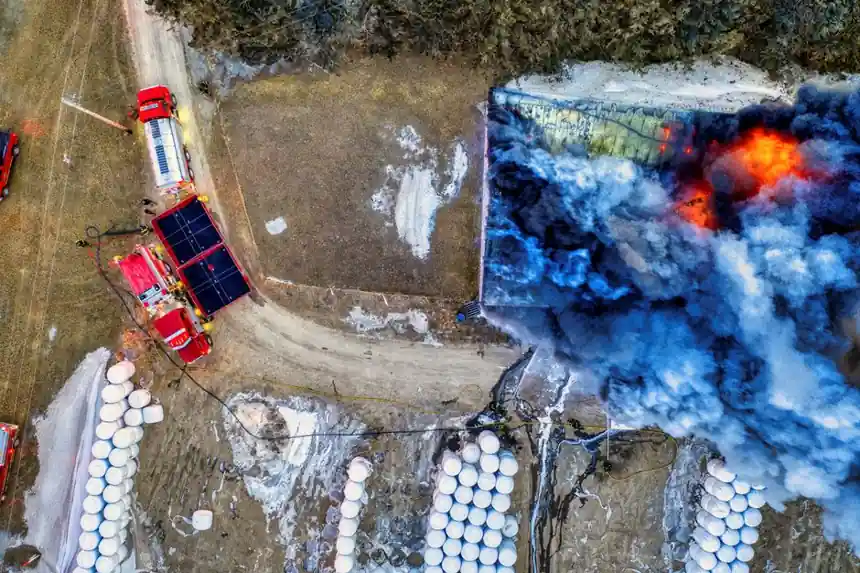
Specifying an explosion-proof control station is a six-variable reconciliation problem: hazardous area classification, control logic, certification scheme, enclosure material, ingress protection, and installation conditions must all be resolved before a model is chosen, because none of them can be fixed after the order is placed [S2].
The most common build is a cast aluminium or stainless-steel enclosure with flameproof threaded joints, certified to Ex db eb IIC T6 Gb for gas and Ex tb IIIC T80 °C Db for dust under IEC 60079-0, -1, -7 and -31, mapping to Class I Division 1, Class I Division 2, Zone 1/Zone 2, and Zone 21/Zone 22 service [S2][S3].
Hazardous Area Classification Comes First
Under the NEC system, control stations are typically rated for Class I Division 1, Class I Division 2, Class II, or Zone 1/Zone 2 environments, and product naming such as "explosion-proof" alone carries no zone, gas group, or temperature class information [S1]. Four parameters must be confirmed before any model is selected: Zone 1 and Zone 2 for gas atmospheres under IEC and ATEX; Zone 21 and Zone 22 where combustible dust is present; Class I Division 1 and Division 2 for NEC-specified projects, which is a separate system and must not be treated as equivalent to Zone ratings; and gas group (IIA, IIB, IIC) plus temperature class (T1 to T6), determined by the process media at the location [S2].
Gas group determines whether the enclosure design is adequate for the ignition energy of the atmosphere, while temperature class caps the permitted surface temperature, and because that limit interacts with ambient temperature, a station rated T6 at +40 °C may carry a different rating at +60 °C [S2]. Selection should always start with a site hazardous-area drawing, not with a vendor catalog page.
Operator Count, Logic, and Layout
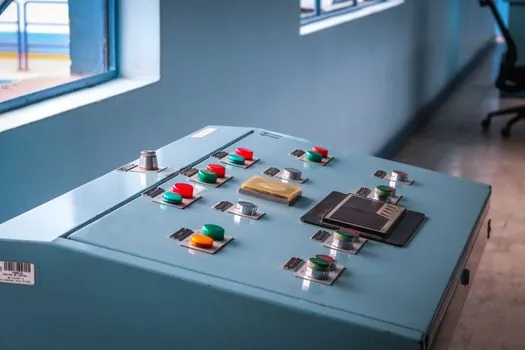
Enclosure size follows from the operator count, but not on a one-button-one-hole basis: a typical pump-station LCS carries start, stop, emergency stop, local/remote selection, manual/auto selection, running indication, and fault indication, while a loading-rack LCS more often needs pump start/stop, emergency stop, valve open/close, loading status, and alarm [S2]. The operator layout should follow the control logic of the equipment, not the other way round, and at least 20-30% spare face area is cheap insurance for late-stage scope changes.
Common operator devices include push-buttons, selector switches, emergency stop switches, pilot lights, and combination control devices, with pendant variants used where the operator must stand back from the machinery, such as crane, hoist, and valve-actuator duty [S1][S4]. For intrinsically safe or signal-level circuits inside the same cabinet, see explosion-proof junction box for the field-wiring side, and explosion-proof button for the operator-side hardware family.
Certifications and Ex Markings
Common certification schemes are UL 1203 for explosion-proof and dust-ignition-proof electrical equipment in North America, the ATEX Directive (2014/34/EU) for the European Union, and IECEx as the international scheme accepted across multiple jurisdictions [S3]. A representative ATEX/IECEx string is Ex II 2G Ex db eb IIC T6 Gb for gas and Ex II 2D Ex tb IIIC T80 °C Db for dust, with "II 2G" mapping to Equipment Category 2 suitable for Zone 1, and "II 2D" to Zone 21; Equipment Category 1 covers Zone 0 and Zone 20, while Category 3 covers Zone 2 and Zone 22 only [S2][S7].
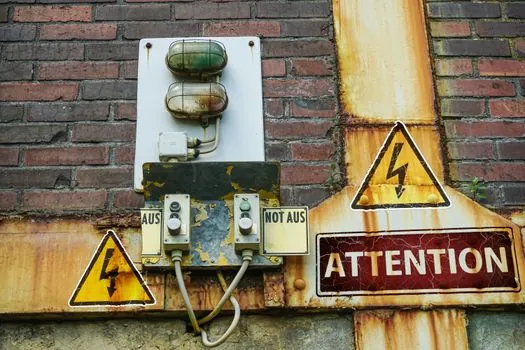
OSHA, NEC/CEC, IECEx, and ATEX are all referenced for compliance, and a station must carry the correct group (IIA/IIB/IIC) and temperature class (T1 to T6) for the actual gas or dust present, otherwise the certificate is invalid for the location [S1][S2]. Watch out: NEC Class/Division and IEC Zone systems are not interchangeable on a 1:1 basis, and an ATEX-only certificate is not accepted in many US jurisdictions without a separate UL listing.
Enclosure Material and Construction
Enclosures are typically cast aluminium for general duty or stainless steel (often 316L) for corrosive and offshore service, with glass-reinforced polyester (GRP) used where non-metallic, lightweight, or impact-resistant builds are required [S3][S4]. The trade is well-defined: aluminium is roughly 30-40% lighter and cheaper than 316L but corrodes in salt-spray and acidic atmospheres; 316L adds cost and weight for chemical, marine, and offshore exposure; GRP cuts weight further and resists many chemicals but has lower mechanical impact tolerance and temperature ceiling than metal.
Construction must include flameproof joints and gaskets to keep gas or dust from entering or escaping, and the enclosure must be rated to withstand and contain an internal explosion without rupturing or permitting flame propagation through threaded joints, flanges, covers, or conduit interfaces [S1][S4]. For higher-power motor and starter builds adjacent to a control station, see explosion-proof motor for matching Ex d protection level, and explosion-proof distribution for downstream breaker and disconnect layouts.
Ingress Protection, Temperature, and Cable Entry
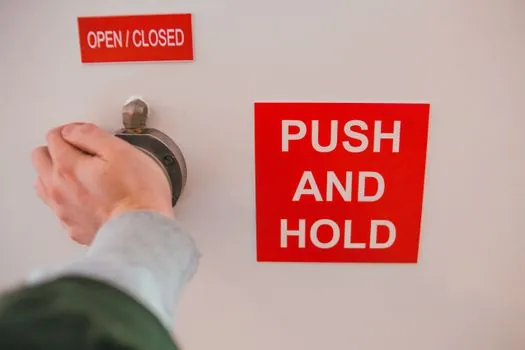
Typical ingress ratings are IP66 for outdoor or washdown service, with NEMA 4X as the equivalent in the North American system, and NEMA 7 for Class I Division 1 enclosures where flamepath containment is the primary protection [S1][S3]. Operating temperature must be confirmed against the site envelope, including solar gain on black-painted enclosures in tropical installs, and a heater or cooler is often specified at +40 °C and below or above the standard ambient band [S3].
Cable entry is frequently the failure point: threaded hubs or conduit openings must match the certified entry pattern, and the correct flameproof barrier or stopping compound must be used in every unused entry. For a deeper treatment of the conduit-entry rules that engineers routinely misread, see Five Full Threads: The Explosion-Proof Conduit Entry Rule Engineers Keep Misreading; the closely related How to Specify an Explosion-Proof Distribution Box: Zone, Ex Marking, Material, IP walks through the same parameter set for the distribution side of the same skid.
Use-Case Fit: Pumps, Loading Racks, and Pendants
For pump stations and tank-farm pump skids, the local station is standard practice because the operator needs to start, stop, and see status at the machine rather than walking back to a control room, and typical functions cluster around start, stop, E-stop, local/remote, manual/auto, running, and fault [S2]. Loading and unloading areas add valve open/close, loading status, and alarm indication, with stations mounted for reach during the actual transfer alongside the truck, rail car, or vessel [S2].
Pendant stations are a separate form factor, used for crane, hoist, winch, and valve-actuator duty where the operator must control motion from a standoff distance, and the certification is the same as wall-mounted stations but the enclosure geometry, strain relief, and switch count differ [S4]. Standard pendant stations without hazardous-location certification must not be substituted, because the casing has no spark containment and the polymer or lightweight metal housing will not pass Ex d or Ex tb impact testing.
Selection Criteria: Aluminium vs 316L vs GRP
A decision table helps when the duty and atmosphere are clear. The three realistic options line up as follows on the four criteria that drive most bids: corrosion resistance, weight, impact tolerance, and cost baseline. Aluminium is light, mechanically tough, and cheapest, but loses in salt-spray and acidic atmospheres. 316L stainless wins on corrosion, holds on impact, and costs roughly 2-3x aluminium at the same size. GRP wins on weight and many chemical exposures, but is the weakest on impact and temperature ceiling. [S2]
Material choice is therefore a four-way intersection: corrosion class of the site (C1 to C5 per ISO 12944), mechanical impact risk (IK rating per IEC 62262), ambient temperature band, and budget. For most onshore oil and gas, powder-coated aluminium is the default. For offshore, marine, and sour service, 316L is the default. For chemical plants with halogenated vapours and weight-sensitive skids, GRP enters the shortlist but needs an IK07 or better impact test on the certificate.
Limits, Failure Modes, and Sourcing
The most common field failures are mismatched certification (ATEX-only supplied to a US Class I Div 1 site, or wrong gas group such as IIB equipment in an IIC hydrogen service), wrong temperature class at elevated ambient, missing or misapplied cable glands on unused entries, and impact damage to flamepaths from forklift or dropped-tool strikes that is not inspected and re-certified [S2][S3]. Unspecified spare capacity is another chronic failure: once a pump skid is commissioned, adding a fourth pushbutton means a new enclosure, new Ex certificate, and new cable entries, so 20-30% spare face area and at least one unused certified cable entry is the right starting brief [S3].
Reputable sourcing channels include manufacturer-authorised distributors and the OEM's own hazardous-location product line, with the build sheet showing the Ex marking string in full, the ambient temperature band, the gas group, the temperature class, IP/NEMA rating, material grade, and a list of every operator and indicator with its part number [S1][S6][S9]. Expect to verify the certificate number against the issuing notified body (ATEX) or certification body (IECEx) before acceptance, and to require third-party verification of the flamepath dimensions on a sampled basis for any volume order.