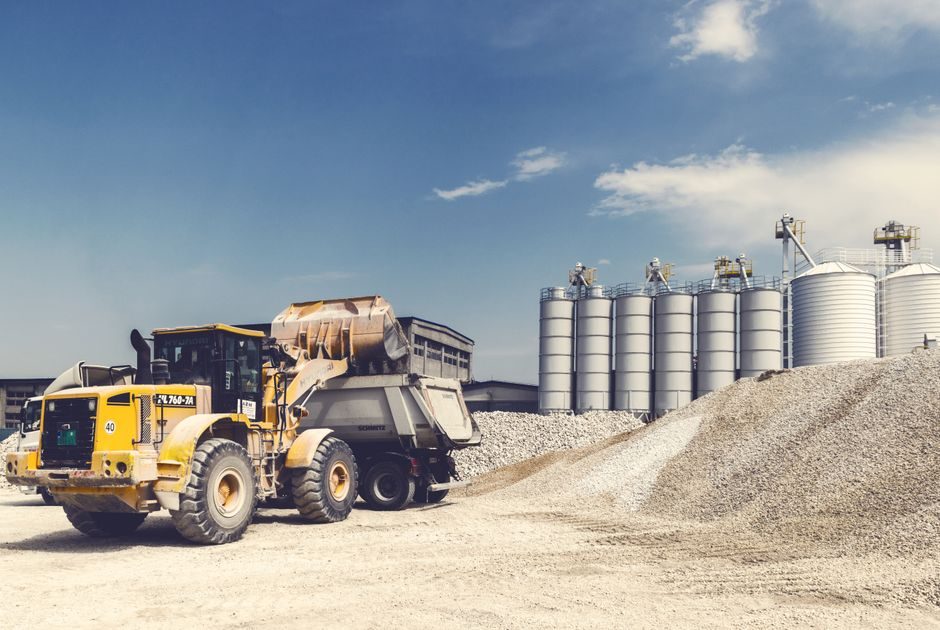
Special cement is specified when a project demands chemistry or strength behaviour ordinary Portland cement (OPC) cannot deliver, with the common API/ISO classes being oilwell (API Spec 10A), sulphate-resisting (ASTM C150 Type V / C595 Type HS), low-heat (ASTM C150 Type IV / GB 200), high-alumina (GB 201 / EN 14647), expansive (GB 23439) and white (ASTM C150 Type I White, Fe2O3 below 0.5% by mass) [S1].
Each class is a trade-off in clinker phase design, fineness and admixture compatibility, so the right choice starts from the binding environment (well temperature, sulphate exposure, mass-concrete heat, decorative whiteness) and works backward to the standard designation that the spec engineer can write into a purchase order.
Start with the Binding Environment, Not the Brand
Special cement selection is governed by the chemistry of the contact medium first, the strength target second. Oilwell grades (Class A through H under API Spec 10A) are graded by well depth and temperature: Class A is a basic 0–1830 m / 0–250 °F well, Class G is the de-facto world standard for 0–2440 m deep casings and is now the most globally traded oilwell grade, while Class H is a coarser variant for deeper sections [S1].
Sulphate-resisting grades target a C3A limit: ASTM C150 Type V caps C3A at 5% by mass of clinker for severe sulphate exposure, while C595 Type HS (blast-furnace slag blend) keeps the C3A under 8% and relies on slag replacement to resist sulphate ingress. High-alumina cement (HAC) is the only family that delivers fire resistance above 1300 °C through calcium-aluminate phase dominance rather than C2S/C3S silicate hydration, which is why foundries and refractory shops specify it over OPC. The brand of the cement plant matters only after the chemistry window has been narrowed.
For mass-concrete dams, low-heat cement under ASTM C150 Type IV or GB 200 caps the 28-day heat of hydration below ~290 kJ/kg, allowing continuous pours over several thousand cubic metres without thermal cracking. Decorative and architectural work calls for white cement with Fe2O3 below 0.5% (Type I White) and TiO2 under 0.5% to control the cool grey cast — chemistry knobs that no ordinary grey OPC can hit.
Spec Anchors: Standard Codes, Strength and Phase Ratios
For oilwell cement, API Spec 10A defines the free-water content (max 5.9% by volume for Class G at 38 °C / 102 mPa·s slot), 24-hr compressive strength at 38 °C and 60 °C simulated well conditions, and thickening time at simulated downhole pressure and temperature. A 38 °C × 21 MPa × 8 h slot test is the standard acceptance point for Class G base cement [S1].
For structural grades, 28-day compressive strength is the headline spec: 42.5 MPa and 52.5 MPa are the common EN 197-1 / GB 175 strength classes, with 42.5R / 52.5R denoting early-strength variants hitting 20 MPa / 30 MPa at 2 days. Sulphate-resisting cements add the C3A + C4AF combined limit; EN 197-1 SR 3 sets C3A at 0% for the most severe exposure class, with allowable SO3 capped at 2.5–3.0% by mass depending on the C3A value.
High-alumina cement is sold on Al2O3 content: 40%, 50%, 60% and 70% grades (GB 201) deliver different fire and abrasion behaviour, with 70% Al2O3 rated for 1700 °C service. Expansive cement under GB 23439 is dosed by expansion rate — Type I (UEA) gives 0.2–0.5% restrained expansion at 28 days for shrinkage-compensating slabs, while Type II gives 0.5–1.0% for restrained grouting and anchor bolts.
When sourcing from Chinese plants, GB/T 21372 is the equivalent of API 10A for oilwell grades, and most domestic mills also hold API 10A monogram for export to Middle East and Russia buyers. A 1992-founded state-owned mill such as Guangxi Yunyan Special Cement is one example of a domestic manufacturer carrying a wide product line including sulphate-resisting, oilwell, low-heat and road cement under both GB and API schemes [S3].
Selection Criteria Side-by-Side: Six Common Special Cements
The table below compresses the decision space into four hard criteria. Use it as the cross-check before writing the spec line. [S1]
Oilwell (API 10A Class G) → application: downhole casing/cementing → governing spec: API Spec 10A / GB/T 21372 → key chemistry: C3S 48–65%, C3A below 5%, free water below 5.9% → typical strength at 38 °C/8 h: 4.1 MPa minimum, 10.3 MPa at 24 h under schedule 8S.
Sulphate-resisting (ASTM C150 Type V) → application: foundations, sewers, marine substructures → governing spec: ASTM C150 / C595 / EN 197-1 SR → key chemistry: C3A at or below 5%, total C3A + C4AF capped → 28-day strength 42.5–62.5 MPa class.
Low-heat (ASTM C150 Type IV / GB 200) → application: dam mass concrete, large raft pours → governing spec: ASTM C150 / GB 200 → key chemistry: C3S below 35%, C2S above 40%, C3A below 7% → 28-day heat of hydration under ~290 kJ/kg, 28-day strength typically 25–35 MPa (lower than OPC by design).
High-alumina (GB 201 / EN 14647) → application: refractory linings, emergency patches, winter pours → governing spec: GB 201 / EN 14647 → key chemistry: Al2O3 from 40% to 70% by mass → 24-hour strength 40–60 MPa, 1300–1700 °C service ceiling.
Expansive (GB 23439) → application: shrinkage-compensating slabs, grouting, anchors → governing spec: GB 23439 / JC 313 → key chemistry: 8–12% sulphoaluminate or 20–30% calcium-sulfoaluminate clinker → 28-day restrained expansion 0.2–1.0%.
White (ASTM C150 Type I White) → application: architectural, terrazzo, tile grout → governing spec: ASTM C150 / GB/T 2015 → key chemistry: Fe2O3 below 0.5%, TiO2 below 0.5% → 28-day strength 42.5–52.5 MPa class with reflectance above 87% on Hunter scale.
Application Mapping and Who Should NOT Use Special Cement
Special cement is for when the environment is unusual: hot wells, hot kilns, sulphate groundwater, mass concrete, decorative surfaces. The general rule of thumb: if an ordinary 42.5 OPC (or 42.5R) meets the durability and strength target, do not pay the 1.5–4× price premium for a special grade. A domestic special cement spec line is appropriate only when one of the chemistry windows above is closed off by the service conditions. [S2]
Oilwell Class G is the right pick for steam-injection wells, geothermal casings and high-pressure gas wells; it is overkill for surface grouting or a residential foundation. High-alumina cement is correct for a 1500 °C furnace lining repair, but it is the wrong choice for a structural column — the conversion reaction (hexagonal to cubic C-A-H) causes porosity and long-term strength loss above ~30 °C in moist conditions, and structural codes in many countries restrict HAC to non-structural use. Expansive cement should be used only with proper restraint (rebar or edge formwork) and never as a structural concrete replacement; an unconfined expansive mix simply cracks the surface.
For a working engineer drafting a 2026 mix design, the related Concrete Admixture Sizing and Selection Guide for 2026 Mixes covers the admixture side of the same spec sheet.
Procurement and Logistics Risks Specific to Special Cement
Special cement has a 6–12 month shelf life under dry, sealed storage; humid storage causes pre-hydration and a 20–40% strength loss before the bag is opened, which is a common cause of in-pile failures [S1]. For export contracts, the bag specification (50 kg multi-ply paper bag, 1–1.5 t jumbo bag, or 25 kg moisture-barrier PE liner) is itself a spec line: most importers in Africa, the Middle East and Southeast Asia will reject a shipment whose bag fails the 5-drop 1 m test on a 3 mm steel plate [S1].
Demand growth is concentrated in the Middle East (oilwell), Southeast Asia (sulphate-resisting for coastal infrastructure) and Sub-Saharan Africa (low-heat and general special for hydropower and road projects) [S1]. The implication for procurement is lead time: an oilwell Class G order is typically 30–60 days from order to vessel loading at a Chinese port, while a 70% Al2O3 HAC is closer to 45–75 days because of the limited number of kilns that can sustain the high-alumina melt.
Documentation also differs from OPC: a special cement shipment should carry the type-test report (per the governing standard), the mill certificate with 28-day strength at the named age, and for oilwell grades, the API monogram license number. For projects with strict traceability — pipelines, nuclear safety-related foundations, large dams — the mill cert is the contract attachment, not the bag label.
Acceptance Tests Before the Bag Is Opened
The minimum acceptance test set for any special cement at site: fineness (specific surface area, m²/kg, 45 µm sieve residue) must meet the standard envelope; setting time (initial and final Vicat, GB/T 1346 / ASTM C191) within the standard's named limits; soundness (Le Chatelier expansion for OPC, autoclave expansion for HAC under 1.0%) must pass; and 3-day, 7-day and 28-day compressive strength on 40 × 40 × 160 mm prisms or 50 mm cubes (GB/T 17671) at the named strength class. [S3]
For oilwell cement, additional well-simulation tests are the binding acceptance: thickening time at the simulated BHCT and BHCP (typically 30–90 min window under the schedule specified by the well programme), and free-fluid content of the slurry (max 5.9% for Class G). These two values decide whether the cement will set in time, seal the casing–formation annulus, and not leak zonal fluids during the well's producing life.
A useful internal cross-reference for engineers who also spec control hardware is the pressure transmitter family — pressure verification on cementing-pump lines and on well-head monitoring follows the same disciplined acceptance testing logic: a documented pass on a standard test method, not a verbal assurance.
Decision Path: Five Lines a Spec Engineer Should Write First
1) Name the binding environment and the durability risk (well temperature, sulphate concentration, mass-concrete heat, fire exposure, decorative whiteness). 2) Select the standard class that matches (API 10A, ASTM C150 Type IV/V, GB 201, GB 23439, etc.). 3) Lock the strength class (42.5 / 52.5, R variants) and the chemistry window (C3A, Al2O3, fineness). 4) Define the acceptance test set per the chosen standard and add a mill certificate / type-test report clause. 5) Confirm packaging, lead time, and storage shelf life — and that the mill holds the API/GB monogram for the named grade. [S4]
The engineer who follows these five lines can audit a special-cement purchase order against the standard in under an hour, and a procurement officer can verify the mill's claim against the type-test report in another hour. The savings are not just monetary — they are the avoidance of a well-cementing failure, a sulphate attack on a foundation, a thermal-cracked dam monolith, or a refractory that crumbles in the first shift.
For related plant-equipment spec work on the same project — from pumping to instrumentation — the flow meter and industrial valve pages follow the same spec-first logic: pin the standard, lock the materials, write the acceptance test, then choose the brand.