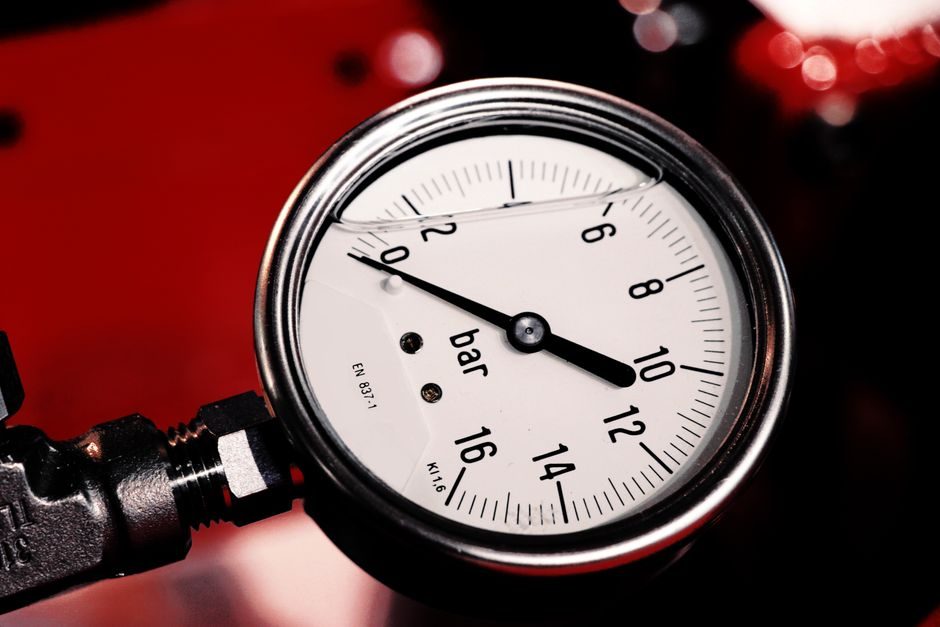
A high-pressure gas-line RFQ must lock nine items on the spec line before price becomes a meaningful number: gas chemistry, working/MOPD pressure, temperature range, area classification, proof-of-design standard, seat leakage class, body and seal material, supply voltage, and the failure-safe position (energised-open vs energised-closed).
Gas service is where the cheapest pilot-operated, NBR-sealed unit on the buyer's shelf will fail in the field. The solenoid valve categories that actually qualify for natural gas, CNG, hydrogen, oxygen, and high-pressure air start at the explosion-proof / high-pressure tier — for example the "high temperature and high pressure solenoid valve" and "explosion-proof solenoid valve" product lines carried by Anshan Solenoid Valve Co. [S1][S3] — and that tier carries the proof-of-design, leakage-rate, and material data a non-hazardous general-purpose unit does not.
Define the Service First: Gas, Pressure, and Temperature
Three numbers are non-negotiable on line one: fluid name, maximum working pressure (often listed as MWP or PS), and minimum/maximum media temperature. A CNG engine injector study, for instance, is built around solenoid-actuated gas injectors whose electromagnetic force, plunger response, and injection quantity are all functions of upstream CNG pressure and ambient/engine temperature [S2]. Treat that study as proof that the supplier has to size the magnetic circuit against the real operating pressure, not the nameplate pressure.
For a typical compressed natural gas header in the 2.5–10 MPa range, suppliers stock high-pressure variants cut from the explosion-proof family and rate them on MOPD (Maximum Operating Pressure Differential) rather than on the body PN alone [S1]. Specify MOPD on the RFQ line, not the body PN — the body might be 600# while MOPD is half of that once the seat material is factored in. PTFE and metal-to-metal seats handle the highest differential; NBR and EPDM seats must be derated, and the derating curve is what the supplier will read before the price list. Reference the seat temperature window the same way: PTFE seats cover roughly -40 to +200 °C service, while NBR is generally capped near +80 °C.
Explosion-Proof, Certification, and Area Classification
Any solenoid valve on a flammable-gas line inside a classified area needs an Ex marking that the inspector can trace to a test certificate — the Anshan AMB nuclear-grade / explosion-proof line, for example, ships to Ex d IIC T5, with 1E/K1-K3 certification grade and 1A seismic rating [S1]. The buyer should write the Ex string into the RFQ (e.g. "Ex d IIC T4 Gb", "Ex ia IIC T6 Ga") and require the certificate number with the quote.
For non-nuclear but hazardous service, the spec still has to land on three things: flameproof enclosure letter (d vs e vs i), gas group (IIA / IIB / IIC), and temperature class (T1–T6). IIC + T6 covers hydrogen-rich streams; IIB + T4 is the common natural-gas default. If the RFQ only says "explosion-proof" with no gas group or temperature class, the supplier will pick the cheapest Ex marking on his catalog page, and that is the start of a requote cycle the first time a plant inspector reads the nameplate. For solenoid valves used in CNG fuel systems, the dynamic behaviour of the coil is also part of the cert chain — open and close response time directly affects the injection quantity profile in the gas injector model [S2].
Body Material, Seal Material, and Leakage Class
Stainless 304/316 is the default for clean, dry natural gas and for CNG; brass is acceptable for instrument air and low-pressure LPG but unacceptable for oxygen, hydrogen, or any stream with trace H2S. Seal selection follows: PTFE for the widest temperature envelope, EPDM for steam-incompatible services, FKM (Viton-class) for hydrocarbon gas at moderate temperature, and metal-to-metal (Stellite on Stellite, or tungsten carbide) for high-temperature or abrasive service. Where the spec line says "high temperature and high pressure" without naming a temperature, the supplier assumes 200 °C, which rules out half the catalog [S1][S3].
Leakage class is the second most-skipped field on a gas RFQ. For shutoff service on a flammable line, Class VI (per the soft-seat industry convention) or a bubble-tight rating is the minimum — anything looser than that is "for water only" in most catalogs. On high-pressure gas, a single Class II leak on a 10 MPa line is a plant evacuation waiting to happen. Write the leakage class on the RFQ line and require the test fluid (air vs water vs helium) to be stated, because a "bubble-tight on air" seat is not the same proof as "bubble-tight on helium".
Voltage, Coil Class, and Duty Cycle
Two items cause the most RFQ noise after Ex rating: coil voltage and insulation class. Specify DC 24 V, AC 110 V, AC 220 V, or AC 24 V explicitly — and on a high-pressure gas line, the impulse-withstand rating of the coil (F-class 155 °C or H-class 180 °C) matters because the coil will be energised against full MOPD for long periods. Continuous-duty coils need a thermal cut-out or a Class H insulation to survive the locked-rotor heating on a stuck plunger; intermittent-duty coils are cheaper but burn out in gas service if the duty is misread.
Voltage tolerance is the second trap: many catalogs publish a "±10%" tolerance, but a long DC cable run on a 24 V coil can drop 4 V before the coil sees it, and the solenoid force falls off with the square of the voltage. Reference the solenoid coil page in your spec folder before locking the voltage: a 24 VDC solenoid pulled to 20 VDC at the coil terminals will not open against full MOPD on a high-pressure gas line. Specify the minimum holding voltage at the coil terminals, not at the cabinet terminals.
Comparison: Direct-Acting vs Pilot-Operated for High-Pressure Gas

Direct-acting solenoid valves move the plunger directly against the seat — they tolerate zero differential pressure, switch faster, and are the safer default on small-orifice gas service (typically up to DN10–DN15 at 1.6 MPa or so, and up to DN25 in the high-pressure tier) [S3]. Pilot-operated valves use the line pressure to assist opening, which gives higher MOPD at larger orifice sizes but requires a minimum pressure differential to function, typically 0.05–0.3 MPa, and they will not open if the upstream pressure is lost on a fail-closed install. For high-pressure gas RFQs, the rule of thumb that the catalog will not tell you is: direct-acting up to 6.4 MPa, pilot-operated above that, and only metal-seated direct-acting above 10 MPa.
For the safety argument, an air solenoid valve that is acceptable for a 1.0 MPa instrument air header is rarely acceptable on a 4.0 MPa natural gas header, even when the body PN is the same — the seat material, response time, and the Ex marking are all different lines in the catalog. Tie the type selection to the failure-safe position: energised-closed (fail-closed) for fuel shutoff, energised-open (fail-open) for vent and purge lines. The solenoid valve encyclopedia entry on the site goes through the same selection logic with worked examples if the RFQ writer is new to the service.
RFQ Line Item Template for High-Pressure Gas Service
A working RFQ line for a high-pressure natural gas shutoff valve reads: "2/2 NC solenoid valve, DN15, MOPD 6.4 MPa, body 316 SS, seat PTFE, fluid natural gas (dry, ≤30 °C, ≤6.0 MPa working), Ex d IIC T4 Gb, IP67, AC 220 V 50 Hz, F-class coil, leakage class VI on air, NACE MR0175 not required, proof-of-design: 100,000 cycles on dry N2 at rated MOPD, certificates: Ex, hydrostatic test, material traceability EN 10204 3.1, response time <50 ms open / <100 ms close." That single paragraph will get a usable quote from three suppliers on the first pass; missing the Ex group, the MOPD, or the cycle-life evidence is what triggers the second round. [S3]
For a high-pressure gas header that also feeds a downstream pressure reducing valve or a safety relief valve, the RFQ writer should add a line saying "valve to be sized for full forward flow, not just shutoff", because the same solenoid valve is often quoted as a shutoff device only and the Cv comes back undersized for the line. Reference the high voltage tester page only if the spec demands a coil dielectric withstand test (typically 1500 V AC for 1 minute) — most gas-service RFQs do not need it, but some nuclear and offshore builds do.
Trackable Signals on the Next RFQ Pass
Two signals are worth watching before the next RFQ cycle. First, the move among Chinese solenoid-valve vendors (e.g. Anshan and the solenoidvalve.cn group) toward an explicit "high-pressure / explosion-proof" catalog tier with on-page MOPD curves and material declarations [S1][S3] — that is the precondition for skipping the second-round clarification on a gas RFQ. Second, the publication of cycle-life and electromagnetic-force data for solenoid gas injectors in CNG service [S2] — this is the kind of evidence that gets a vendor's name added to a qualified-vendor list, and the buyer's RFQ should ask for it on first pass, not after a failure in the field. For buyers who run a parallel electric ball valve cert list for compressed-air headers, the same nine-line structure applies; the difference is in the Ex group and the seat material, not in the RFQ discipline.