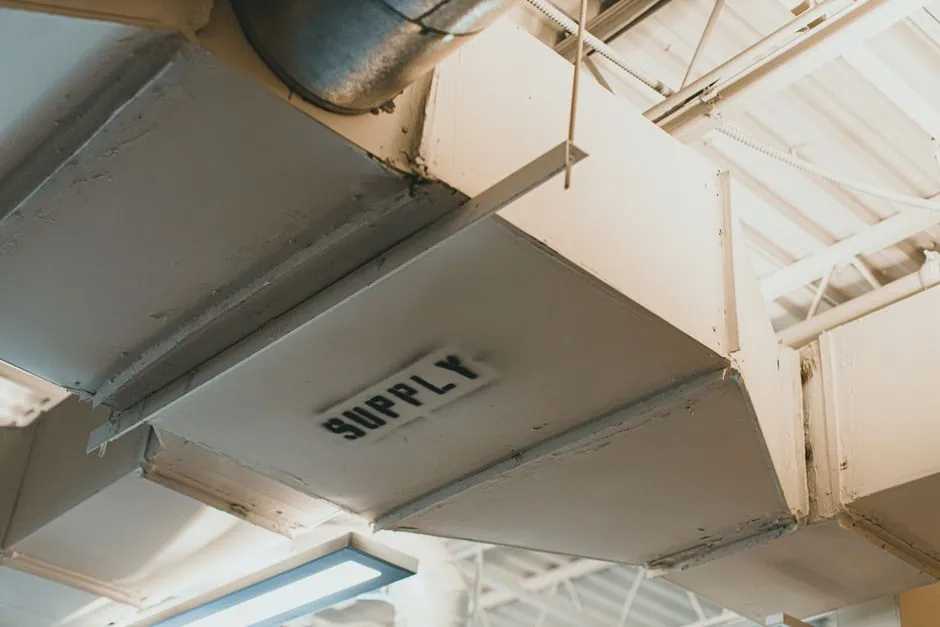
A 20-30A pilot-arc plasma cutter with 120V/240V dual-voltage input is the right power class for 26-16 gauge HVAC ductwork, because the recommended cut for that range sits at 1/8"-3/16" mild steel and a clean-cut tolerance of about 0.2 mm [S1][S2].
Selecting purely on amperage is the most common HVAC-shop mistake; the binding constraints are pilot-arc start (for painted or galvanized duct), duty cycle at the actual working amperage, clean dry air at 4-5 CFM @ 90 PSI, and torch weight under 30 lb for rooftop or ceiling-plenum work [S2][S3].
Ductwork Thickness and the 20-30A Power Class
HVAC sheet steel falls into two thickness bands, and each maps cleanly to a plasma amperage range per current 2025-2026 buying guides [S2][S5]. Residential ductwork in 26-22 gauge (0.4-0.8 mm) sits at the bottom of the 20-30A class with a recommended cut of 1/8" and a maximum severance cut of 1/4"; commercial rectangular duct in 22-16 gauge (0.8-1.5 mm) pushes toward 30A with FineCut-style consumables to keep kerf narrow and HAZ under 1 mm. Buying 20-30% more amperage than your typical stock thickness is the rule of thumb that yields clean dross-free cuts and longer consumable life, so a 30-40A machine is a safer bet than a 20A unit for shops that occasionally walk into 3/16" galvanized [S2]. The reference table in current buying guides pegs 20-30A cutters at a recommended cut of 1/8"-3/16" and a maximum severance cut of 1/4" for sheet metal, auto body, and HVAC use [S2].
Pilot-Arc Start: The HVAC Field-Tested Differentiator
Pilot-arc (high-frequency) start is the single most field-relevant feature for HVAC installers, because ductwork is frequently painted, galvanized, or rusty, and pilot-arc torches can initiate a cut without the tip touching the workpiece [S2][S8]. Contact-start (scratch-start) torches are cheaper but cannot start on expanded metal, perforated angle, or rusty duct strap, which forces the operator to grind a bare starting tab for every cut. For rooftop condensing-unit skids, vintage metal duct with multiple paint layers, or rusty unistrut, pilot-arc alone saves 10-20 seconds per cut and is the reason 30A pilot-arc units dominate HVAC job-site shortlists [S2][S8]. The trade-off is HF electronic interference, which can trip GFCI-protected rooftop circuits, so isolating the receptacle or specifying a non-GFCI breaker for the cutter outlet is standard practice on commercial sites [S3].
Duty Cycle and Air Supply: 35% at 30A, 4-5 CFM Clean
Duty cycle is rated on a 10-minute window at the nameplate amperage, and a 30A cutter at 35% duty cycle will run 3.5 minutes and need 6.5 minutes cooldown at full output, but drops to 60-80% effective duty at 20A working amperage [S2]. For HVAC trim work that rarely runs continuous, 35% is acceptable; for production shops cutting transition pieces all day, spec a 50-60A inverter with 60% duty cycle, since inverter designs typically deliver 35-60% duty in the 10-40 lb weight class versus 20% for transformer designs of equivalent amperage [S2][S3]. Air supply is the silent failure mode: a 20-30A plasma needs 4 CFM @ 90 PSI of clean, dry, oil-free air, which mandates a 20-gallon receiver tank and an inline desiccant or refrigerated dryer to keep moisture out of the consumable stack [S2]. Moisture and oil contamination will clog the torch tip inside 2-4 hours of cutting and is the number one cause of premature consumable failure on HVAC sites [S2].
Input Voltage and Portability: 120V vs 240V
Single-phase 220-240V at 50-60 Hz is the standard for plasma cutters above 50-60A output and is required for any 240V dedicated circuit on HVAC commercial projects, while 120V units cap at 12-40A with reduced duty cycle and slower cut speed [S2][S3]. Dual-voltage (120V/240V) auto-link machines are the practical answer for HVAC crews that work both residential (120V dryer outlet) and light commercial (240V disconnect): a 50A/30A dual-voltage unit delivers full 50A on a 240V receptacle and steps down to 30A on a 120V outlet, trading 40% cut speed for portability [S2]. For mixed-shop inventory, dual-voltage is the lowest-risk choice; for dedicated shop use, a 240V-only 50-60A inverter is cheaper per amp and lighter on the wall circuit. Voltage compatibility is the most commercially critical specification variable for export markets and the most common source of warranty failures in incorrectly specified equipment, so confirm the input rating before placing cross-border HVAC orders [S3].
Comparison: 20-30A vs 40-50A vs 60-80A Plasma for HVAC

Spec the cutter against these four decision gates before buying, with HVAC ductwork performance as the benchmark: (1) 20-30A units, 1/8"-3/16" recommended cut, 1/4" maximum severance, 4 CFM air, 120V or 240V, 15-30 lb weight, the right pick for residential and light commercial ductwork with intermittent cuts; (2) 40-50A units, 1/4"-3/8" recommended cut, 1/2" maximum, 5 CFM air, 240V-only, 30-60 lb weight, the right pick for production shops cutting 1/4" duct plus light structural; (3) 60-80A units, 3/8"-1/2" recommended cut, 3/4" maximum, 6 CFM air, 240V-only, 60-100 lb weight, overkill for ductwork but the right pick for shops that also do structural steel [S2][S5]. For pure HVAC work above 30A, you pay for amperage and compressor capacity you rarely use; below 25A, you give up severance margin on 1/4" plenum box stock [S2].
Hypertherm MAX200, Powermax30 XP, and the Reference Benchmarks
Two reference models anchor the 2026 HVAC discussion. The Hypertherm MAX200 is a heavy-duty 100% duty cycle unit with 2-inch (50 mm) cutting capacity, designed for manual and mechanized fabrication but well above HVAC needs at roughly 100A class [S1]. The Hypertherm Powermax30 XP with FineCut consumables is the 30A class benchmark for HVAC ductwork, where the 30A output is the right power level for thin duct without the excessive HAZ of higher-amperage units [S7]. For 3/4" structural cuts, the Hypertherm Viper 65 SYNC delivers clean cuts at 20 IPM on up to 3/4" steel, which is the cited example for the boundary between clean-cut and dross territory in 2026 specification literature [S1]. Industry guidance also flags inverter weight at 10-40 lb for portable modern units versus 80-200 lb for legacy transformer designs, so any HVAC unit above 40 lb should be reviewed for job-site mobility [S2][S3].
Galvanized Duct and Cut Quality: HAZ, Dross, and Corrosion
Galvanized steel is the HVAC default, and plasma cutting it raises three specific cut-quality issues that drive specification. First, the heat-affected zone on thin gauge must stay narrow to avoid burning off the zinc coating more than 1-2 mm back from the cut edge, which means using FineCut consumables and 30A rather than 50A [S7][S8]. Second, dross on the lower edge of the cut must be wire-brushed off before the duct is sealed, because loose dross traps moisture against the zinc and accelerates white rust in conditioned-air streams; high-quality consumables and staying within the clean-cut rating limit are the engineering controls [S1]. Third, plasma's 15,000-25,000°C arc and fast travel speed mean the HAZ is small enough that stainless components cut for specialty HVAC (cleanroom or food-grade duct) do not lose corrosion resistance from chromium-carbide precipitation, provided travel speed stays high [S1][S3]. Cross-reference the broader plasma cutter reference for arc physics, and consider that HVAC installation often shares the same 120V/240V inverter platform as a demolition crew's plasma rig, where the Plasma Cutter Selection for Demolition: Spec Gates, Air, Duty Cycle article covers heavier 60-100A spec work for structural teardown. For thin-gauge job-site work, the Plasma Cutter Spec Map for Road Maintenance Fleets article covers portable 120V selection under similar duty-cycle and air-supply constraints.
When NOT to Spec a Plasma Cutter for HVAC
Plasma is the wrong tool for three HVAC-adjacent scenarios: cutting non-conductive fiberglass ductboard (use a utility knife or specialty cutter), cutting less than 26 gauge (0.4 mm) where tin-snips or a nibbler are faster and produce no HAZ, and any job requiring ASME Section IX weld procedure qualification cuts on pressure-rated stainless duct, where a bandsaw or waterjet preserves certification traceability [S1][S3]. For a fleet running mixed HVAC, demolition, and road work, parallel-spec a heavier 60-80A unit for non-HVAC jobs and keep the 30A pilot-arc unit dedicated to ductwork, because using a high-amperage cutter on 26-gauge just widens the kerf, increases HAZ, and burns through FineCut consumables twice as fast [S2][S7]. Confirm input voltage, CFM, and pilot-arc start type against the job-site power and air supply before purchase; that is the engineering gate that decides whether the 20-30A HVAC class is the right answer, or whether the application has drifted into oxy-fuel cutter or concrete groove cutter territory.
Trackable signals for the next 90 days: 2026 Hypertherm price-list updates for the Powermax30 XP and Powermax45 XP, and any CE/UL re-certification notices on 120V/240V dual-voltage inverters exported to EU HVAC markets.