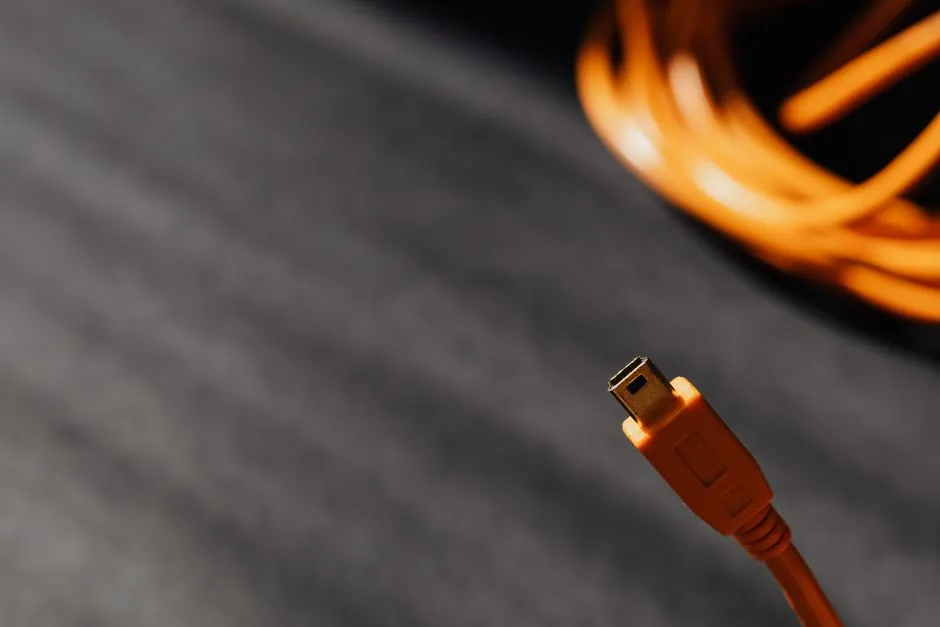
A combined shielded data-and-power hybrid cable typically packages a 22 AWG stranded data pair with 2x18 AWG power conductors inside a double-shielded (SF/TP) TPU jacket, delivering 110 ohm characteristic impedance and power over the same continuous run [S7].
The construction is purpose-built to replace two-to-four discrete cables in machine vision, AGV, LED daisy-chain, and Single Pair Ethernet (SPE) installations, with typical use cases specifying 10 m to 15 m fixed-routing drops [S3][S7]. Phoenix Contact lists hybrid cable assemblies alongside its device-connection product family for industrial communication and signal marshalling [S4].
Core Construction: What Sits Inside the Jacket
A hybrid data+power cable integrates at least three functional layers inside a single outer jacket: stranded copper power conductors sized to the load, one or more twisted data pairs at controlled impedance, and a shielding system that isolates the data pair from the power conductor's switching noise [S1][S5]. L-com's TSPEH01 series specifies one 22 AWG stranded data pair plus 2x18 AWG power cores, double-shielded with an overall foil + braid (SF/TP) screen, in a green TPU jacket rated for industrial flexing [S7].
Sommer Cable's bulk hybrid range uses a pairwise stranded data line at 110 ohm wave impedance, individually shielded, with fine tinned 0.10 mm single wires to guarantee high bending cycles for continuous-flex applications such as wiring duct raceways inside moving machinery [S6]. Habia's hybrid cable product line similarly merges power, signal, data, and fibre in one custom jacket, explicitly describing the shielding as the element that lets power and data coexist reliably [S1]. For installations where the cable must share a conduit with motor feeders, the SF/TP foil+braid combination is the de-facto baseline for keeping common-mode noise off the data pair [S5][S7].
Single Pair Ethernet (SPE) Hybrid: The 2025-2026 Default
Single Pair Ethernet has become the dominant data-pair topology in 2025-2026 hybrid bulk cable, because SPE simultaneously carries 10 Mbps to 1 Gbps data and DC power (the SPoE / PoDL profile) over a single twisted pair, eliminating one of the two pairs a traditional 100BASE-TX design would consume [S7]. L-com's TSPEH01 hybrid bulk cable is built explicitly around this architecture: 22 AWG data pair, 2x18 AWG power cores, SF/TP shielding, TPU jacket, supplied in 10 m reels for industrial Ethernet drops [S7].
The win is one cable replacing three: data, low-voltage power, and a spare/return, which is exactly the topology that engineers were forced to hand-build in 2017 using a Belden 1502R MIDI cable plus a separate Cat-5 run [S3]. The same hybrid drop is now offered with matched M12 / M8 connector systems from Phoenix Contact so the entire link, from device port to control cabinet, is a single pre-engineered assembly rather than a field mix of plugs [S4].
Conductor Sizing, Impedance, and Ampacity Trade-offs
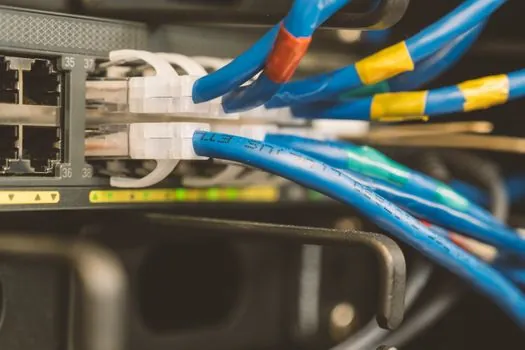
The standard data-pair impedance across hybrid designs is 110 ohm, matching the SPE / RS-485 / twisted-pair industrial Ethernet requirements [S6][S7]. For hybrid runs, the data pair is typically 22 AWG, while the power cores are commonly 18 AWG (approximately 0.75 mm²) [S3][S7].
Belden's 1529A and 9553 triple twisted-pair 18 AWG cables were the historical workaround when no purpose-built hybrid existed, but bonding two pairs in parallel for power was a compromise: thinner data conductors and a shared screen doubling as a return path, which is acceptable for short runs but not for noisy industrial sites [S3]. The three main material/construction options engineers compare on are: (1) PVC jacket, lowest cost, limited flex life; (2) TPU jacket, oil- and abrasion-resistant, suited to drag-chain and machine-builder use, the default on L-com's SPE hybrid [S7]; (3) PUR or TPE jackets with foil+braid SF/TP shielding, used in subsea and broadcast hybrid cables where bending cycles exceed several million [S6][S8].
Shielding Schemes: From Drain Wire to SF/TP Double Screen
The shielding choice is what separates a real industrial hybrid cable from a bundled multi-core: a common overall braid is the minimum to keep low-frequency magnetic interference off the data pair, while a foil+braid double screen (SF/TP) is needed when the cable runs alongside VFD outputs or motor leads, common in retrofitting lamps and light fittings circuits on machine lines [S5][S7].
For subsea and broadcast variants, the data pair is individually shielded before the overall jacket is applied, a construction Habia and Macartney (referenced in the EEVblog thread as a 110 ohm subsea hybrid) use to push the hybrid concept into 110 ohm impedance-controlled runs with sub-millisecond timing budgets [S1][S3]. When the application is broadcast, touring, or live sound, the hybrid shifts to combined audio, data, and power in one bulk cable, with the shield scheme designed to reject 50/60 Hz mains hum induced into long parallel mic runs [S8]. The practical rule, drawn from hybrid-cable selection guides, is to match the shield to the worst noise source in the duct: foil alone for ESD, braid alone for low-frequency magnetic fields, SF/TP for both [S5].
Where Hybrid Cables Win, and Where They Don't
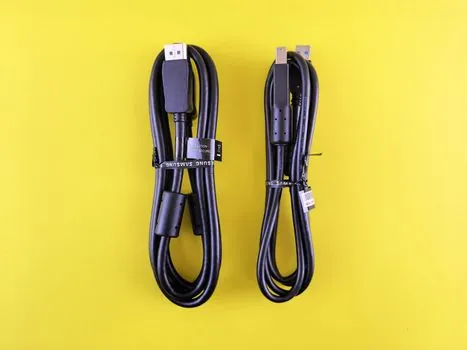
Hybrid cables pay off when the run is fixed, the devices are daisy-chained (LED dimmers, AGV sensor heads, machine-vision cameras), and tray/conduit space is at a premium: one drop instead of three, with a single connector pair at each end [S2][S4][S5]. They are a poor fit when the data and power must follow different code paths (for example, where the data pair must be Class II low-voltage and the power must be a separately fused mains circuit), or when the application requires hot-swapping only the data link without disturbing the power path [S4].
A second constraint is bend radius: the same TPU jacket that gives the cable its oil resistance also raises the minimum bend radius to roughly 6x to 8x the outer diameter, which can rule out hybrids in tight retrofit paths where two discrete small-diameter cables would have routed cleanly [S7]. Connectorisation is the third real cost, because a hybrid drop needs a hybrid connector (M12 hybrid, or a custom overmould), and the field-termination tooling is more expensive than a standard RJ45 or 2-pin power plug [S4][S5].
Selection Checklist for Spec Writing
A spec for a combined data+power hybrid drop should include data-pair impedance of 110 ohm nominal for SPE / RS-485 and a data-pair AWG of 22 AWG [S6][S7]. It should also call out the connector family (M12 hybrid, M8 hybrid, or a custom overmould) and the matched receptacle on the device side, because a hybrid cable with mismatched connectors forces a field splice that negates the install-time savings [S4][S5].
Engineers specifying shielded cable for combined data+power drops should also confirm the data logger or endpoint device the cable lands on, since hybrid drops are commonly used to feed remote I/O blocks whose data logger input expects a specific 110 ohm termination rather than the 100 ohm of a generic Ethernet PHY [S5].
Two signals to watch over the next procurement cycle: (1) more M12-hybrid and M12 SPE connector families moving into Phoenix Contact's standard stock, reducing custom-cable minimum order quantities; (2) bulk hybrid cables in 100 m and 300 m reels becoming default SKUs at the major industrial distributors, which would push the per-metre price below the current custom-run threshold and shift hybrid from a project-cable to a stock item. For broader project context, the same fixed-installation logic that drives LED dimmer daisy-chains is also reshaping lighting equipment and electric lamps distribution layouts in industrial plants.
See also our earlier report, Image-Based Code Readers vs Laser Scanners for DPM Marks: Spec Decision Map.