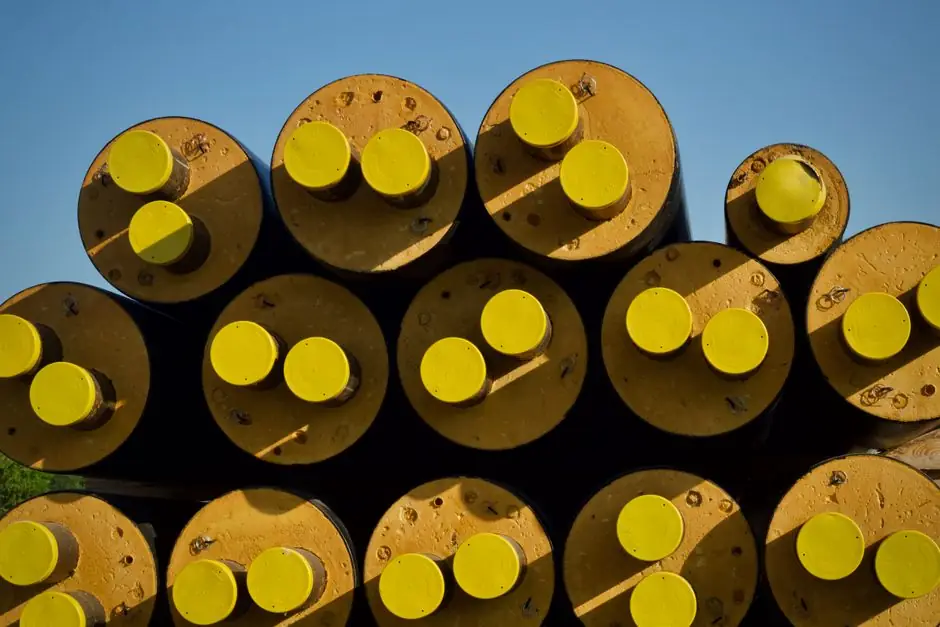
Hydraulic cylinders are split first by actuation: single-acting units pressurise one chamber only and rely on a spring, gravity, or external load for return, while double-acting units port fluid to both head and rod ends for force in both directions [S1][S2]. A second axis cuts by body style, with tie-rod, welded (mill-type), telescopic, and ram constructions dominating industrial and mobile-equipment catalogues [S9].
This classification scheme matters because the same bore and stroke will deliver different force, pressure tolerance, serviceability, and footprint depending on which family is selected [S4]. For a working overview of the underlying fluid-power principle, see the hydraulic actuator and hydraulic cylinder reference entries, and the broader hydraulic system context.
Actuation: Single-Acting vs Double-Acting
Single-acting cylinders drive the rod in one direction only; the return stroke is handled by an internal spring, by the suspended load, or by gravity [S1]. Typical examples include hydraulic jacks, spring-extend workholding clamps, and dump-body lifts where the body weight provides return force [S3]. The design is mechanically simple, with a single port and small housing, but thrust is reduced by the opposing spring load and stroke consistency degrades as the spring wears [S1].
Double-acting cylinders port fluid to both ends, so the piston develops force on extension and retraction; the rod-side annulus has less effective area than the head side, which is why differential and synchronous variants are specified separately [S3]. Pressurising the head end extends the rod, pressurising the rod end retracts it, and the design supports faster cycling, longer strokes, and bidirectional control at the cost of extra valving and piping [S2]. Pressures above 3,000 psi are routine in welded double-acting mobile cylinders [S2].
Body Style: Tie-Rod, Welded, Telescopic, Ram
Tie-rod cylinders clamp the end caps to the barrel with high-strength threaded steel tie-rods running the full length of the tube, typically four or more, and rely on static seals at the barrel-to-cap interface [S2]. They disassemble easily for seal and rod service, which lowers lifetime cost, and they dominate medium- and light-duty factory and agricultural circuits, including rephasing tie-rod designs that synchronise independent loads in series plumbing [S2][S3].
Welded (mill-type) cylinders fuse the barrel to the end caps by welding, eliminate the tie-rods, and tolerate higher pressures, often above 5,000 psi, in a more compact envelope [S2]. The welded construction resists tie-rod stretch on long strokes and is the default on mobile equipment where space, shock loading, and weather exposure combine, making them common on excavators, bulldozers, and mining machinery [S2][S5].
Telescopic cylinders nest two to five stages of progressively smaller tubes inside one another, and a typical collapsed length is 20% to 40% of the extended length, giving a long stroke from a short stowed package [S2]. They are predominantly single-acting, commonly used in dump trucks, refuse vehicles, and reach booms where the dump body or load provides the return force [S2][S5].
Ram (plunger) cylinders omit the piston and use a large-diameter rod as the sealing element; they are single-acting and well suited to short, high-load push applications such as presses and lifting rams [S1].
Comparison Matrix: Cylinder Family vs Selection Criteria
Across the four main families, the decision axes that matter most in a typical industrial spec are pressure rating, serviceability, stroke length for a given envelope, and force direction [S2][S3][S4].
On pressure, welded bodies lead at greater than 5,000 psi, tie-rod bodies cap lower and prefer the medium-duty window, telescopic stages drop working pressure as the number of stages rises, and rams are application-specific [S2]. On serviceability, tie-rod wins because end caps unbolt for seal access; welded bodies are effectively non-disassemblable and must be replaced as a unit [S2][S3]. On stroke in a given envelope, telescopic cylinders are unmatched thanks to the 20% to 40% collapsed-to-extended ratio [S2]. On force direction, only double-acting designs (across all body styles) deliver controlled push and pull, while single-acting variants accept a passive return mechanism [S1][S2].
In practice, mobile heavy equipment defaults to welded double-acting for boom, arm, and bucket functions, dump trucks default to single-acting telescopic, factory presses and material handling default to tie-rod double-acting, and short-stroke high-tonnage lifts default to single-acting rams [S3][S5].
Spec Components, Mounting, and Operating Envelope
Every hydraulic cylinder in this classification system shares the same core parts: a steel barrel, a piston, a hard-chrome-plated piston rod to resist pitting and scoring, end caps, and a seal/wiper stack sized to system pressure and fluid cleanliness [S3]. The wall thickness of the tube, the end-cap material, the rod diameter, and the choice of static versus dynamic seals are the variables that move a design from light to heavy duty [S3].
Mounting style is a separate selection layer that interacts with body style: tie-rod and welded bodies are commonly supplied with cross-tube, clevis, trunnion, or flange mounts, while telescopic dump cylinders typically use a single-end trunnion or pin-eye that reacts the long extension moment [S3]. For a deeper look at how the cylinder sits inside a larger machine, the construction machinery and equipment reference covers typical mounting and load cases on excavators, loaders, and dump trucks.
Application Domains and Sourcing Standards
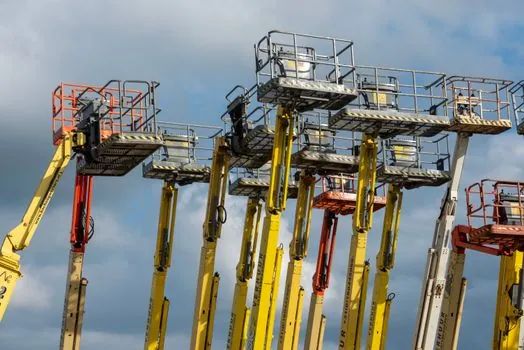
Hydraulic cylinders are specified across aerospace landing gear, agricultural tractors, civil-engineering excavators and bulldozers, petroleum and mining equipment, power-generation water-gate actuators, and highway maintenance vehicles, with each domain driving a different balance of pressure, stroke, and environmental sealing [S4]. In mobile and outdoor service, welded double-acting designs dominate because of their shock tolerance and weather resistance, while indoor factory duty cycles lean toward tie-rod for ease of maintenance [S2][S4].
For sourcing, engineers typically spec against ISO 6020 (single-rod cylinders), ISO 6022 (double-rod cylinders), and manufacturer-specific tie-rod and welded catalogues, with pressure ratings expressed in psi or bar, bore in millimetres or inches, and rod diameter in millimetres or inches [S2]. When a cylinder is part of a larger mobile machine, system-level design gates such as pump alignment, suction line sizing, and drive coupling, covered in the hydraulic pump installation field guide, interact with cylinder selection.
Trackable signals for the next spec revision: published updates to ISO 6020-2 dimensional tolerances, OEM catalogue releases for 7,000+ psi welded mobile cylinders, and any tier-1 manufacturer expanding telescopic stage count beyond the current five-stage limit. For related selection logic on adjacent industrial equipment, see the industrial gas selection guide and the oxy-fuel cutting torch spec map.