
Hydraulic valves control flow, direction, and pressure of hydraulic fluid in circuits that commonly run from 200 bar up to 700 bar or higher, with pressure ratings, leakage class, and filtration tolerance setting the real-world operating envelope [S1].
Engineers who pick the cheapest throttling valve for a 350 bar press loop, or who skip a 10 micron filter in front of a proportional spool, learn the failure modes the same week the line starts: drift, sticktion, and external leakage. A 2026-era spec map sorts those failure modes by valve class, mount type, and control signal before the BOM is frozen [S1][S2].
What a Hydraulic Valve Actually Does in the Circuit
A hydraulic valve is the active element that changes flow state in a hydraulic circuit, and the term covers three functional classes: directional control (check valves, solenoid directional valves), pressure control (relief, sequence, pressure-reducing), and flow control (throttle, speed-regulating, diverter) [S2].
Structurally the family splits into spool, rotary, seat (ball and poppet), jet-pipe, and cartridge types; spool valves dominate mobile equipment, while poppet and seat valves are preferred for zero-leakage holding circuits [S2]. On a press, injection-molding machine, or excavator boom, the same circuit usually combines at least one of each class, with the directional valve setting path, the pressure valve capping peak load, and the flow valve setting actuator speed [S1][S2].
Decision Criteria: Pressure, Leakage, Response, Filtration
Specifying a hydraulic valve in 2026 boils down to four numbers and one tolerance band: maximum working pressure, internal leakage class (often expressed in drops per minute or cc/min at rated pressure), step response in milliseconds, ISO 4406 / NAS 1638 fluid cleanliness target, and viscosity range across the operating temperature window [S1].
A fixed-orifice throttle valve is cheap and rugged, but its flow rate drifts with viscosity, so cold-start at 0 cSt versus hot-running at 40 cSt can shift the meter curve 15 to 25 percent in field data, which is why most modern circuits use pressure-compensated flow control instead [S1]. A pressure-compensated unit holds flow within roughly 3 to 5 percent across load swings once the compensator spring is properly sized, at the cost of higher unit price and a 0.5 to 1.0 bar higher pressure drop [S1].
Filtration is non-negotiable for proportional and servo valves: contamination above ISO 4406 20/18/15 (roughly NAS 9) is the dominant cause of spool sticktion in field returns, while NAS 6 or cleaner is the typical target on proportional circuits [S5].
Comparison Map: Valve Classes Against Selection Criteria
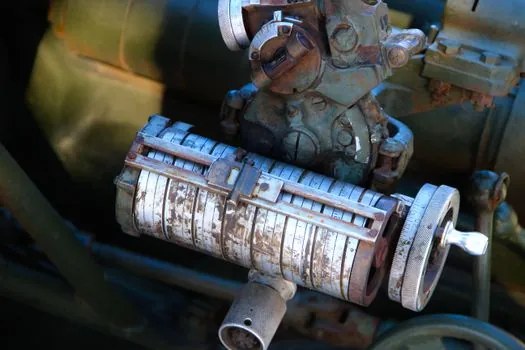
Sorting the main valve families against the same four criteria makes the trade-off readable in one pass. [S3]
Directional control valves (solenoid or pilot-operated) score high on response (15 to 30 ms for direct-acting solenoid) and low on cost, but they do not regulate flow or pressure on their own, so a complete circuit always needs a paired pressure and flow element [S2].
Pressure control valves (relief, sequence, pressure-reducing) handle system peak pressure, typically set 10 to 15 percent above maximum working pressure to prevent chatter, and they are the cheapest insurance against hose burst events [S1][S2].
Flow control valves in their pressure-compensated form are the workhorse for stable actuator speed, with the trade-off being a higher pressure drop than a plain throttle, which costs roughly 3 to 8 percent of pump power at full load in typical mobile circuits [S1].
Proportional valves add electrical input (usually 0 to 10 V, 4 to 20 mA, or CAN-based fieldbus) to vary flow or pressure continuously rather than just open and close, and they typically cost 3 to 8 times a comparable on-off directional valve, with the payback coming from cycle-time reduction and energy savings in injection-molding, CNC, and robotics duty cycles [S5].
Who It Is For, and Who Should Walk Away
Hydraulic valves are the right call where power density matters more than cleanliness or noise: presses, injection-molding clamps, mobile equipment booms, machine tools, ship steering, and heavy-lift actuators above roughly 5 kW continuous, where the same envelope delivers hundreds of kW of controlled mechanical power [S3][S4].
They are the wrong call where the load is light, the duty cycle is intermittent, the environment cannot tolerate any leak, or the fluid is not a sealed-loop mineral or synthetic oil. Residential and commercial supply piping, food-zone washdown, and clean-room processes are the typical no-go zones, because hydraulic fluid is messy, can be caustic to paint and some seals, and any external leak in a hot area can catch fire [S3][S4].
Advantages Documented Across Manufacturers
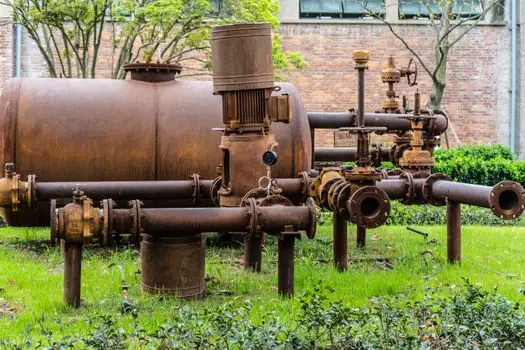
Across the four main sources, the recurring advantages are consistent and concrete: simple and compact structure that fits into tight envelope constraints, smooth and reliable transmission because hydraulic fluid is nearly incompressible, large output torque from a small actuator footprint, adjustable output torque via the constant-pressure relief valve, convenient speed regulation through throttling or pressure compensation, and continued operation through a power failure if a hydraulic accumulator is fitted, which matters for long-distance pipeline emergency shut-off valves [S3].
For proportional valves specifically, the same pattern adds four more: precise control of flow and pressure proportional to an electrical input, smooth acceleration and deceleration that removes shock loads, native integration with PLC and electronic controllers, and real energy savings by trimming flow and pressure to the actual load rather than the worst-case peak [S5].
Disadvantages and Field Failure Modes
The downside list is also consistent across sources and it maps directly to specification discipline. Hydraulic systems are prone to temperature swings because oil viscosity changes fast, cold-start at 0 cSt versus hot-running at 50 cSt shifts response and leakage in opposite directions, and viscosity-index improvers only blunt the effect [S3][S4].
Leakage is the headline disadvantage: external leaks are messy, the fluid is often caustic to paint and some seal materials, hot leaks can ignite, and a burst line is a safety event, so pipe, subplate, and sectional valve selection all turn on leak path count, not on sticker price [S2][S3][S4].
Hydraulic valves are not the right tool for signal amplification, memorization, or logical judgment, because the valve is a power element, not a logic element, and any computation belongs upstream in the PLC or electronic controller [S3].
For proportional valves the three added failure modes are higher unit cost, complex setup that needs trained commissioning, and high sensitivity to contamination, which forces high-quality filtration (typically 10 micron absolute or better with ISO 4406 18/16/13 or cleaner targets) and a regular fluid sampling program [S5].
Mounting and Integration Choices That Drive the Trade-Off
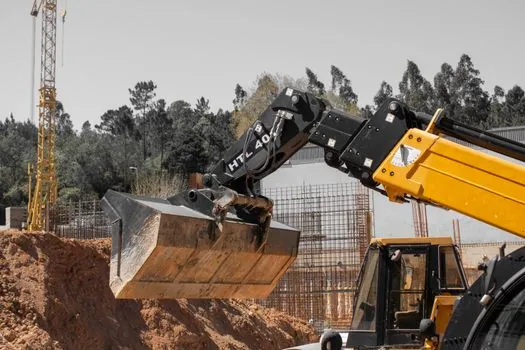
How the valve mounts into the circuit is half the spec: pipe-mounted valves are the only fully independent assembly, easy to swap, but they scatter across the panel and grow with circuit complexity, so leakage paths and assembly time both rise [S2].
Sectional valves stack a shared P and T port across multiple working sections, which keeps the envelope compact and the plumbing tidy, but replacing one section usually means breaking the whole bank, and inter-section leakage becomes a chronic service item on machines older than 10 years [S2].
Subplate valves move the port pattern to a base plate, so the valve body can be swapped without draining the line, and sandwich valves stack between the subplate and the directional element to add functions (check, pressure relief, throttle) without extra pipe runs, which is the dominant pattern on modern 350 bar mobile and industrial circuits [S2].
Cartridge (threaded) valves screw into a manifold block and deliver the smallest envelope and the lowest leak risk at the cost of requiring a custom-machined cavity for each function, which is why they dominate high-flow mobile and aerospace hydraulic systems above roughly 250 bar [S2].
Selection Flow and Standards Anchors
A clean 2026 selection flow starts with the actuator duty: linear or rotary, max force or torque, max speed, and the duty cycle, then moves to the supply (fixed displacement pump, load-sensing pump, or servo pump) because that drives whether a pressure-compensated or proportional flow valve is needed [S1][S2].
Filter selection is set by the most contamination-sensitive element in the circuit, not by the cheapest element, so a circuit mixing a proportional valve with a fixed-orifice throttle still has to meet the proportional valve's NAS 6 / ISO 4406 18/16/13 target, and the filter Beta ratio at the target particle size should be documented on the data sheet [S5].
Relevant standards and references for any hydraulic valve spec include ISO 4406 for fluid cleanliness, ISO 4413 for hydraulic system general rules, ISO 10770 for hydraulic cylinders and test methods, and NFPA T2.6.1 or equivalent for pressure and flow ratings, with manufacturer test reports for leakage class, response time, and pressure drop usually supplied per these methods [S1][S2].
Real Use Cases and Field Data Points
On injection-molding machines, proportional directional and flow valves cut clamp movement time by 10 to 20 percent versus on-off valves, which at 200 to 500 mm/s clamp speed and 1 to 2 million cycles per year is a real OEE line, not a marketing number [S5].
On excavator booms and other mobile construction machinery, load-sensing systems with pressure-compensated directional valves keep implement speed roughly constant regardless of load swing, and the hydraulic actuator upstream of the valve benefits directly from the held flow rate, while the construction machinery and equipment downstream sees predictable cycle times [S1][S5].
On machine tools and CNC equipment, proportional pressure and flow valves enable soft-start and soft-stop on hydraulic axes, which removes the pressure spikes that fatigue hoses and seals, and the filter upstream is typically specified at 10 micron absolute with a Beta 200 rating to keep the proportional stage clean [S5].
For related process and component context, Hydraulic Pump Types and Classifications: A 2026 Spec Map covers the pump side of the circuit that the valve controls, and Hydraulic Valve Installation: A 2026 Spec-First Field Guide covers the field side, from torque values on subplate bolts to flush procedures before first energization, which is where most contamination-driven warranty claims actually start.
Limitations Engineers Should Encode in the Spec
Hydraulic valves do not tolerate dirty fluid, do not tolerate wide temperature swings without a viscosity-controlled reservoir and heater-cooler circuit, and do not tolerate external leak paths in zones where ignition, contamination, or aesthetics matter, which means the spec must call out filtration, temperature control, and sealing class (NBR, FKM, EPDM, or PTFE) up front, not as a footnote [S3][S4][S5].
Proportional and servo valves also do not tolerate electrical noise, signal loss, or poor grounding, so the spec should call out the input signal type (0 to 10 V, 4 to 20 mA, CANopen, or EtherCAT), the dither frequency, and the EMC environment, with failure mode behavior (center position, last position, or safe de-energize) declared explicitly in the I&M documentation [S5].
Trackable signals worth watching over the next 6 to 12 months: OEM datasheets publishing ISO 4406 cleanliness targets alongside response time curves rather than only nominal flow, more load-sensing pump plus proportional valve bundles quoted as a single efficiency number, and revised fluid sampling programs that move from quarterly to condition-based, all of which would shift the cost-of-ownership math on the proportional-versus-on-off decision.