The dominant unplanned-downtime category for aerial work truck fleets serving packaging warehouses is hydraulic: hose rupture, cylinder seal bypass, defective load-holding valves, and pump wear are repeatedly identified as the leading root causes, ahead of electrical or structural faults [S2][S3][S6].
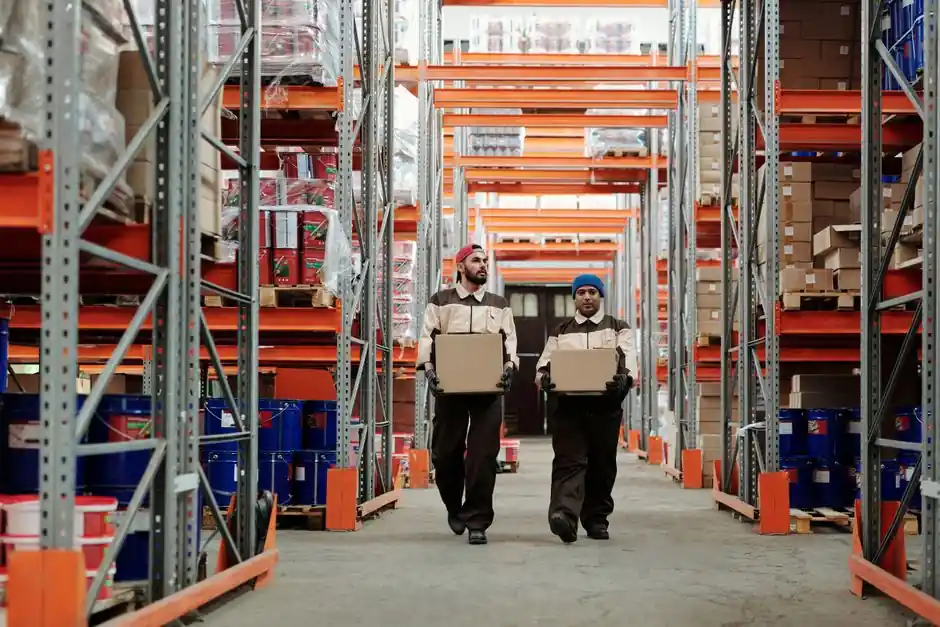
A packaging-warehouse environment adds duty-cycle stress that is unusual for a utility bucket truck: long idle periods in heated aisles, frequent short lifts to rack-top lighting or sprinklers, and constant exposure to corrugated dust, stretch-wrap film offcuts, and pallet-deck debris [S1][S2].
How the boom actually drops: pressure-loss taxonomy
Sudden loss of pressure from a ruptured high-pressure hose or a failed crimp fitting is the single most documented failure signature on bucket-truck booms, producing rapid descent when the lift cylinder is unloaded [S3]. A second signature is internal bypass inside the lift cylinder, where worn rod seals or scored chrome allow fluid to leak across the piston; the boom drifts down under load rather than free-falling, which is often misread as "settling" until drift exceeds 50–100 mm per minute [S2][S6].
A third signature is the load-holding or counterbalance valve that fails to reseat after a shock event. Without a redundant pilot-operated check pair, a single stuck-open valve converts a controlled lowering into a free-fall on the next lift cycle [S3][S5]. On truck-mounted booms, the emergency-pump check valve carries the same role: it isolates the backup pump so backflow from the cylinder does not deadhead the motor during a controlled emergency lowering [S5].
Why packaging warehouses amplify the wear
Packaging lines generate a specific contamination profile: cellulose fibre from corrugated board, PE/PET film fragments from pallet wrap, and stray metal staples from box erecting. These particles migrate into rod-wiper areas of lift cylinders and into check-valve seats, accelerating both seal wear and valve-seat scoring [S1][S2].
Heat cycling matters as much as contamination. Sprinkler-head and high-bay luminaire maintenance typically happens in summer, after the roof deck has been absorbing solar load all day, so hydraulic fluid routinely operates above 80 °C in unventilated mezzanines. ISO 4406 solid-contamination targets tighten by one class for every 10 °C above 60 °C, so a fluid rated at 18/16/13 at room temperature is effectively 19/17/14 on a hot warehouse roof, with proportional life loss for pumps and servo valves [S2].
Selection criteria: redundancy over raw lift capacity
For warehouse duty, the controlling specification is not platform height or load chart; it is the redundancy of the load-holding path. A boom specified with a single pilot-operated check per cylinder is acceptable for occasional use but is the wrong choice when the unit runs two or more shifts a week on rack work [S3][S5].
Four decision criteria line the options up cleanly: (1) load-holding redundancy (dual pilot-operated checks plus a counterbalance valve versus a single check); (2) emergency-power source (12/24 V DC electric backup pump versus manual hand pump versus gravity-only); (3) cylinder serviceability (field-replaceable cartridge-style seal kit versus full-rod reseal); (4) hydraulic fluid cleanliness target (ISO 4406 18/16/13 baseline versus 17/15/12 for high-cycle duty) [S2][S5][S6]. A truck specced with dual checks, DC electric backup, cartridge seals, and a 17/15/12 fluid target will cost more at purchase but typically halves boom-related incident frequency on packaging-warehouse duty [S2][S3].
Inspection cadence and post-repair verification
A practical inspection cadence for a packaging-warehouse aerial unit is pre-shift visual (hoses, rods, fluid level), weekly rod-wiper and fitting check, monthly fluid sampling with particle count and viscosity, and quarterly valve-stem leakage measurement under deadhead [S2][S5]. Hose routing should be reviewed against chafing points at every quarterly service; abrasion at a single bend radius is the most common precursor to a sudden-rupture event on warehouse booms [S3].
Post-repair verification is the most underused step in this market: a replaced hose or resealed cylinder should be cycled under load three to five times, with the boom held at full extension for a timed drift test, before the unit returns to service. Industry troubleshooting guides note that "fix it and forget it" is the single largest contributor to repeat-failure patterns on bucket trucks [S2][S4]. The same telemetry-to-action discipline that mining fleets use on haul-truck drivelines applies, scaled down: integrate the platform's hour-meter, fault-code log, and any pressure transducer data, and trend them against fluid-sample results [S4].
Failure modes that are not what they look like
Operators frequently blame "weak hydraulics" for slow booms, when the real fault is contaminated fluid starving the pump inlet, or a partially blocked return-line filter pushing the system into bypass mode [S2]. Conversely, an intermittent electrical fault (a corroded limit switch on the upper boom, or a failing angle sensor) can mimic a hydraulic drift symptom because the controller commands a corrective lift that the operator perceives as drift [S2][S6].
Tip-over incidents in narrow warehouse aisles are rarely pure hydraulic events: the chain usually starts with an undersized outrigger pad on an uneven concrete joint, compounded by an off-centre load on the platform, and only then surfaces a marginal counterbalance valve. Treating the valve as the root cause and ignoring the ground-condition and load-placement factors is a classic outcome-bias error in warehouse aerial work platform root-cause analysis [S1][S6].
Standards, sourcing, and what to verify before signing a PO
For warehouse duty, require evidence of compliance with the relevant regional mobile-elevating-work-platform standard (ANSI A92.20 in North America, EN 280 in Europe) on every unit, and confirm the load-holding valve pair is dual-redundant rather than single. Insist on a written fluid-cleanliness target in the OEM service manual, and on traceability of seal-kit part numbers, because field-replaceable cartridge kits are a meaningful spec line, not an accessory [S2][S5].
Two trackable signals to watch over the next two quarters: tighter hydraulic-fluid cleanliness clauses appearing in OEM warranty terms, and growing adoption of onboard pressure-transducer logging on mid-range bucket trucks, mirroring what mining haul fleets have used for several years on driveline health [S4][S8]. Fleet buyers should also read the broader procurement patterns in adjacent materials-handling categories, such as the IBC tank selection criteria for warehouse automation shift toward documented cleanliness targets, as a leading indicator of where aerial-truck specs are heading.
For component-level specifications, see logistics packaging.