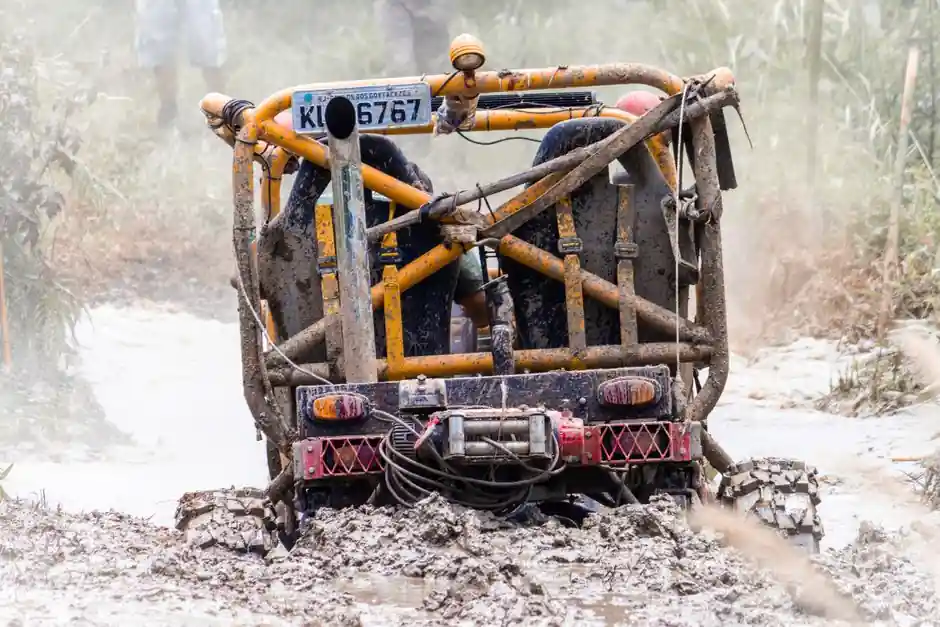
Hydraulic system contamination and parking-brake neglect on inclines are the two failure patterns that most reliably take a rough terrain forklift out of service during a planned shutdown window [S6][S3].
The economic case is concrete: a single forklift breakdown halts throughput at $500-1,000 per hour, and after-hours emergency repair premiums run 150-200% above scheduled service rates [S4]. On rough terrain units, those costs compound because the machines work on gravel, mud, and slopes, environments that accelerate wear on tires, hydraulic seals, and parking-brake hardware beyond what a warehouse forklift ever sees [S1][S6].
Hydraulic System Failure: Contamination, Leaks, and Pump Damage
Hydraulic leaks account for roughly one in five forklift breakdowns across surveyed service data, and on rough terrain units the proportion is higher because dust ingress, vibration, and abrasive surface loading accelerate seal and hose wear [S4][S6].
The root-cause pattern is consistent: improper fluid levels let aeration and cavitation pit pump vanes, while particulate contamination scoring cylinder walls and control-valve spools shows up first as jerky mast lift and slow tilt response. A standard corrective threshold is fluid cleanliness below ISO 4406 18/16/13 (or per OEM spec), with hose replacement at any visible braid extrusion and seal replacement whenever rod wipers show nicks. Acceptance test for any hydraulic repair is a 10-minute full-load lift-and-lower cycle with no audible pump whine and mast drift under 25 mm in 5 minutes at rated load [S6].
When NOT to repair: if the main hydraulic pump shows steady-state case-drain flow above OEM spec or if the mast structural member is bent, the assembly is replaced, not rebuilt, because fatigue life cannot be recovered by machining [S6].
Parking-Brake and Slope-Discipline Failures
A near-miss reported in 2025 documentation involved a forklift parked on a mild plant-road incline with the parking brake unengaged, rolling backward until stopped by a kerb short of a pedestrian [S3].
Slope ratings for rough terrain forklifts typically span 10-20% maximum under ideal load distribution, never as a routine operating parameter [S1]. The engineering fix is a mandatory walkaway checklist (parking brake, controls neutral, forks lowered, wheel chocks if slope exceeds 5%), backed by poka-yoke chocks made mandatory for any parked equipment, not just on inclines [S3]. Test value: parking-brake holding torque must hold the rated gross vehicle weight on the rated maximum slope for a minimum of 5 minutes with no measurable roll [S1][S3].
Behaviorally, the failure is rarely a bad component; it is a skipped step. Biannual refresher training with scored retention quizzes, plus CCTV and supervisor spot-checks of MHE (materials handling equipment) parking, measurably reduced repeat events in the documented case [S3].
Powertrain, Tire, and Undercarriage Wear from Rough Terrain

Rough terrain forklifts use pneumatic tires with deep treads and four-wheel drive to maintain traction on loose gravel, dirt, and mud, and the air-filled carcasses absorb shock that would disable solid-tire warehouse units [S1].
That same exposure degrades them faster. Failure modes trace to: (1) tire carcass damage from embedded debris, with replacement triggered by any visible ply, sidewall bulge, or tread depth below the OSHA 1910.178 inspection threshold; (2) driveline U-joint wear from repeated shock loading, diagnosed by grease purging and play exceeding OEM spec at the slip yoke; (3) undercarriage impact damage from rocks and stumps, which raises the center-of-gravity compromise that higher ground clearance already creates [S1][S6]. Acceptance criteria post-repair: tire pressure within ±5% of nameplate, no measurable wheel bearing play beyond 0.1 mm end-float, and four-wheel-drive engagement confirmed under load on a 15% grade.
For comparison, warehouse rough terrain forklift duty cycles rarely exceed 1,500 hours/year, while construction-yard units commonly log 2,500+ hours/year in dust and heat, which roughly doubles hydraulic and tire replacement frequency in field service data [S1][S4].
Maintenance Strategy Tiers: Reactive vs Preventive vs Predictive
Tier 1 reactive, or run-to-failure, maintenance is the weakest strategy because emergency callouts run 150-200% above scheduled rates and after-hours parts sourcing adds days of downtime on a critical lift truck [S5][S4].
Tier 2 preventive maintenance on operating-hour and load-cycle intervals (typically 250-hour and 1000-hour service points per OEM spec) is the baseline professional standard, with daily pre-shift checks per OSHA 1910.178 and a documented out-of-service tag for any deficiency [S5]. Tier 3 predictive layers in oil-wear particle analysis (typically every 250 hours), thermal imaging of the mast and motor contactors, and on-board fault-code trending. Tier 4 prescriptive, the AI-driven tier, fuses the above with usage telemetry to recommend the exact intervention window, which is where mature 2025-era fleets are migrating [S5]. The economic crossover: a single avoided $4,000-8,000 pump replacement, or a single avoided $500-1,000/hr shutdown, pays for a year of oil-analysis on a fleet of 10-20 units [S4][S5].
Inspection Cadence, Documentation, and Shutdown Integration
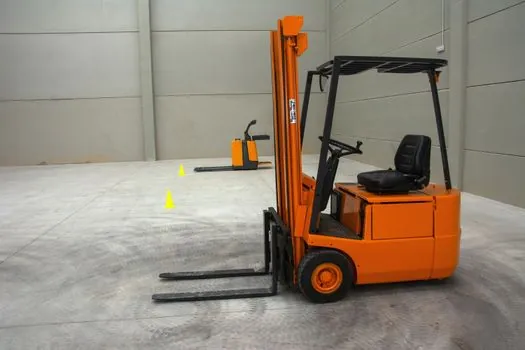
OSHA 1910.178 requires a daily or per-shift inspection and mandates that any forklift found in need of repair be taken out of service before being returned to operation, a hard compliance line for any planned shutdown handover [S5].
Effective shutdown integration pairs the daily pre-shift walkaround with a written defect log, a hold-and-tag register, and a parts-and-labor forecast tied to the next 250-hour service point. Site precedent (see skid steer loader pre-trip inspection: two-phase checklist specs and failure points) shows that two-phase checklists, pre-start exterior and operational, cut repeat defects by capturing the 30% of issues that only show under load, such as mast drift under lift and brake pull on a test slope. Acceptance gate before a unit returns to the yard: all checklist items closed, hydraulic fluid sample below ISO 4406 threshold, parking-brake hill-hold test passed, and operator sign-off on the reissue log [S5][S3].
When to Replace, Not Repair
A well-maintained forklift can deliver over 20,000 hours of service; a neglected one fails catastrophically at half that, forcing premature capex on a replacement [S5].
Replace, do not repair, when: (1) the mast shows bent uprights or cracked load-backrest extensions; (2) the hydraulic pump exceeds OEM case-drain spec; (3) the frame has visible cracks at the steer-knuckle or counterweight mount; or (4) cumulative repair cost over a 12-month window exceeds 50% of replacement value, a common fleet capex rule [S5][S4]. The cost-of-repair decision should weigh the $500-1,000/hr downtime exposure during the next planned shutdown; on critical-path lifts, replacement is often the lower total-cost option even when the part-level repair looks cheaper on paper [S4].
Key Standards and Sources
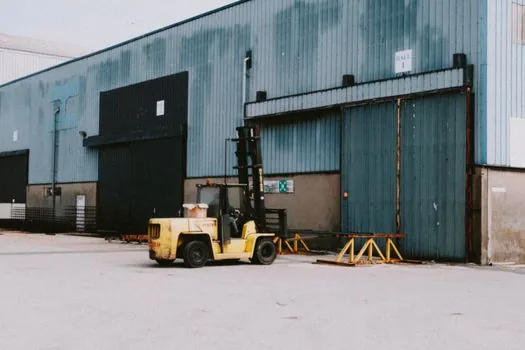
Compliance anchor: OSHA 1910.178 governs daily inspection, out-of-service tagging, and operator training for powered industrial trucks, including rough terrain variants, and is the citation most often invoked after a shutdown-period incident [S5].
Engineering anchors: ISO 4406 hydraulic cleanliness codes (typically 18/16/13 target for mobile hydraulics) and OEM 250-hour / 1000-hour service intervals are the technical baselines the maintenance program must hit. Reliability framing: tiered maintenance maturity (reactive → preventive → predictive → prescriptive) and oil-wear particle analysis are the documented path from a 20% hydraulic-leak failure rate toward the 20,000-hour service-life benchmark [S4][S5][S6]. Cross-reference: this article draws on the same failure-mode discipline applied in crucible furnace failure modes and spare-part sourcing for maintenance and RMC failure modes in food-contact component service: symptom → root cause → corrective action → acceptance test, then a clear replace-vs-repair boundary.
Trackable signals for the next 90 days: adoption of oil-wear particle analysis on rough terrain hydraulic reservoirs, percentage of fleets using walkaway parking-brake checklists on any slope, and OEM guidance updates to ISO 4406 cleanliness targets for off-highway hydraulic systems.
Spec-level background on the components involved: pressure transmitter.