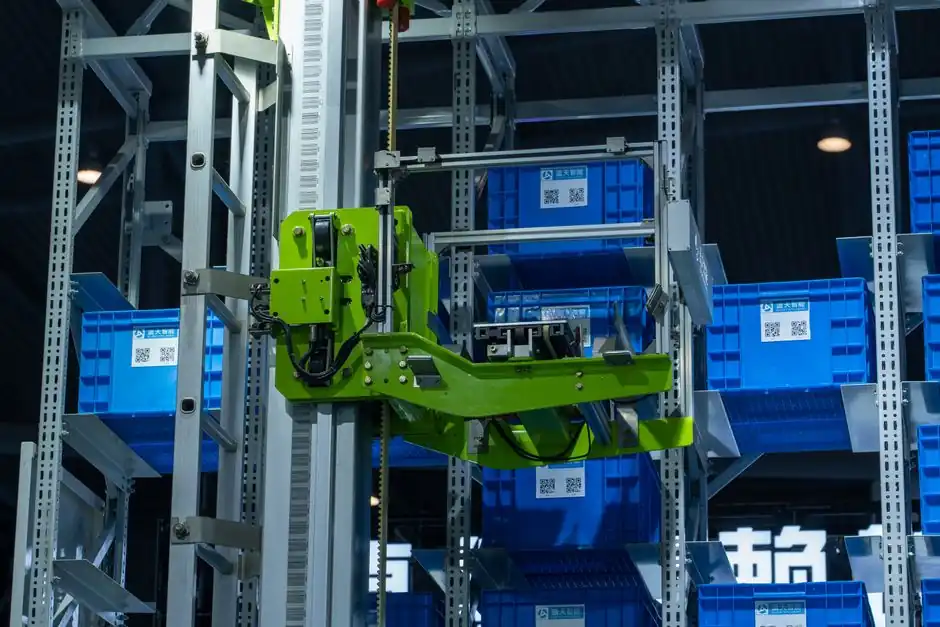
For warehouse automation, the practical IBC tank choice is a 275 or 330 gallon rigid unit on a 45" x 45" footprint, built from HDPE, galvanized composite, or 304/316L stainless steel, and UN/DOT certified for the specific cargo class, with four-way forklift entry and a discharge valve matched to the pump or dosing header [S2][S3].
Intermediate bulk containers earn their name by sitting between 55-gallon drums and full bulk tankers, which is why a standard forklift or pallet jack can move them without specialized gear and why a single IBC can replace roughly six drums on the same floor footprint [S3][S5].
What counts as an IBC, and why the name matters
Intermediate bulk containers are standardized industrial shipping containers, and many rigid IBCs are tested and certified under UN and DOT frameworks for the transport and storage of hazardous and non-hazardous materials, with the inner vessel, pallet base, fill cap, and discharge valve evaluated as one system per UN performance packaging guidance dated 2025-05 [S5].
The cubic geometry, 45" x 45" base, integrated pallet, and 275/330 gallon volume are not arbitrary: a four-pack of 330 gallon IBCs replaces twenty-four 55-gallon drums and saves two pallet positions per cluster, which compounds in any rack or staging lane [S3].
Rigid and collapsible types both exist, and collapsible units fold inward when empty, cutting return-shipping volume but not matching rigid stainless units on chemical compatibility or cleanability, so the two are not interchangeable in a fixed racking layout [S3].
Material selection: HDPE, composite, carbon steel, or stainless
HDPE inner bottles resist a wide pH range and weigh less than metal, so they are the default for non-flammable commodity liquids and food-grade applications where corrosion and cleanability matter more than temperature ceiling [S2][S3].
Composite IBCs pair an HDPE inner liner with a galvanized steel cage, adding drop and stack-load margin for hazardous materials and rough warehouse handling without giving up the chemical resistance of the plastic liner [S3][S5].
Carbon steel IBCs are used where mechanical strength is the priority, but they are uncommon in food or pharma because corrosion limits the service life, while stainless steel in 304 and 316L grades is the standard for food, beverage, pharmaceutical, and aggressive chemical service because it tolerates caustic washdowns and maintains a cleanable surface [S2][S3].
Material decision is driven by cargo: HDPE for general and food-grade chemicals, composite for hazardous and high-cycle use, 304 stainless for most hygienic lines, 316L stainless where chloride exposure or higher corrosion resistance is required [S2][S3].
Standardized dimensions and valve specs that drive automation fit
The 45" x 45" base is fixed across the 275 and 330 gallon sizes, which is what makes the units drop-in compatible with standard racking, ASRS totes, and four-way forklifts in a warehouse automation scheme [S3].
Discharge valve type and outlet thread determine whether a unit will plumb to a pump, dosing header, or robotic fill station without adapters, and a mismatch on this spec is the most common cause of slow transfer cycles and avoidable spill risk in automated cells [S5].
Forklift entry can be two-way or four-way, and four-way entry is the right pick wherever conveyors, automated guided vehicles, or staged cross-aisle moves are part of the layout, because two-way entry forces single-direction flow [S5].
UN/DOT, food-grade, and recertification compliance
Rigid IBCs intended for hazardous transport must carry UN performance packaging certification with the packaging code marked on the bottle, and recertification cycles apply, so any tracking system should log wash, recertification, and thickness-test records against each serial number [S4][S5].
Food-grade IBCs rely on FDA-grade HDPE or 304/316L stainless, and wash certificates plus bills of lading should be stored against the asset ID, since auditors ask for them at lot-level recall and not at fleet-level summary [S2][S4].
Carbon steel units are allowed under UN packaging codes for certain dangerous goods, but stainless is the safer call for any application involving repeated clean-in-place cycles or where chloride cleaners are in the wash rotation [S3].
Tracking and ERP integration for fleet visibility
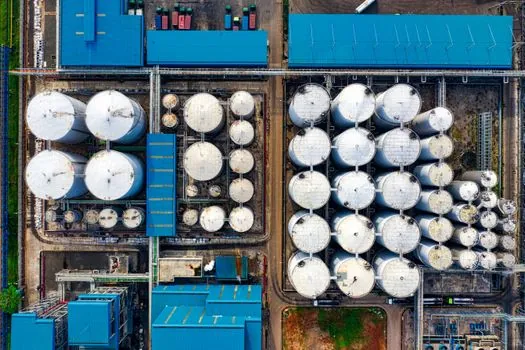
A practical IBC tank tracking system must give real-time location, accurate data on wash and recertification status, customizable geofence and dwell alerts, document and certificate storage (DOT, BOL, SDS), scalability as fleet size changes, and ERP or inventory integration through API or workflow automation [S4].
Tank-level liquid-level telemetry, geo-fenced exit alerts, and recertification due-date alerts are the three highest-value alerts in a warehouse automation context, because they prevent both lost-asset write-offs and out-of-certification shipments that stall at the dock [S4].
A user-friendly interface matters more than feature count, since adoption by floor staff is what makes any tracking platform actually work in a busy warehouse where screens compete with forklifts and RF scanners [S4].
Selection criteria by warehouse automation profile
For ASRS-style high-density storage with robotic retrieval, choose 275 gallon rigid composite or 304 stainless on 45" x 45" base with four-way forklift entry, UN/DOT certification for the cargo, and a 2-inch ball-valve outlet matched to the dosing header [S2][S3].
For food or pharma lines running clean-in-place cycles, 316L stainless with a documented cleanability surface finish, 2-inch tri-clamp or sanitary valve outlet, and wash-certificate tracking tied to each serial number is the right pick [S2][S3][S4].
For commodity chemical storage with high cycle counts, composite IBCs (HDPE liner, galvanized steel cage) with UN certification and a maintenance log per asset are the cost-effective option, with carbon steel reserved for specific compatibility cases [S3][S5].
For export and cross-dock operations, prioritize collapsible IBCs on return logistics to cut empty-leg cube, accepting that they trade some cleanability and chemical range against freight savings [S3].
Where IBC tanks fall short in automated warehouses
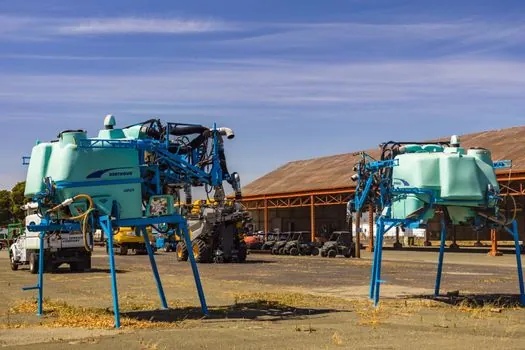
HDPE bottles have a finite service life and can be damaged by certain solvents and hot-fill above their rated temperature, so any hot-fill above 140 deg F, flammable liquids, or strong oxidizers needs a composite or stainless unit with the correct UN rating, not a generic HDPE tote [S2][S3].
Two-way forklift entry, non-standard valve threads, and missing UN markings each force workarounds in automated cells, because adapters and manual handling break the cycle-time assumptions the rest of the system is built around [S5].
Stainless steel and 316L units raise unit cost materially versus HDPE or composite, so any decision to standardize on stainless should be tied to a quantified cleanability, longevity, or compliance benefit rather than preference [S3].
Cross-references that pair with an IBC selection project
For warehouse fire and life-safety integration that often runs alongside container storage changes, the Fire Alarm Control Panel Selection for Laboratories: Spec, Sizing, and Integration piece lines up panel sizing and detection zoning, while Dust Detector Selection Criteria for Warehouse and Distribution Center Operations covers the particulate triggers that pair with powder or pellet IBC service. For perimeter and personnel access on a tank yard, the Mining Access Control: Spec Criteria for Harsh-Site Selection reference is the closest analogue for harsh outdoor conditions. [S2]
For reference detail on container engineering and valve geometry, the IBC tank encyclopedia page consolidates dimensional and material facts used above, and related handling equipment is covered under electrical automation for the conveyors and PLC interfaces that sit downstream of the discharge valve.
Watch three signals over the next two quarters: (1) UN packaging code revisions affecting 31HA1/Y composite and 31A/Y stainless ratings, which historically reset fleet recertification windows, (2) growth in collapsible IBC share for export lanes as freight cube costs rise, and (3) tighter ERP integration between tank-level telemetry and warehouse execution systems, since that is where dwell-time and wash-cert alerts start to drive measurable cycle-time gains [S2][S4].
Detailed specification references: tank container.