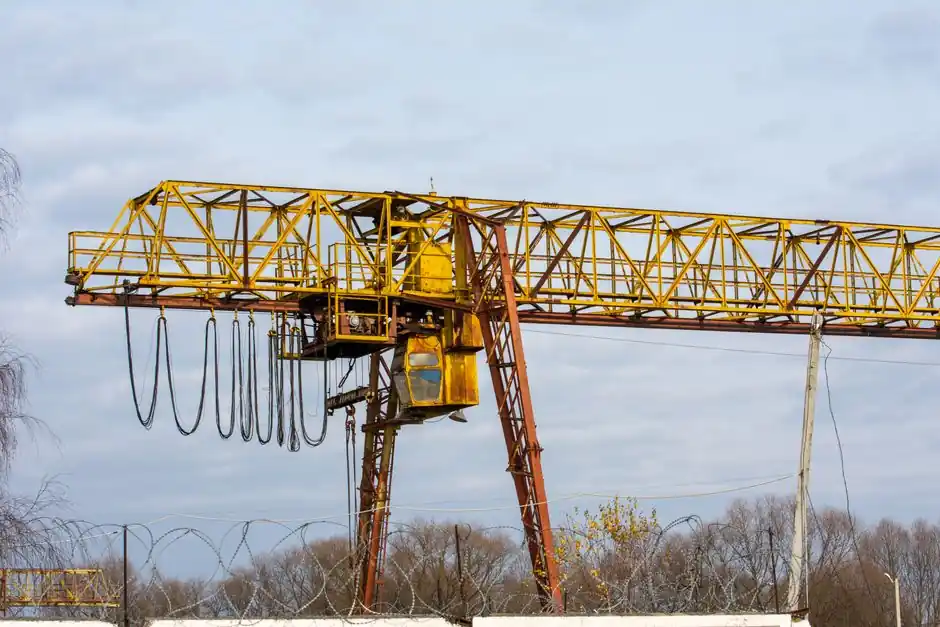
A hydraulic load cell measures force via a piston compressing a confined fluid, with no live electrical parts at the sensing element, which is why it is the textbook choice for ATEX Zone 1/21 and Class I Division 1 hazardous-area weighing [S2][S3].
A strain gauge load cell converts elastic deformation of a metal body into a resistance change through a bonded Wheatstone bridge, delivering higher accuracy (typically 0.02–0.05% of full scale) and native 4-20 mA, mV/V, or digital outputs, but every variant that uses live excitation needs a certified Ex enclosure or intrinsically safe barrier in classified areas [S1][S8].
Why hydraulic cells are the inherent-safe default in explosive atmospheres
A hydraulic load cell works purely as a mechanical pressure system: applied load pushes a piston, the piston pressurises a calibration fluid, and an attached pressure gauge or transducer reads that pressure [S1][S2]. The sensing body itself contains no energised circuitry, so the ignition source required by ATEX 2014/34/EU and IEC 60079-0 simply does not exist at the point of measurement [S3]. Multiple OEM and integrator sources flag hydraulic cells as inherently safe in any explosive atmosphere, and pneumatic cells as the equivalent air-driven alternative, with both routinely specified for oil and gas, chemical, grain-elevator, and pharmaceutical plants where flammable vapours or dusts are continuously present [S2][S3].
For heavy-duty ratings, hydraulic cells are commonly built for capacities from roughly 5,000 lb up to 500,000 lb (about 2,300–226,000 kg) and are field-proven on truck weighbridges, rail scales, silo weighing, and other infrastructure that lives outdoors or in washdown zones [S1][S7]. Ruggedness, IP67/IP68 sealing, and complete immunity to electromagnetic interference, radio frequency interference, and lightning-induced transients are part of the standard hydraulic value proposition, which matters when weighing critical inventory near rotating machinery, large motors, or welding operations [S1][S2].
Where sealed strain gauge cells still win on accuracy and integration
Strain gauge load cells are the most widely deployed weighing transducer across process industries because they hit the sweet spot of precision (0.02–0.1% FS), compact size, and price per channel [S1][S2][S5]. A sealed stainless-steel strain gauge load cell, fully welded and hermetically sealed to IP67/IP68/IP69K, can be specified in food, pharmaceutical, and chemical washdown areas without intrinsic safety, as long as the cell itself carries the appropriate Ex rating or is paired with an IS barrier [S4].
For hazardous-area integration, modern strain gauge cells support mV/V, 4-20 mA, HART, PROFIBUS, EtherNet/IP, IO-Link, and Foundation Fieldbus outputs through remote I/O or smart transmitters, giving plants a single bus architecture from weigh scale to DCS that hydraulic cells cannot match without an external electronic gauge pressure transmitter at every point [S2][S8]. The catch is that any strain gauge electronics operating inside a Zone 1/21 or Class I Div 1 area must be protected by an Ex d (flameproof) or Ex ia (intrinsically safe) certification, and the loop powering the cell must run through a safety barrier or run on a certified Ex e / Ex d junction box, all of which adds cost and installation time [S2].
Selection criteria compared: hydraulic vs strain gauge in classified areas
The decision collapses to four engineering criteria: ignition risk, accuracy, capacity, and integration. On ignition risk, hydraulic is inherently safe at the sensor because there is no energised element, while strain gauge requires Ex-rated housings (Ex d/Ex ia/Ex e) or remote-mounted barriers for every cell in the classified zone [S2][S3]. On accuracy, sealed strain gauge typically reaches 0.02–0.05% FS in precision classes C3 to C6, while hydraulic commonly lands at 0.1–0.25% FS depending on the pressure gauge resolution, so high-speed batching and checkweighing skew toward strain gauge [S1][S2][S5].
On capacity, hydraulic cells cover heavy-duty ranges up to several hundred tonnes on a single piston without electronic amplification, which is hard to match with strain gauge columns of equivalent cost [S1][S7]. On integration, a strain gauge cell drops directly into a load cell module feeding a 4-20 mA, HART, or digital bus loop, which is why a typical plant pairs multiple strain gauge cells with a single load cell to indicator signal conditioner; a hydraulic cell needs a pressure gauge or electronic pressure transmitter at the cell, and that pressure transmitter itself becomes the item requiring Ex certification in classified zones [S2][S8]. Maintenance behaviour also diverges: hydraulic cells need periodic fluid checks, seal inspection, and freeze protection in cold climates, while sealed strain gauge cells are largely maintenance-free but require annual or biannual re-calibration with calibrated test weights to maintain OIML R60 or NTEP HB44 traceability [S5][S8].
Use cases: pick hydraulic for these, strain gauge for those
Pick hydraulic load cells for hazardous-area truck weighbridges, rail scales, silo and hopper weighing, crane and hoist load monitoring, and any outdoor weighing platform exposed to lightning, RF, or welding transients, because the all-mechanical sensing path eliminates the ignition source and the EMI/RFI failure mode [S1][S2][S3]. Pick a sealed strain gauge load cell for batching reactors, loss-in-weight feeders, checkweighers, precision filling, tank and vessel weighing in chemical or pharmaceutical skids, and any application where you need fast update rates, high resolution, or a digital bus output to the DCS, provided each cell is Ex-rated or wired through an IS barrier in Zone 1/21 areas [S1][S4][S5].
For mixed installations, common practice is to run hydraulic cells under the silo legs and strain gauge cells inside the reactor skirt, with both wired back to the same weighing controller using a load switch for batching interlocks, accepting the extra engineering effort of dual-technology integration in return for matching the right sensor to each mechanical and safety requirement [S1][S2][S5].
Failure modes and limitations worth budgeting for
Hydraulic cells fail by seal leakage, fluid contamination, air entrainment in the load line, and temperature-induced pressure drift, with cold-climate installations needing glycol-based fluid or heater tracing to prevent freezing that would lock the piston [S2][S3][S7]. They are also more expensive per cell than entry-level strain gauge units, and their accuracy ceiling is set by the connected pressure gauge, so swapping a mechanical gauge for a high-resolution electronic pressure transmitter is often required to reach 0.1% FS or better [S2][S7].
Strain gauge cells fail by fatigue cracking of the spring element, moisture ingress through damaged cable jackets, zero drift from overload shock, and bridge excitation failure, all of which require the cell to be removed and re-calibrated [S2][S8]. In hazardous areas, the dominant added failure mode is barrier or housing compromise: a damaged Ex d flameproof enclosure, a missing Ex e cable gland, or an improper IS barrier wiring turns a safe loop into an ignition source, so inspection routines aligned with IEC 60079-17 are non-negotiable, and the cost of those routines is a real line item in total installed cost [S2].
Standards, sourcing, and what to verify on the datasheet
For hazardous-area deployment, verify the ATEX 2014/34/EU category (1G/1D for Zone 0/20, 2G/2D for Zone 1/21, 3G/3D for Zone 2/22), the IECEx certification number, and the North American Class/Division rating printed on the cell nameplate, and cross-check them against the plant hazardous-area classification drawing before installation [S2]. Weighing accuracy should reference OIML R60 for legal-for-trade applications and NTEP HB44 for US commercial scales, with combined error and creep figures matched to the required accuracy class [S5]. Material and sealing should be confirmed as 17-4 PH or 316L stainless with welded hermetic seal, IP67/IP68/IP69K ingress, and an operating temperature window wide enough for the process, typically -40 to +80°C for standard cells [S8].
Always request the latest calibration certificate traceable to a national standard such as NIST or NPL, and confirm that the manufacturer offers Ex-rated variants with the same mechanical form factor before locking in a platform design [S5][S8].
Track the next decision nodes: confirm the exact Zone/Division classification and gas group from the plant EHS document, request Ex d or Ex ia certified variants from the chosen vendor, and validate the integrated weighing loop against OIML R60 acceptance criteria on a calibration jig before commissioning.