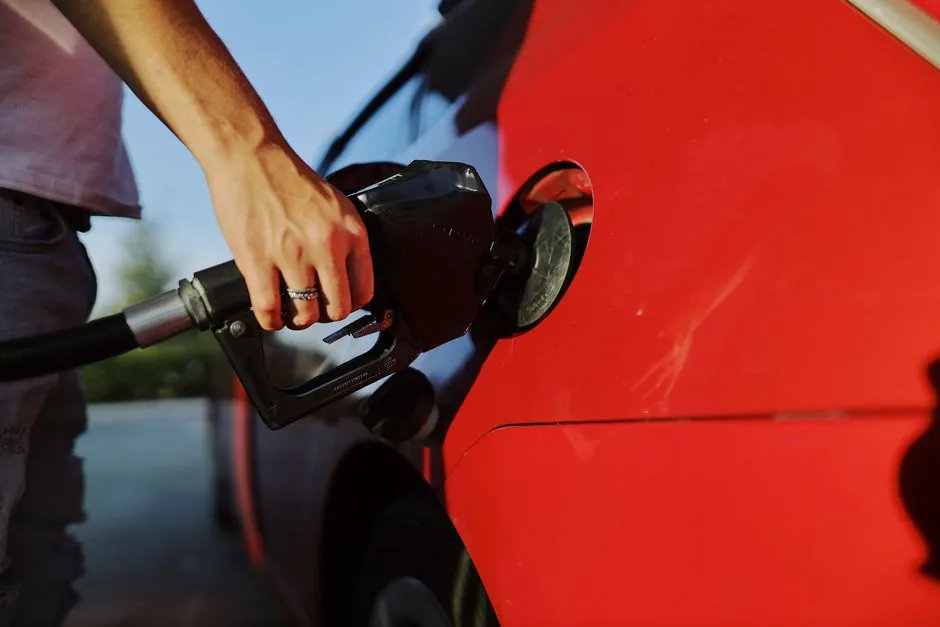
The International Hydrogen Fuel Cell Association (IHFCA) was launched by China SAE, FORVIA, Toyota, Hyundai, SAIC, Sinopec, Valterra Platinum and other founding organisations as a non-profit body promoting worldwide hydrogen collaboration and FCV commercialisation [S1].
As of August 2026, IHFCA lists eight Chairman/Vice-Chairman institutions including Anglo American, Tsinghua University, and Toyota China, with executive-board seats held by Sinocat, Bosch China, Ballard, and Garrett Motion among others [S1]. HydrogenSphere 2026 is scheduled for Madrid, extending the body's working reach beyond the original Asian base [S1].
OEM Product Lines: Three Reference Vehicles
Toyota, Honda, and Hyundai are the only automakers offering production FCEVs for consumer sale in major markets as of mid-2026. The 2025 Toyota MIRAI delivers an EPA-rated driving range of 402 miles (approximately 647 km) on a single hydrogen fill, using PEMFC stack chemistry fed by compressed hydrogen [S5]. Honda lists the 2026 CR-V e:FCEV at a starting MSRP of $50,000 with 61/52 city/highway MPGe ratings, positioning it as a plug-in fuel cell hybrid rather than a pure FCEV [S7]. Hyundai's Nexo continues in selected markets as a dedicated FCEV crossover, with IHFCA executive membership signalling continued strategic commitment [S1]. The three models cover distinct positioning: MIRAI targets long-range sedan buyers, CR-V e:FCEV targets range-anxious SUV buyers wanting plug backup, and Nexo targets crossover buyers in FCEV-supportive jurisdictions.
Standards and Cylinder Technology Track
On 7 July 2026, IHFCA opened a call for co-development organisations on Standard NP 2025-002 covering fully-wrapped carbon fibre reinforced cylinders for compressed-hydrogen skid container applications, a key type-IV pressure-vessel category [S1]. Cylinder construction is the gating safety item for skid-mounted transport: type-IV composite overwrapped pressure vessels (COPV) are the current benchmark for 350 and 700 bar automotive service, and IHFCA's standardisation push mirrors that hardware baseline. IHFCA's IHFCA Standard Portal aggregates national-level working groups, while UNIDO co-hosted a 9 April 2026 webinar with IHFCA on industrial decarbonisation pathways, broadening the scope beyond mobility to heavy industry [S1].
Materials and Stack Components: Catalyst Support Choices
Cabot Corporation's FCX-grade highly graphitic conductive carbons are positioned as catalyst supports for PEMFC and related low-temperature fuel cell stacks, with the supplier citing improved conductivity and durability versus conventional carbon blacks [S2]. Stack-level platinum group metal (PGM) loading is the dominant cost lever, and graphitic supports raise the bar on corrosion resistance, a key durability axis named explicitly by the Hydrogen Fuel Cells USA 2026 programme under "material degradation and catalyst poisoning" [S3]. Component-supplier positioning for 2026 splits into three buckets: carbon and PGM materials suppliers (Cabot, Anglo American, Valterra Platinum), stack and system integrators (Ballard, Bosch, Refire, Sinocat), and OEM vehicle integrators (Toyota, Hyundai, Honda, SAIC) [S1][S2].
Event and Procurement Calendar: 2026 Touchpoints
Two anchor events define the US-facing 2026 procurement and intelligence calendar. The 4th Annual Hydrogen Fuel Cells USA 2026 runs in Anaheim, California, organised by IQ International Pte Ltd, with tracks on FCEV adoption challenges, manufacturing cost reduction, durability, safety standards, and case studies on automotive fuel cell applications [S3]. A separate "Mastering Clean Hydrogen" online event is scheduled for 11-18 August 2026, and the Hydrogen Technology Expo North America is set for 10-11 February 2027 in Houston [S3]. For sourcing teams, the Anaheim event is the primary live US touchpoint within the article's research window.
Selection Criteria: Who Each Architecture Suits

FCEV purchase decisions in 2026 are still gated by refuelling station density and total cost of ownership (TCO) versus battery EVs, so fleet operators in heavy-duty, long-haul, and high-utilisation duty cycles are the rational early buyers. Single-passenger consumer FCEVs remain a niche, with Toyota's 647 km MIRAI range and Honda's plug-in CR-V e:FCEV as the two production reference points rather than volume movers [S5][S7]. For mid-duty logistics fleets (delivery vans, light trucks, urban buses), the case rests on fast refuelling versus battery dwell time, but hydrogen station coverage and green-hydrogen supply remain the binding constraints.
Limitations and Open Constraints
Production FCEV volumes remain small relative to battery EVs, and the public-charge-versus-hydrogen-refuel infrastructure gap still defines real-world usability more than stack performance does. The Hydrogen Fuel Cells USA 2026 programme explicitly lists "material degradation and catalyst poisoning" alongside "regulations and safety standards for hydrogen vehicles" as standing concerns, signalling that durability and harmonised regulation, not peak power, are the open engineering problems [S3]. For 2026 spec decisions, the operating envelope question is whether a site has confirmed access to 350 or 700 bar dispensing and to a green-hydrogen offtake, since the vehicle spec is essentially fixed once the platform is chosen.
Closely related reference material on stack, vehicle, and capacity signals through 2030 is in the fuel cell demand 2026-2030 spec map, and a separate OEM market-share view across process families is in the 2026 additive manufacturing spec bands piece for adjacent sourcing context. Track the IHFCA Standards Portal for the NP 2025-002 working draft, the HydrogenSphere 2026 Madrid agenda, and the 5th Annual Hydrogen Fuel Cells USA 2027 calendar release as the next 2026-second-half signals.
Spec-level background on the components involved: oxy fuel cutter, load cell, and load cell module.