
Global additive manufacturing in 2026 remains a process-family market, not a single-leader market: powder bed fusion for metals (PBF-LB laser, PBF-EB electron beam), polymer material extrusion and vat photopolymerisation, directed energy deposition, binder jeting, and a growing hybrid AM / CNC category each carry their own OEM concentration curve, with the cross-vendor installed base split across Americas, DACH, and East Asia [S1].
Per the additive manufacturing research catalogue indexed 2026-07-26, 13 dedicated market reports and 1 book carry the "Hybrid Additive Manufacturing" tag, signalling that combined additive + subtractive platforms are now reportable as their own segment rather than a niche [S1]. Metallic PBF holds a dominant position within AM for metal components [S2], and on PBF-EB the Arcam A2X platform is one of the most diffused reference machines, with deep-learning anomaly detection demonstrated at F1 ≈ 90% and 6 h average advance warning of build failure [S2].
Process families, not brand names, define share
Engineers should select on process family first because OEM share is concentrated at the process level, not at the corporate level: laser PBF (PBF-LB), electron-beam PBF (PBF-EB), binder jeting, directed energy deposition, material extrusion (FDM/FFF), and vat polymerisation each have different material menus, build envelopes and qualification histories [S2]. PBF-EB fuses conductive metal powders (Ti, Ti-6Al-4V, CoCr, Cu) under high vacuum with preheating, and produces higher density and shorter build time than laser at the cost of requiring vacuum-rated powder handling [S2].
Polymer AM is addressed by Roland Berger's market study under the 2020 baseline (2025-08), and continues to evolve around mass-production polymer extrusion and powder bed fusion, with material certification (PA12, PA11, TPU, PEEK, ULTEM) still gating the high-value applications (2025-08) [S5]. The American peer-reviewed journal <em>Additive Manufacturing</em> (Elsevier, ISSN 2214-8604) is affiliated with America Makes, the U.S. National Additive Manufacturing Innovation Institute, and is the canonical publication venue for process data [S7].
PBF-EB monitoring: the F1 ≈ 90% anomaly band
The Arcam A2X case study published in the <em>Journal of Intelligent Manufacturing</em> (2024-03) is a hard spec datapoint: a deep-learning autoencoder was trained on A2X layering variables and identified anomalous patterns in real time, reaching an F1 score of approximately 90%, anticipating current-job failure by 6 h on average and by up to 20 h in a single case [S2]. That converts anomaly detection from a research line into a procurement-relevant spec band: any PBF-EB tender above 2025 should ask for in-situ monitoring with quantified detection performance, not just "closed-loop" marketing language.
For procurement, the decision rule is: a PBF-EB platform without demonstrable in-situ process monitoring is now below the industrial-maturity line for serial aerospace or medical production, because layer-level instability remains a documented barrier to industrial breakthrough and a primary source of powder and time waste [S2]. Monitoring depth is therefore a real differentiator between PBF-EB OEMs, alongside beam power, build chamber size and powder-recovery workflow.
Hybrid AM: 13 reports, one reportable segment
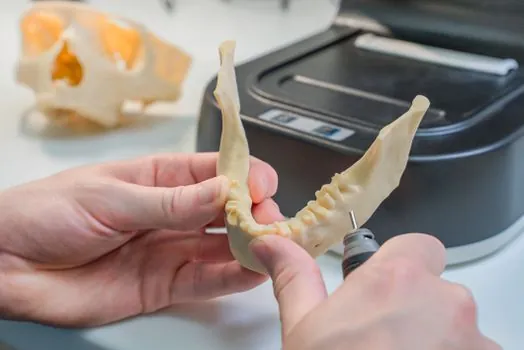
Hybrid additive manufacturing, defined as combined additive (typically DED or DED-like heads) and subtractive (milling, turning) on a single platform, is treated as a standalone research category on the 2026-07-26 catalogue page, with 13 published reports and 1 dedicated book indexed globally [S1]. That alone is a usable spec signal: hybrid AM is now a multi-vendor, multi-region segment with comparable reporting depth, not a one-off integration story.
Selection criteria for hybrid AM diverge from pure AM: the gating specs are the number of additive axes, the subtractive spindle rating (kW, max RPM), the workpiece and build envelope (typically 0.5–2.0 m³ class for large hybrid cells), and the ability to switch between additive and subtractive without operator re-fixturing. If a spec sheet leads with "single 3D printer with a spindle bolted on" it is not in the hybrid category buyers should benchmark.
Service bureau footprint and the India / Southeast Asia capacity build
Service bureaus and contract manufacturers define effective share as much as machine OEMs: in India, Incredible AM Pvt. Ltd. (Pune) runs metal AM for titanium alloy, CoCr alloy, plus polymer systems (PMMA, PEEK) as of the 2026-08-05 corporate disclosure [S6]. North-American bureaus such as Next Chapter Manufacturing list moldmakers, plastic processors and OEM customers, with the 2026-08-07 site positioning the firm on the conventional-to-digital manufacturing transition for tooling and plastic parts [S3].
Implication: a specifier who needs ASME / ASTM-grade Ti-6Al-4V or CoCr medical-grade build slots in 2026 is typically routing through one of these service bureaus rather than buying a machine, so the buy decision is dominated by material certification (ISO 5832-3, ASTM F75, ASTM F1108 for CoCr), machine OEM inside the bureau, and post-process heat treatment / HIP capacity, not by bureau brand recognition [S3][S6].
Material menu as a primary share proxy

In 2026, machine-level share is best read through the certified material menu: Ti-6Al-4V (PBF-LB, PBF-EB, DED), Inconel 625/718 (PBF-LB, DED), 316L/17-4PH stainless (PBF-LB, binder jeting), CoCrMo (PBF-LB, PBF-EB for medical), AlSi10Mg (PBF-LB), plus polymers PA12, PA11, TPU, PEEK, ULTEM (SLS, MJF, FDM) [S2][S5][S6]. The wider and more qualified the menu, the larger the install base tends to be, because each material carries its own process parameter set and its own qualified application (aerospace, medical, automotive, moulding).
CoCr, titanium and copper powder PBF-EB specifically, with high-vacuum process and preheat above 700 °C, sit in a narrower vendor pool than PBF-LB for the same alloys [S2]. For a reader new to the additive manufacturing material landscape, the additive manufacturing material encyclopedia entry lays out the polymer / metal / ceramic families used in 2026 production, including the powder size distributions (typically 15–45 µm for PBF) that are part of the same procurement decision.
Decision matrix: PBF-LB vs PBF-EB vs hybrid AM
For the reader who needs a one-pass comparison, the three process families most often shortlisted for serial production line up on four criteria. (1) Material range: PBF-LB covers the broadest alloy menu (Ti, Al, Ni, SS, CoCr, Cu) [S2]; PBF-EB is restricted to conductive metals and is strongest on Ti-6Al-4V and CoCr [S2]; hybrid AM inherits DED material menus plus subtractive surface finishing. (2) Build time: PBF-EB is faster per layer due to higher beam power and faster scan speed [S2]. (3) Surface finish and tolerance: PBF-LB typically requires post-machining for tight tolerance; PBF-EB has higher surface roughness but is also a candidate for hybrid finishing; hybrid AM brings subtractive in-process. (4) Monitoring maturity: PBF-EB has demonstrated quantitative F1 ≈ 90% anomaly detection on Arcam A2X [S2], PBF-LB monitoring is broader but vendor-specific, and hybrid AM monitoring is fragmented across additive and CNC stacks.
For embedded process control on these machines, the PLC platform landscape is increasingly crossed with AM controllers via OPC UA, and for in-process thermal / pressure verification, the pressure sensor and flow meter families cover chamber vacuum and inert-gas line instrumentation.
What the 2026 specifier should track
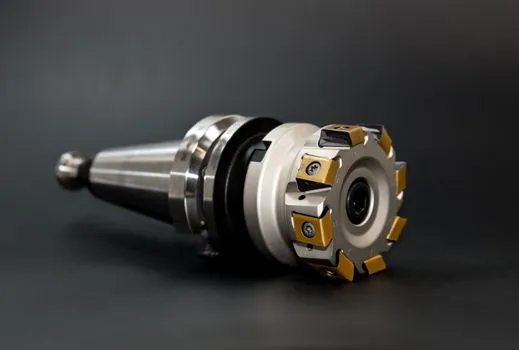
Two trackable signals close the loop. First, hybrid AM is a now-reportable segment with at least 13 published market reports as of 2026-07-26 [S1], so any 2026 RFQ that does not include a hybrid AM benchmark line is below current procurement practice for large metal parts. Second, PBF-EB anomaly-detection performance is now quantified, with the Arcam A2X case study reporting F1 ≈ 90% and 6 h average advance failure warning [S2], which is the threshold to demand from any PBF-EB vendor claiming closed-loop process control.
For 3D printing OEM market share, the 2026 spec bands and material sourcing map are covered in 3D printing manufacturer market share, 2026 spec bands, material sourcing and selection, and the 2026–2030 demand outlook across hardware, materials and end-use spec bands is in 3D printing demand forecast 2026-2030, hardware, materials, and end-use spec bands.