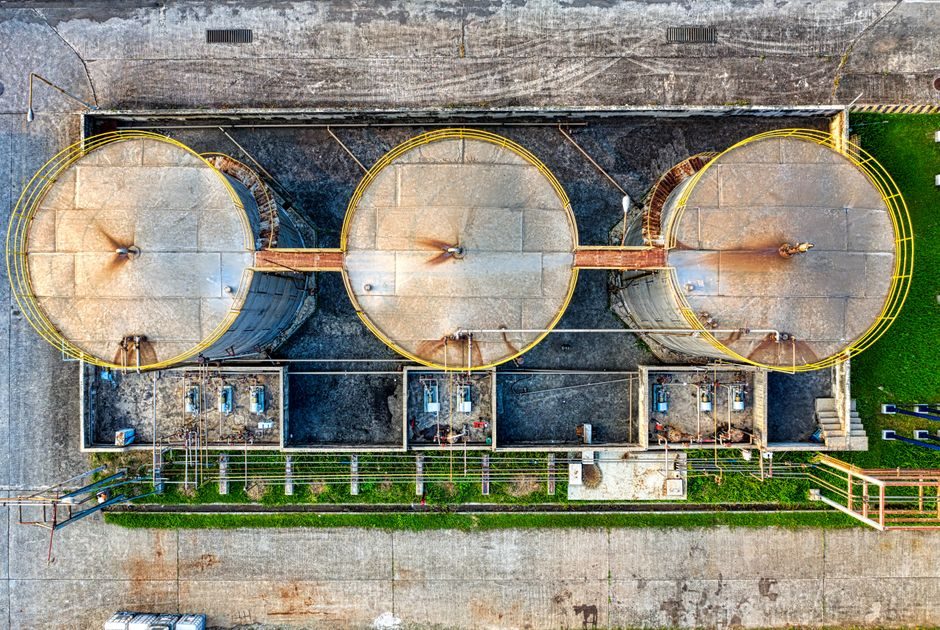
Buyer-side activity on 2026-06-25 centres on PEM fuel cell stacks and turnkey engines, with the supplier base consolidating around three regional clusters: Chinese stack and heavy-vehicle engine makers (Vision Group, VET Energy, the Wuhan HydraV Hydrogen Fuel Cell Technology Co. line), European portable/stationary specialists (Power Up in the Netherlands for the UP-series gensets, Intelligent Energy in the UK for IE-SOAR/IE-DRIVE/IE-LIFT ranges), and Indian/Chinese HHO and small-PEM shops channelled through Alibaba B2B listings.
Power density, voltage class, and operating-temperature window are the three hard gates on every RFQ. The VISH-130A engine sits at 130 kW (177 hp) with a 480-880 V DC bus, 300 A current, and an ambient envelope of -30 °C to +60 °C [S1]. The UP3K portable genset, by contrast, ships at 12/24/48 V, air-cooled, weighing 21-42 kg in a 59 × 30 cm envelope [S2]. Intelligent Energy's 2026 product tree breaks into IE-SOAR (drone/UAV class), IE-LIFT (material handling), IE-POWER (stationary/back-up), IE-DRIVE (automotive, including IE-DRIVE HD100), IE-FLIGHT (eVTOL) and IE-GRID (utility-scale) [S7]. Buyers writing a 2026 shortlist should weight engine kW, voltage architecture, ambient rating, and intended duty cycle before brand affinity.
Stack and Engine Suppliers: China Cluster
Wuhan HydraV Hydrogen Fuel Cell Technology Co., Ltd., through the Vision Group VISH-130A engine, targets 130 kW heavy-truck duty with a 480-880 V bus and a -30 to +60 °C window, voltage and cold-start envelope that map onto Chinese heavy-duty FCEV programmes [S1]. The VISH-130A's 880 V maximum at 300 A implies a peak electrical envelope near 264 kW, well above the rated 130 kW continuous figure, which is the normal overload head-room spec'd for transient hill-climb on Class 8 heavy trucks.
Chongqing-based VET Energy lists PEM fuel cell and PEM electrolyser lines on its 2026-06-25 site, indicating a dual-stack/Electrolyser product posture common among newer Chinese entrants hedging between fuel-cell vehicle demand and green-hydrogen production [S6]. For buyers triaging Chinese suppliers, the B2B listing filter "hydrogen fuel cell stack" on Alibaba still skews 90% domestic-market, with the typical small-to-mid Chinese stack supplier sitting below US$1 Million total revenue and a 76.2% response rate on RFQs [S3]. Treat that sub-US$1M cohort as prototype/low-volume only; the VISH-130A-class OEMs sit one tier above and require audited production lines, not Alibaba storefronts.
Portable and Stationary Genset Suppliers: European Cluster
Power Up (Netherlands) ships the UP-series hydrogen fuel cell generators in single-phase and three-phase variants, air-cooled, 12/24/48 V output, weighing 21 kg, 27 kg, and 42 kg depending on power rating and battery hybrid stage [S2]. The 59 cm length × 30 cm width footprint positions the UP3K as a man-portable back-up or off-grid primary unit, with hydrogen fuel cell acting as a range extender on top of an internal battery — a common 2026 architecture for telecom tower back-up, security trailers, and remote sensor stations.
Intelligent Energy's 2026 line-up splits the stationary and portable market into IE-POWER 4 (4 kW-class stationary), IE-POWER 1T/1U (1 kW telecom), and IE-LIFT (fuel cell modules for Class 1-3 forklift trucks) [S7]. The IE-DRIVE HD100 is positioned at 100 kW-class automotive duty, competing head-to-head with the Chinese heavy-truck engines on power density and on durability for high-utilisation logistics fleets. For a hydrogen fuel cell buyer writing a 2026 RFQ that crosses stationary and motive duties, Intelligent Energy is one of the few vendors offering an OEM-validated product in automotive, aviation (IE-FLIGHT for eVTOL), data centres (IE-GRID), and material handling from a single warranty envelope.
Selection Criteria: Power, Voltage, Ambient, Duty
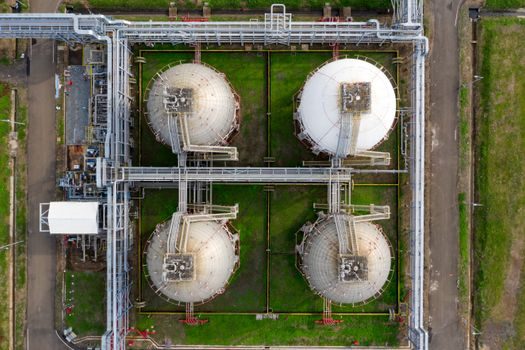
Four criteria separate a usable shortlist from a marketing brochure: rated electrical power (kW continuous, not peak), voltage architecture (12/24/48 V for portable; 400-800 V DC for automotive/truck), ambient operating window (look for the -30 °C cold-start figure, not just the storage spec), and duty cycle (continuous vs intermittent). The VISH-130A's 130 kW continuous at 480-880 V DC, -30 to +60 °C, fits heavy-truck continuous duty [S1]. The UP3K's sub-50 kg air-cooled package at 12-48 V fits portable intermittent back-up [S2]. The IE-DRIVE HD100 and IE-GRID product tree targets high-duty automotive and stationary baseload respectively [S7].
Buyers who only need a backup battery-charger or DC source for a remote site should look at 1-10 kW air-cooled PEM modules in the 12-48 V class, where PEM fuel cell stack and pressure transmitter auxiliaries share the same 4-20 mA + HART monitoring vocabulary used in adjacent process skids. Buyers speccing a Class 8 truck or a stationary MW-class installation are in a different vendor pool entirely — engine OEMs, not stack integrators. For the broader powertrain build-out, electric motor smart-manufacturing lines sit one BOM level down from the fuel cell engine, and the IE4/BLDC motor tier pairs with PEM fuel cell engines for hybrid drivetrains.
Standards Governing Fuel Specification
BS ISO 14687-3:2014 sets the hydrogen fuel product specification for stationary PEM fuel cell appliances, defining impurity limits (CO, total sulphur, ammonia, particulates) that grid-connected and stationary systems must meet to protect membrane and catalyst life [S10]. The standard sits alongside vehicle-side ISO 14687-2 for PEMFC road vehicles; both should appear in any stationary or motive fuel-quality clause, because a fuel cell operating on industrial-grade H2 will degrade catalyst loading within hundreds of hours.
For explosion-protection area classification, indoor hydrogen equipment falls under the IEC 60079 family for gas atmospheres; new European stationary builds at ATEX category 2 are common in 2026 specifications. The IP-rated enclosure language (typically IP55 for outdoor stationary, IP54 for indoor industrial) needs to be paired with a hydrogen-specific leak-detection strategy, since H2 disperses upward and is undetectable by IR flammable sensors calibrated for hydrocarbons. Buyers who already use industrial valve and load cell module instrumentation should request the same HART layer for the H2 mass-flow meter so existing asset-management dashboards pick up the new skid without a protocol-conversion project.
Use Cases and Application Map
Hydrogen fuel cells split into seven duty classes in 2026: (1) heavy-duty trucks, where the 100-300 kW PEM engine is the workhorse and the VISH-130A 130 kW / 880 V architecture is a reference design [S1]; (2) light commercial vehicles, covered by IE-DRIVE class at sub-100 kW; (3) material handling (Class 1-3 forklifts), addressed by IE-LIFT modules that swap into existing battery-electric truck bays [S7]; (4) stationary back-up / primary power for telecom and data centres, where IE-POWER 1U/1T/4 and UP3K-class gensets compete; (5) aviation / eVTOL, addressed by IE-FLIGHT for sub-MW platforms; (6) UAVs (IE-SOAR 800, IE-SOAR 1.2, IE-SOAR 2.4 across 800 W to 2.4 kW); and (7) utility/grid (IE-GRID for kW-to-MW dispatchable load) [S7].
Real deployments confirm the duty split. Changchun City's hydrogen fuel cell project, documented in March 2025, positions the technology as a clean-energy pillar with hydrogen's 140 MJ/kg calorific value pitched against coal and petroleum for combined heat and power and transport fuel applications [S5]. The Plug Power benefits literature (March 2025) lists zero tailpipe emissions, water and heat as the only by-products, and corporate sustainability programme integration as the procurement drivers in North American deployments [S4].
Limitations and Failure Modes Buyers Should Pre-Load
Three failure modes dominate field returns on PEM fuel cell systems in 2025-2026. First, hydrogen fuel contamination: sulphur and CO poisoning of the platinum catalyst is irreversible above a few ppm, which is why ISO 14687-3:2014 impurity tables are a contractual requirement, not a guideline [S10]. Second, membrane dehydration at stack temperatures above ~65 °C; the VISH-130A's 60 °C upper ambient limit is a thermal-headroom cap, not a marketing number, and humidification skid design determines whether you operate at full power on a 35 °C summer day [S1]. Third, freeze-start below -10 °C without an active membrane heater; the -30 °C rating on the VISH-130A assumes a thermal-management subsystem that buyers must price in separately [S1].
Supplier-risk indicators to track in 2026: Chinese sub-US$1M stack vendors on B2B directories at 76.2% RFQ response rate are typically trading-only operations, not OEMs with membrane MEA lines [S3]. UK and European suppliers (Intelligent Energy, Power Up) carry IEC 60079 and ATEX documentation, which Chinese trading-tier vendors often cannot produce. For buyers running multi-megawatt stationary projects, the engineering risk sits less in the stack and more in the hydrogen fuel cell stack BoP (balance of plant): BOP, water management, and the hydrogen mass-flow loop.
Procurement Verdict and Next Signals to Track
Buyers writing a 2026 shortlist should treat the supplier base as three tiers: (1) heavy-vehicle engine OEMs (Vision Group / HydraV-class at 100-300 kW, IE-DRIVE HD100-class) for FCEV and stationary baseload; (2) portable and stationary genset OEMs (Power Up UP-series, Intelligent Energy IE-POWER/LIFT) for sub-10 kW telecom, security, and forklift duty; (3) prototype stack trading vendors on B2B directories for lab and education use only. Two trackable signals will reset this map within the next 12 months: any new BS ISO 14687 revision work for high-pressure trailer-grade H2, and any Chinese OEM migrating from sub-US$1M revenue tier to audited US$10M+ production lines, since the latter signals the threshold at which warranty-backed stationary projects become bankable. [S1]