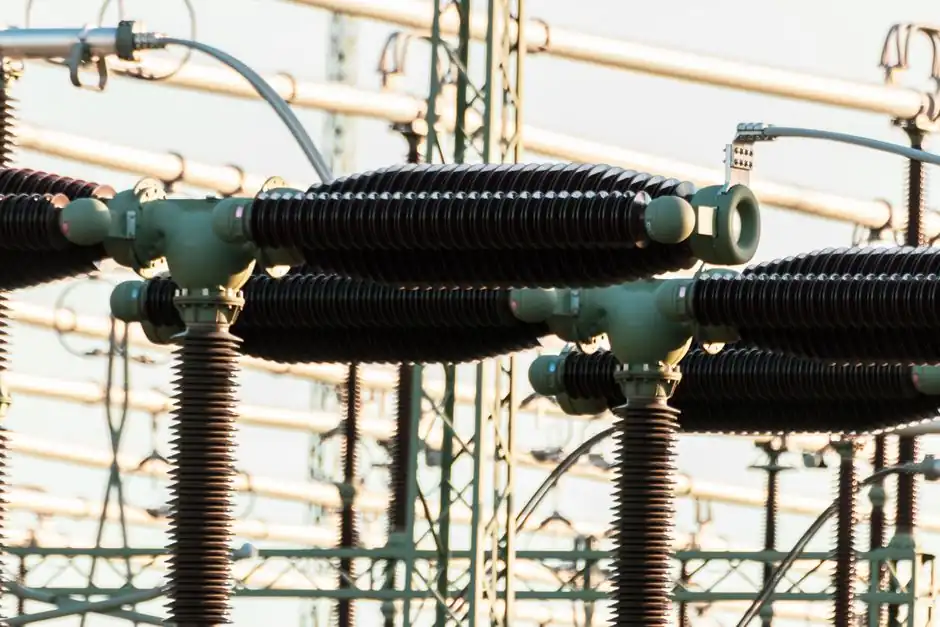
IEC 61850-3 and IEEE 1613 certified industrial routers are the default specification for new transmission and distribution substations, covering electromagnetic immunity, surge, and environmental stress that office-grade IT hardware cannot survive [S1][S6].
IEEE 1613 defines environmental and EMI performance for communications networking devices in electric power substations, while IEC 61850-3 is the global companion for substation environmental requirements covering temperature, humidity, mechanical shock, and dielectric stress [S1][S6]. Together they are the procurement baseline for protection-class network gear.
What the two standards actually require
IEEE 1613 covers ratings and environmental performance for communications networking devices installed in electric power substations, including EMI immunity and fault tolerance criteria for devices that sit in the same cabinet as protection relays [S1]. IEC 61850-3 mirrors those environmental demands globally, with mechanical and electrical test profiles that align with the IEC 61850 substation communication architecture [S2].
Substation controllers and routers carrying both marks are positioned for substation automation, T&D automation, and grid integration markets, where downtime translates directly into relay misoperation and feeder outages [S2]. Phoenix Contact's industrial network components conform to both IEC 61850-3 and IEEE 1613 because a single substation failure can knock an entire protection scheme offline [S6].
Hardware envelope: temperature, surge, and immunity
Substation-hardened routers are typically rated -40 to 85 C operating temperature, with a subset of industrial switches specifying -10 to 60 C where the cabinet HVAC holds the envelope [S5]. Convection-cooled designs are common, since fans fail faster than the silicon inside them; Moxa's DA-820C substation computer pairs the IEC 61850-3 / IEEE 1613 ratings with IEC 60255 compliance for relay-room cohabitation [S3].
Surge and EMI performance matters more than throughput. The standards demand dielectric withstand on power and signal ports, plus conducted and radiated RF immunity that allows the device to sit next to a 110 dBµV arc from a 145 kV disconnect. Power input is typically dual and wide-range, for example 18 to 75 VDC, 85 to 264 VAC, or 88 to 370 VDC on modular substation switches [S5].
PRP, HSR, and the redundancy model
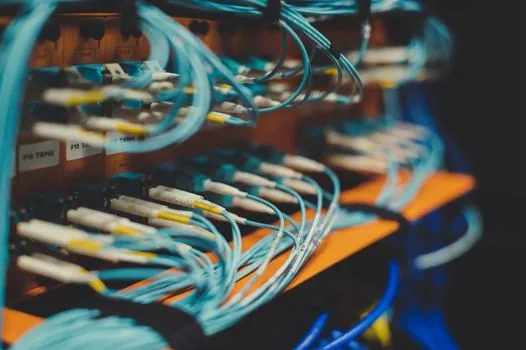
PRP (Parallel Redundancy Protocol) and HSR (High-availability Seamless Redundancy) are the two IEC 62439-3 topologies used to carry IEC 61850-3 GOOSE and Sampled Values traffic with zero-switchover loss, which is mandatory for protection messaging [S3]. PRP duplicates frames on two physically separated LANs, while HSR rings the duplicated traffic; both rely on LAN hardware that drops no frames during a single-path fault.
Moxa's DA-820C line of substation computers ships IEC 61850-3 and IEEE 1613 ratings together with PRP/HSR support, targeted at smart-grid retrofits where existing protection schemes must not be disturbed [S3]. The same redundancy model shows up on modular substation switches from ORing, which carry 24+4 10G ports with PRP/HSR capability inside the IEC 61850-3 / IEEE 1613 envelope [S5].
Selection criteria: where the spec earns its money
For a 110 kV to 400 kV transmission substation, IEC 61850-3 + IEEE 1613 is non-negotiable; the device lives inside a relay panel next to merging units and protection IEDs. For a 11 kV to 33 kV distribution substation, the same rating buys headroom in compact secondary substations where temperature swings and induction from load break switches are real. For pad-mount switchgear cabinets, look for the same pair plus an IP65 or higher enclosure rating. [S3]
For a control house in a hydro or wind plant step-up yard, IEC 61850-3 + IEEE 1613 still applies, but you will also want EN 50155-style shock and vibration data if the router is mounted on a turbine skid. For any site where the LAN only carries SCADA Modbus or DNP3 polling, IEC 61850-3 is overkill; a hardened industrial router with a wider temperature rating is the rational choice.
Comparison: substation router vs hardened industrial router vs office IT router
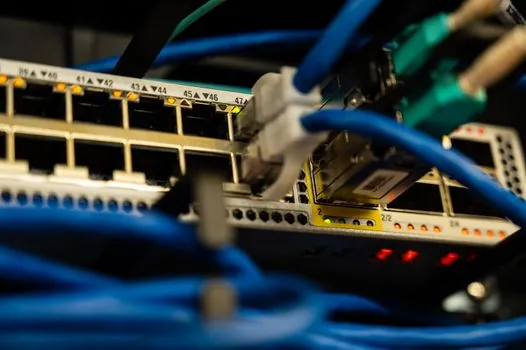
Three device classes show up in utility procurement, and they are not interchangeable. The substation router carries IEC 61850-3 + IEEE 1613 and is built to live in a relay panel. The hardened industrial router carries a wider temperature rating and surge protection but skips the IEEE 1613 EMI profile. The office IT router has neither rating and fails inside a year near a breaker. [S1]
On EMI immunity, only the substation router passes the IEEE 1613 conducted and radiated RF bars plus the IEC 61850-3 surge tests. On temperature, substation routers cover -40 to 85 C; hardened industrial units typically cover -25 to 70 C; office IT stops at 0 to 40 C. On redundancy, substation routers support PRP/HSR, hardened industrial units support LACP or ring protocols only, and office IT has no deterministic failover. On certification cost, the substation router carries the highest BOM but the lowest field-failure rate.
Limits, failure modes, and common spec traps
IEC 61850-3 covers the device, not the antenna, the fiber tray, or the cabinet door. A router that passes the test on the bench can still fail in the field if SFPs are commercial grade, if the fiber bend radius is violated, or if the cabinet ventilation is blocked. The standard also does not mandate cybersecurity; NERC CIP and IEC 62443 sit on top of it, and any substation router bought today should ship with signed firmware, role-based access, and a documented vulnerability-disclosure process. [S3]
Watch for vendors that claim "IEC 61850-3 compliant" without naming IEEE 1613 as a dual rating, since the two are usually specified together for North American and European utility procurement [S6]. Watch for "industrial temperature" claims without a published test certificate; the headline range is meaningless without the test method behind it. Watch for routers that quote PRP/HSR but lack the cut-through latency under 4 microseconds that GOOSE requires; the protocol support without the silicon is marketing.
Sourcing, standards, and verification
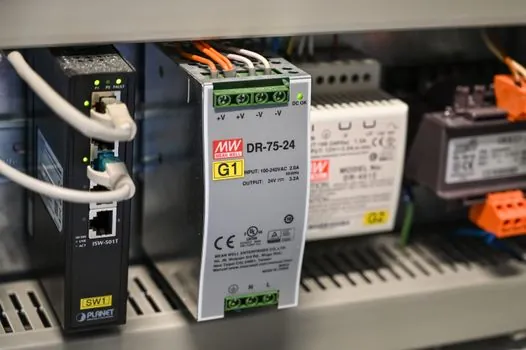
For a serious buy, ask for the IEC 61850-3 test report and the IEEE 1613 certificate by number, plus the operating-temperature evidence on the same hardware revision. Cross-reference the certificate scope against the IEC 61850-3 environmental class your substation falls into, and confirm that the PRP/HSR claim is anchored to IEC 62439-3, not a proprietary ring. [S3]
Cisco's Substation Automation 3.1 design guide is a useful free reference because it lists IEC 61850-3 and IEEE 1613 compliance as a hard requirement for utility-grade routers, alongside stackability up to 3 units, modular WAN options, and integrated firewall functions for NERC CIP environments [S4]. Etherwan, Advantech, Moxa, ORing, and Phoenix Contact all publish product lines on the same dual-rating baseline, with a mix of managed switches, substation computers, and routers covering the same envelope [S1][S2][S3][S5][S6].
Trackable next signals: confirm whether the router's firmware supports IEEE 1588v2 PTP for substation time sync (ORing's RGS-PR9000 includes it within the IEC 61850-3 envelope) [S5], and check the vendor's published MTBF and parts-discontinuance policy before the unit is deployed in a 30-year protection scheme. For broader construction and field-installation context, see how the same construction machinery and equipment classifications are applied in related industrial procurement, and for measurement test workflows on substation acceptance, see the measurement test 3 reference.
Background reading: Dual-rotor vs single-rotor turbine meters: swirl compensation, turndown, and selection.