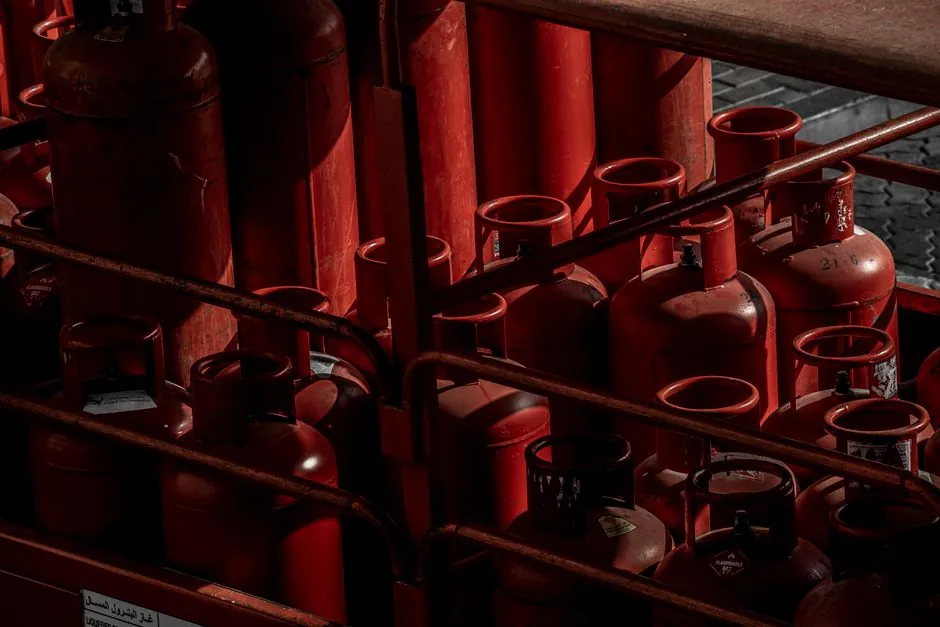
IEC 60079-20-1 subdivides Group II surface-industry gases into three subgroups: IIA, IIB and IIC, ranked by how little energy is needed to ignite the gas and how narrow a gap a flame will propagate through [S3]. IIC is the most demanding, typically associated with hydrogen (MESG 0.29 mm) and acetylene; IIA is the least demanding, typically associated with propane and similar hydrocarbon vapours [S1][S3].
The hierarchy runs IIC > IIB > IIA, so an IIC-certified explosion-proof electrical device is automatically acceptable in IIB and IIA atmospheres, but an IIA device must never be deployed where hydrogen or acetylene may be present [S3][S4]. Most portable equipment, including radios, headlamps, gas detectors and smartphones, is therefore built to IIC as a default so it can move freely between zones without re-certification [S3].
How the Three Groups Are Defined: MESG and MIC Ratio
The two laboratory measurements that drive the classification are MESG (Maximum Experimental Safe Gap), measured in a standardised 25 ml spherical chamber with a 25 mm long gap, and MIC ratio (Minimum Igniting Current ratio), tested in a standard intrinsic-safety apparatus [S3]. A smaller MESG and a lower MIC ratio both indicate a more easily ignited gas, which forces tighter flame-path tolerances and lower permitted energy on the equipment side.
Reference bands quoted across current hazardous-area guidance: IIA: MESG > 0.90 mm, MIC ratio > 0.80; IIB: MESG 0.50–0.90 mm, MIC ratio 0.45–0.80; IIC: MESG < 0.50 mm, MIC ratio < 0.45 [S2][S3]. Hydrogen's MIE of roughly 0.017 mJ at stoichiometric mixture sits two orders of magnitude below methane's ~0.28 mJ, which is why IIC enclosures are engineered with cylindrical or threaded flame-paths rather than the flat joints used for IIA and IIB [S5].
Representative Gases and Where Each Group Shows Up
IIA covers propane, butane, acetone, ammonia, ethanol, benzene, toluene and methane; typical sites are refineries, paint rooms and solvent handling [S2][S3][S4]. IIB covers ethylene, hydrogen sulphide, diethyl ether, coke gas and ethylene oxide; it is the workhorse group for petrochemical plants and many polymerisation areas [S3][S4]. IIC covers hydrogen, acetylene and carbon disulphide; it is mandatory for electrolyser halls, hydrogen compression and storage, acetylene manifolds and most laboratory gas cabinets [S1][S3][S5].
Selection rule used by most EPCs: identify every flammable substance that could be present, including upset conditions and cross-leakage from adjacent processes, then specify equipment certified for the most demanding group actually present [S3]. When hydrogen is a process gas or by-product anywhere on site, the IIC requirement normally extends to all explosion-proof distribution gear in the affected unit, not just the equipment directly contacting H2.
ATEX and IECEx Marking: Reading IIA, IIB, IIC on the Nameplate

On an ATEX or IECEx nameplate, the gas subgroup appears inside the Ex marking string, for example "Ex d IIB T4 Gb" for a flameproof (Ex d) device rated for ethylene-type atmospheres up to surface temperature 135 °C, EPL Gb for Zone 1 [S4][S6]. The full marking also carries the equipment protection level (Ga/Gb/Gc for gases), the temperature class (T1–T6) and the zone suitability; the gas group letter alone is not enough to verify compatibility [S1][S6].
A common reading error is to treat "IIB" as covering hydrogen. It does not: IIC is required for hydrogen, acetylene and carbon disulphide, and IIB + H2 is a separate ATEX variant that explicitly adds hydrogen to the IIB gas list using a "+" suffix on the certificate, rather than the full IIC construction [S5]. Buyers should always request the certificate's gas list and confirm that every on-site substance is listed, rather than relying on the subgroup letter alone [S1][S5].
Decision Matrix: Picking IIA, IIB or IIC Equipment
Match the equipment subgroup to the most easily ignited gas that can realistically reach the enclosure, then verify temperature class and zone separately: [S1]
IIA equipment is the cheapest and lightest of the three because the flame-path gaps can be wider and the housings thinner; it is the right pick for propane, butane, acetone and ammonia service in refineries and paint rooms [S2][S4]. IIB equipment adds tighter flame-path tolerances for ethylene, H2S and diethyl ether; it is the standard for most petrochemical and polymerisation areas and is usually the lowest-cost option that still covers the site's actual gas list [S3][S4]. IIC equipment is mandatory whenever hydrogen, acetylene or carbon disulphide is in the gas list; it costs more and weighs more, but it can substitute for IIA and IIB equipment anywhere, which is why most portable and shared-pool equipment is bought IIC by default [S1][S3].
For fixed gear on a known-pure propane line, IIA is the cost-optimised choice; for a mixed-feed petrochemical unit, IIB is the typical baseline; for any unit that handles, stores or can release hydrogen, IIC is non-negotiable, and a related spec to lock in parallel is housing material, mapped in cast aluminum vs stainless steel explosion-proof housings.
Common Selection Mistakes and How to Avoid Them
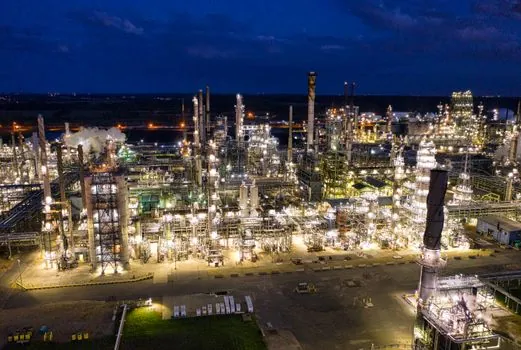
The single most common spec error is deploying IIA equipment in an area that also handles ethylene, which silently upgrades the required group from IIA to IIB and renders the enclosure non-compliant [S1][S4]. A close second is accepting an "IIB + H2" certificate in lieu of full IIC on a hydrogen compressor skid, because the "+H2" variant exists but does not cover acetylene or carbon disulphide, and the gas list on the certificate is what governs, not the subgroup letter [S5].
Other recurring failures: ignoring temperature class while chasing gas group, fitting an IIB-certified explosion-proof light in a location whose surface-temperature limit is below the T-rating, and assuming Zone 2 allows any gas group (it does not: the gas group requirement is independent of zone) [S1][S6]. For fixed combustible-gas detection on the same unit, pair the IIC enclosure decision with a calibrated-gas choice covered in methane vs propane calibration gas for LEL combustible detectors.
Field Signals Worth Tracking Through 2026
Two verifiable signals to watch over the next reporting cycle: hydrogen handling capacity additions at refineries and ammonia/electrolysis projects, which mechanically expand the IIC-rated installed base for fixed and portable equipment [S5]; and the share of new ATEX/IECEx certificates that list "+H2" or full IIC, which has been rising as electrolyser and CCS projects enter construction [S3][S5]. For adjacent enclosure spec work, the next decision node is usually material selection and conduit sealing, both of which sit downstream of the gas group choice.