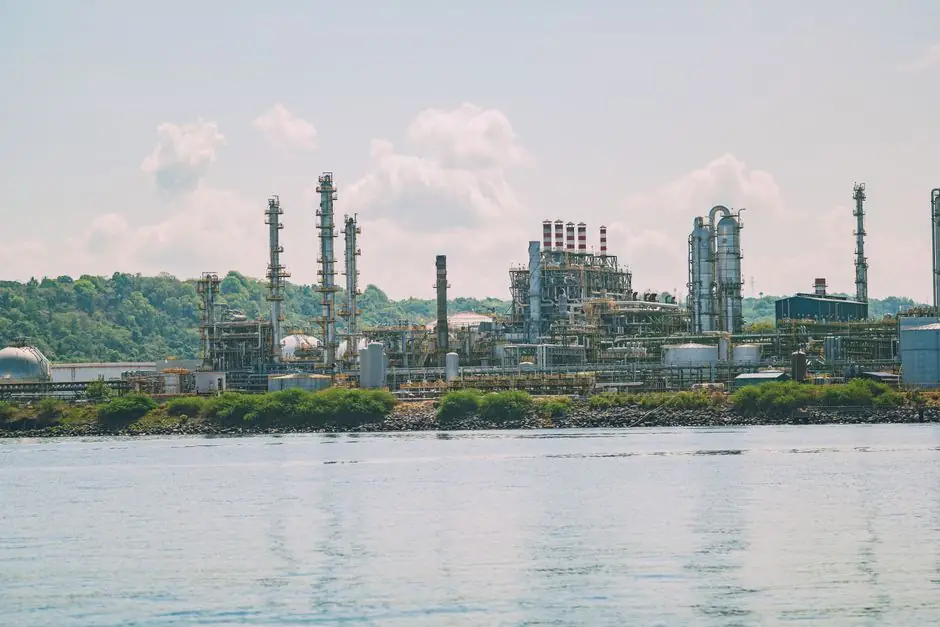
Oil and gas sites demand flameproof (Ex d) enclosures rated for Class I gas groups A through D, while grain elevators and mills require dust-ignition-proof (DIP) enclosures rated for Class II dust groups E through G with surface temperature codes T3 through T6 [S1][S2].
The two industries share an ignition problem, but the physics differ: gas/vapor atmospheres ignite on a single spark near the Minimum Ignition Energy, while grain dust clouds ignite when a hot surface crosses a layer-or-cloud threshold temperature set by the dust's Kst value [S3][S6].
Defining the Two Hazardous Locations
Class I Division 1 in oil and gas covers locations where flammable vapors are present continuously or intermittently during normal operation, mandating enclosures that can contain an internal methane-or-heavier-hydrocarbon explosion and cool escaping gases below the autoignition point of the surrounding atmosphere [S2][S7].
Grain-handling facilities are governed by Class II Division 1, where combustible dust is normally in suspension, and Class III for ignitable fibers; the hazard is the dust layer or cloud meeting a hot surface, not a free gas pocket, so the enclosure's job shifts from flame containment to surface-temperature control and dust ingress prevention [S2][S3]. NEC 500.6 defines these class/division boundaries, and the same article routes a plant to the right equipment family. An explosion-proof electrical component cannot be cross-installed between a gas and a dust environment without re-checking both the group letter and the temperature code.
Protection Method: Contain Gas vs Control Surface Heat
Flameproof Ex d enclosures use engineered flame paths, typically flat or step joints held to a specified gap and width, so that hot gas escaping the internal explosion loses enough heat to the joint walls to drop below the surrounding gas's ignition temperature [S1][S3].
Dust-ignition-proof enclosures instead rely on sealing (typically IP6X) to keep dust out of the electrical cavity and on a temperature code (T-code) stamped on the nameplate to guarantee the external surface stays below the dust cloud's ignition temperature at the worst-case ambient [S2][S7]. The selection rules are codified in explosion-proof electrical equipment selection references, and the same cast-aluminum or stainless steel enclosure can carry very different ratings depending on whether it was tested as a gas or a dust enclosure. For grain sites, the explosion-proof motor and the explosion-proof light families dominate the bill of materials; for upstream oil and gas, the explosion-proof distribution and explosion-proof junction box families carry most of the load.
Group Letters and Temperature Codes: How They Diverge
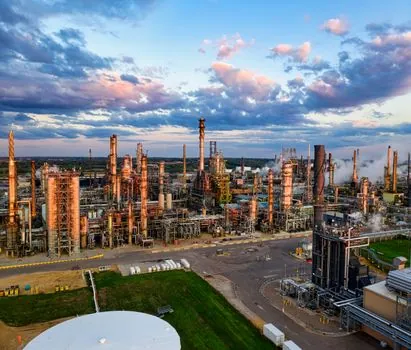
Gas groups under NEC 500 are A (acetylene), B (hydrogen), C (ethylene), and D (propane/methane), with each group setting a different maximum experimental safe gap for the flame path joint [S2].
Dust groups are E (metal dust, most restrictive), F (coal dust), and G (grain dust, least restrictive on gap but still tightly sealed), and the relevant rating is the dust's ignition temperature, which sets a T-code ceiling, for example grain dust typically drives a T3 (200°C) or T4 (135°C) limit depending on the specific commodity and layer thickness [S2][S3]. Surface temperature on a gas detector head in a Class II area matters just as much as the sensor performance: an IR combustible sensor rated T4 at 135°C will be rejected for a wheat-dust application if the dust cloud can ignite at 220°C, because the margin runs the wrong way. The T-code-vs-class trade is laid out clearly in the field guide on T4 vs T6 explosion-proof enclosures, which is directly relevant when a plant engineer has to pick between grain-dust T3C and methane T4 on the same equipment footprint.
Intrinsic Safety vs Explosion Proof: Where Each Wins
Intrinsically safe (IS or Ex i) designs cap circuit energy below the Minimum Ignition Energy of the gas, typically keeping loop power under 1.3 W and surface temperature under 135°C, so the equipment cannot ignite a gas mixture even with two simultaneous faults [S1][S2].
That energy cap is fine for sensors, handheld radios, headlamps, and 4-20 mA loops, but it cannot drive a 30 kW pump motor, so flameproof Ex d enclosures remain the only option for high-power loads in either industry [S1][S6]. In oil and gas, IS dominates instrumentation, gas detection, and operator mobile devices, while Ex d dominates motors, lighting, and distribution; in grain handling, IS is less common and most loads are simply DIP with strict T-codes, because dust tends to require more mechanical robustness on the enclosure than gas. The same divide shows up across vendors: portable gas monitors, headlamps, and tablets tend to be IS, while pumps, light fixtures, and breaker enclosures tend to be Ex d [S6].
Maintenance, Cost, and Lifecycle Differences
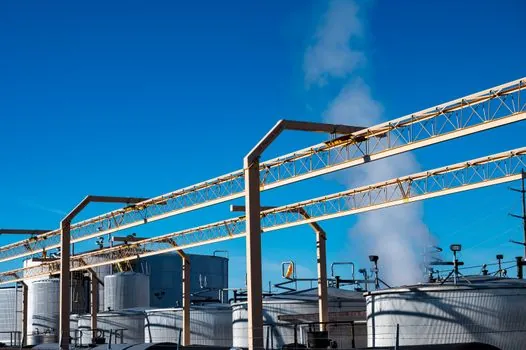
Explosion-proof enclosures cost more up front than ordinary NEMA 4 enclosures, often 3x to 8x the equivalent non-rated product, and they add 15-30% to installed weight on a typical motor or luminaire, which changes cable tray loading and structural support calculations [S3][S4].
Maintenance access is harder: a Class I Division 1 motor in oil and gas usually requires a full gas-test, permit, and de-energization before the cover is opened, whereas an IS instrument loop can often be calibrated hot under a hot-work permit or even live in a Zone 1 area [S2][S6]. Grain sites have a different lifecycle headache: dust ingress and layer accumulation on enclosure surfaces, which means regular (often weekly) cleaning of the radiant heat fins on explosion-proof lights and motor housings to keep the surface temperature reading below the T-code, a maintenance burden that is largely absent in clean gas environments. Warning tape and insulated tools round out the safety stack for both industries, but the enclosure family itself is the cost driver.
Selection Criteria Comparison
Five criteria separate the two industries on a single decision matrix that any engineer can run in a few minutes: hazard class, typical enclosure family, dominant T-code range, dominant equipment list, and maintenance access cost [S1][S2][S3][S7].
For oil and gas upstream and midstream, the matrix reads: Class I Div 1 or Zone 1, Ex d cast aluminum or stainless enclosures, T3 to T6 (135-200°C) depending on gas group, dominated by motors, junction boxes, lighting, and distribution gear, with maintenance access requiring gas test and permit. For grain handling, it reads: Class II Div 1 or Zone 21, DIP enclosures with IP6X sealing, T3 to T4 (135-200°C) limited by grain dust Kst, dominated by bucket elevator motors, belt-conveyor drives, dust-collector fans, and high-bay lighting, with maintenance access gated by dust cleanup and T-code re-verification. A practical rule: if the spec sheet lists a gas group letter, the unit is for oil and gas; if it lists a dust group and an IP6X rating, the unit is for grain [S2][S7].
Use Cases and Common Failure Modes
The dominant oil and gas use cases are drilling rigs, wellheads, compressor stations, refineries, and LNG terminals, where methane, propane, and heavier hydrocarbons drive enclosure selection to Group D minimum and often Group C or B for hydrogen service [S1][S5].
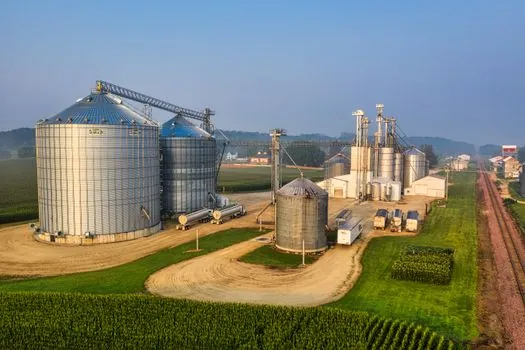
The dominant grain use cases are grain elevators, flour mills, feed mills, and biomass handling, where wheat, corn, soybean, and wood dust drive enclosure selection to Group G and force a T-code that respects the dust's lower ignition temperature and Kst dust-deflagration index [S2][S3]. Failure modes diverge sharply: oil and gas units fail by flame-path damage, wrong gasket replacement, or breathing/drain plug loss after maintenance; grain units fail by dust blanket on the surface (which effectively re-rates the T-code) or by bearing failure in a dust-choked motor, which then drives the surface temperature up through the T-code ceiling. The explosion-proof button and gas detector families are common to both industries, but the cleaning interval on the button station and the bump-test interval on the detector are very different between a gas plant and a grain elevator.
Standards, Sourcing, and Trackable Signals
North American projects work to NEC 500/505 (Class/Div or Class/Zone), while European and global projects work to ATEX 2014/34/EU and IECEx, with IEC 60079-0 and the IEC 60079-1 (Ex d) and IEC 60079-31 (Ex t) sub-parts governing the enclosure tests; grain-handling projects in the US also touch NFPA 61 (Standard for the Prevention of Fires and Dust Explosions in Agricultural and Food Processing Facilities) and NFPA 654 [S3][S7].
Two trackable signals for the next quarter: first, the explosion-proof electrical equipment market report published 2026-09-11 flags oil and gas and chemical processing as the largest application share, with grain and food processing called out as a fast-growing secondary segment, which means more vendors will carry both Ex d and DIP families on the same lead time [S4]. Second, hydrogen service is driving Ex d enclosure demand on the oil and gas side as blue and green hydrogen projects move into design, which pushes group letter B (hydrogen) requirements into conventional upstream specs and tightens the supply of Group B-rated enclosures through 2026 [S5].