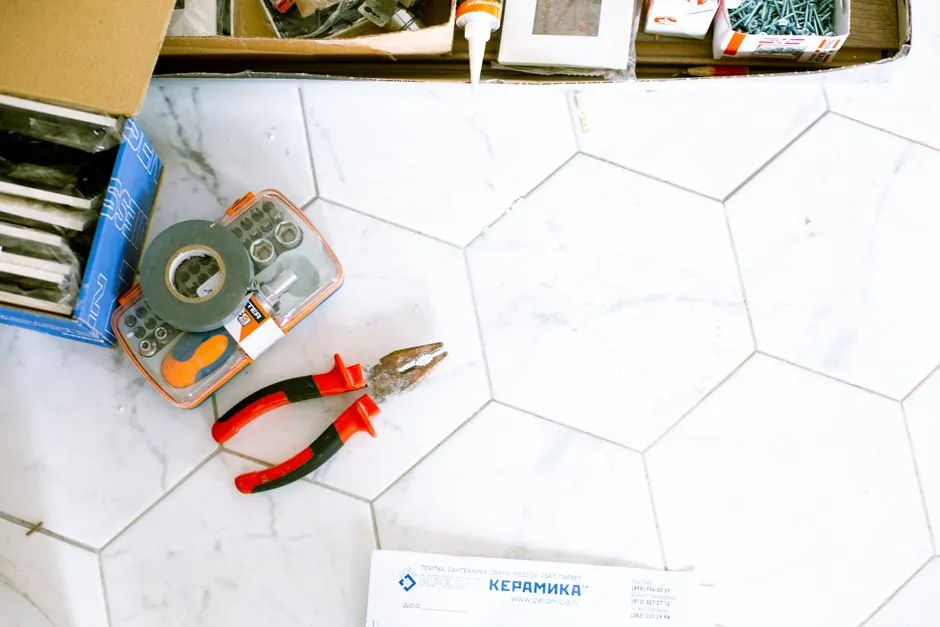
For plumbing installation work, the SDS-Plus cordless rotary hammer in the 18-26 V class, delivering 1.5-2.5 J of impact energy, is the correct primary tool for drilling anchor holes, setting pipe hangers, and running water lines through block walls [S3][S6]. A standard hammer drill is not enough when the substrate is poured concrete, reinforced masonry, or hollow block with grouted cells, because hammer drills use a mechanical cam action that cannot sustain drilling past about 10 mm in dense material [S1][S5].
Plumbing-specific duty cycles are short but repetitive: 6-20 mm holes for sleeve anchors, 10-16 mm through-holes for waste and vent stacks, and the occasional chase cut for an embedded pipe. The tool that fits this profile is compact, weighs under 4 kg, runs on the same battery platform the contractor already owns, and switches between drill, hammer-drill, and hammer-only modes without tools [S3][S6]. The reference standard for concrete drilling consumables (SDS-Plus bit geometry) is the TE-C shank pattern widely used across 18 V rotary hammer lines [S1].
Rotary Hammer vs Hammer Drill: When the Plumbing Trade Actually Needs the Bigger Tool
Rotary hammers use an electro-pneumatic piston mechanism that delivers two to three times the impact energy of a mechanical-cam hammer drill of the same wattage, which is why they drill 10-26 mm holes in 30+ MPa concrete without stalling [S1][S5]. Hammer drills top out at roughly 1 J of impact energy and are limited to brick, light masonry, and small-diameter holes, while rotary hammers in the SDS-Plus class deliver 1.5-2.5 J as a working range for plumbing-scale work [S1][S6]. A plumber who tries to set 12 mm wedge anchors with a hammer drill will burn through clutch springs and bits; a plumber using a rotary hammer for the same job will spend about a third of the time per hole [S5].
The other decisive difference is operator load. Rotary hammer electro-pneumatic systems decouple impact reaction from the user's wrist, so vibration transmitted to the hand-arm is materially lower than a cam-action hammer drill of equivalent hole size, and built-in anti-vibration (AVT) handles reduce it further [S3][S4]. For a plumber doing 30-60 holes per day on a commercial rough-in, that gap is the difference between finishing the day able to feel fingers and finishing it with white-finger symptoms.
Chuck System, Impact Class, and Bit Selection for Plumbing Holes
SDS-Plus is the correct chuck for plumbing-installation rotary hammers because the bit shank geometry handles the 6-26 mm diameter range that covers 95% of plumbing anchor and through-hole work, while SDS-Max is reserved for 30 mm+ demolition bits and core drilling [S1][S4]. The SDS-Plus shank slides freely in the chuck during the impact stroke, which is what allows the piston to drive the bit forward without binding, and the same system accepts pointed and flat chisels for chase cutting and tile removal [S1].
For impact energy, the practical band is 1.5-2.5 J for SDS-Plus and 5-20 J for SDS-Max; plumbing rough-in sits almost entirely in the lower band [S1][S6]. Drilling speed in 30 MPa concrete, with a 10 mm SDS-Plus bit, is typically 80-150 mm/min at 2 J, which means a 100 mm deep anchor hole finishes in under a minute [S4]. Use carbide-tipped SDS-Plus bits matched to the shank standard; rebar will deflect a standard bit and require a rebar-cutting or specialty bit, otherwise the bit will bind and the slip clutch will be tested [S3][S4].
For three-mode operation: drill-only for wood backing plates and metal strapping, hammer-drill for concrete and masonry, hammer-only for chasing channels and breaking out old pipe penetrations [S1][S3]. A tool missing hammer-only mode forces the plumber to borrow a dedicated demolition hammer for chase work, adding cost and a second battery platform to the van.
Matching Cordless Platforms to Plumbing Crew Workflow
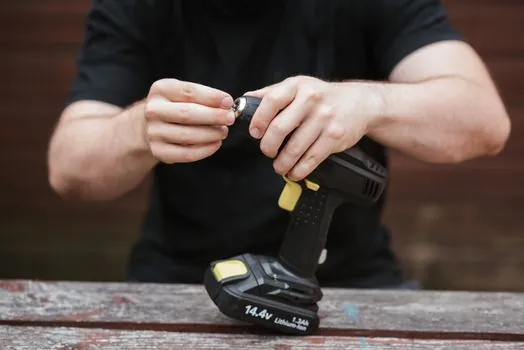
The 18 V cordless rotary hammer is the workhorse for solo plumbers and small crews because the battery platform is shared with drill drivers, impact drivers, and reciprocating saws from the same brand, which keeps van weight and charger count manageable [S3]. The 36 V (or 18 V dual-battery) class adds 20-30% more impact energy for continuous work in 30+ MPa concrete, but the extra weight (often 4.5-5.5 kg) becomes a liability for overhead drilling in ceiling-mounted pipe runs [S3][S6].
Battery capacity matters more than marketing amp-hour claims: a 5.0 Ah battery delivers roughly 60-80 holes of 8 mm x 60 mm in concrete per charge at 2 J, and a 9.0 Ah pack roughly doubles that, so high-cycle jobs (multi-floor rough-in) justify the larger pack despite the weight penalty [S3]. Brushless motors have become the default in the 18-26 V SDS-Plus class because they extend runtime 20-30% over brushed equivalents and eliminate brush-commutator failure as a service item, which is the most common rotary hammer failure mode after chuck wear [S3].
For plumbing contractors who already standardize on one platform, sticking to that platform for the rotary hammer avoids carrying two charger types and two battery inventories; this matters more than incremental performance differences between competing 18 V SDS-Plus models from Milwaukee, DEWALT, Bosch, Makita, and Hilti [S3][S6].
Key Selection Criteria: What Plumbers Should Verify Before Buying
Three-mode selector switch (drill, hammer-drill, hammer-only) is non-negotiable for plumbing work because it determines whether the same tool can chase a channel, drill a 12 mm anchor hole, and drive a small-diameter wood bit without a bit change or a second tool [S1][S3]. Slip clutch or kickback control is the second non-negotiable: when a bit binds on rebar, the clutch must decouple torque before the wrist is wrenched, and Bosch's KickBack Control, Milwaukee's AUTOSTOP, and Hilti's TPS systems all address this with different electronic implementations [S3].
Weight under 4 kg for the bare tool (without battery) is the practical ceiling for overhead drilling; above 4.5 kg, operator fatigue on vertical and overhead work becomes the productivity bottleneck [S3]. Side handle that rotates 360 degrees is required because plumbing holes are not always perpendicular to the floor, and a fixed-position handle forces the operator into awkward wrist angles [S3][S4].
Dust extraction port compatibility is increasingly specified on commercial jobs because silica dust regulations (OSHA 1926.1153 in the US, similar rules in EU jurisdictions) require dust capture at the tool for many concrete-drilling tasks, and a tool without a standardized dust-port interface requires an aftermarket shroud that often blocks bit changes [S4]. Quick-change chuck (SDS-Plus to keyless three-jaw) is a useful option for the plumber who occasionally needs to drive a 13 mm wood bit for backing plates without a second drill, but adds cost and length [S3].
Comparison: Four Cordless SDS-Plus Rotary Hammers Common on Plumbing Trucks

The 2026 shortlist for plumbing-grade 18 V SDS-Plus rotary hammers includes the Milwaukee M18 FUEL 2912-20, DEWALT DCH273B 20V MAX XR, Bosch GBH18V-26K24, and Makita XRH04ZB 18V LXT, all of which meet the three-mode, brushless, AVT-equipped minimum spec [S3]. On cordless convenience and battery-platform breadth, the M18 FUEL 2912-20 has the largest installed base among US plumbing and mechanical contractors because the M18 platform spans over 250 tools, so charger and battery sharing is essentially free [S3].
On weight and overhead comfort, the DEWALT DCH273B and the Makita XRH04ZB are the lightest of the four at roughly 2.5-3.0 kg bare, which makes them the practical pick for plumbers who spend more than half the day on a ladder [S3]. On safety electronics, the Bosch GBH18V-26K24's KickBack Control and integrated vibration control are the most aggressive in the group, which justifies a price premium for crews that drill overhead into rebar-dense slabs [S3]. On raw impact energy in the SDS-Plus 18 V class, all four sit in the 1.7-2.5 J band, which means differences in real-world drilling speed are typically within 10-15% on the same bit and substrate; the platform and ergonomics decision dominates the buying call, not the joule number on the spec sheet [S3][S6].
For larger work such as 30 mm+ core holes for waste stacks through 300 mm foundation walls, the SDS-Max class rotary hammer is required, and the same brand-platform logic applies: buy the SDS-Max tool that matches the SDS-Plus platform already in the van [S1][S3]. Plumbers who occasionally need such large holes but do not justify owning an SDS-Max tool rent by the day at roughly $60 per day in the North American market, per plumbing-tradeshop discussion in 2018, with current rental rates tracking similar per-day economics for the 2026 market [S2].
Field Failure Modes: Chuck, Clutch, Brush, and Bit
Chuck wear is the number one field failure on SDS-Plus rotary hammers used by plumbers, and it shows up as bits walking out of the bore under impact or as a chuck that will not release the bit; the cause is dust ingress into the slotted shank sockets, and the fix is a chuck service kit, not a new tool if the gearbox is intact [S1][S2]. The slip clutch is the second-most-common wear item, and it fails either as a clutch that slips under no load (worn cam plates) or as a clutch that does not slip at all (contactor or electronic-trip failure), and the latter is what tradespeople describe as a tool that "only starts to hammer when it has pressure against something" [S2].
Brushed motors on older or budget rotary hammers need brush replacement every 200-400 operating hours, which is why brushless has become the default for daily-use professional tools; the brushless rotor also runs cooler, which protects the impact mechanism bearings [S3]. Bit breakage is not a tool failure but a selection failure: using a 6 mm bit where a 10 mm bit is required because the substrate has hidden rebar will snap the smaller bit, and the right corrective action is to switch to a rebar-cutting bit or relocate the hole, not to push harder on the smaller bit [S4].
Vibration-related operator symptoms (numbness, tingling, loss of grip strength) are a usage failure rather than a tool failure, and the corrective action is to switch to an AVT-equipped tool, reduce trigger time per shift, and verify the AVT handle is actually mounted; many plumbers leave the AVT handle in the case and lose the benefit, which is a documented mistake on commercial jobsites [S3][S4].
Decision Rules: Buy, Rent, or Escalate
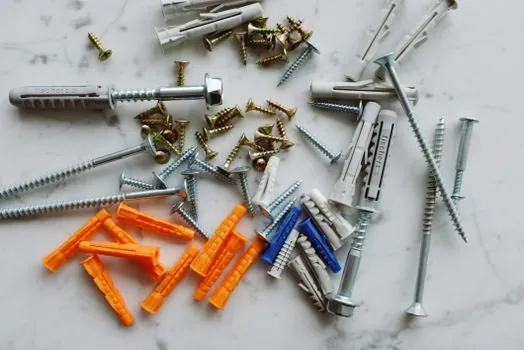
Buy an SDS-Plus 18 V rotary hammer if the plumber drills more than 20 holes per month in concrete or block, or if the job involves any chase work, anchor setting, or pipe-hanger installation in masonry; the payback versus daily rental is typically under six months at that duty cycle [S2][S3]. Rent an SDS-Max rotary hammer for one-off large-diameter core drilling, foundation penetrations over 30 mm, or demolition of a cast-iron stack; the rental cost of roughly $60 per day is cheaper than the $600-900 purchase cost when the job finishes in one or two days [S2].
Escalate to a rotary drilling rig or a core-drilling contractor when the hole diameter exceeds 100 mm, when the substrate is post-tensioned concrete (where uncontrolled drilling can sever a tendon), or when the hole count exceeds 200 of the same size in a single pour, which signals that a dedicated core drill and operator would be more efficient than a rotary hammer [S1][S3]. For plumbing anchors, sleeve anchors, and pipe hangers up to 16 mm in standard 25-35 MPa concrete, the SDS-Plus rotary hammer remains the right tool and the right class.
Plumbers buying a rotary hammer for the first time should verify three things in person: the chuck actually accepts and releases a worn bit smoothly (not just a new one), the mode selector clicks positively into each detent under load, and the tool balance point is within 50 mm of the grip when the battery is fitted; a tool that is tail-heavy on the bench will be worse on a ladder. These three checks eliminate the majority of in-service dissatisfaction that shows up within the first month of ownership.
Trackable signals for the next 6-12 months: adoption of integrated dust-extraction shrouds as standard kit on commercial plumbing rough-in (currently optional on most 18 V SDS-Plus models), wider release of 18 V platforms with 2.5+ J impact energy at sub-3 kg bare-tool weight, and continued migration from brushed to brushless motors across all major professional SDS-Plus lines [S3][S4].
Detailed specification references: rotary hammer.
See also our earlier report, Hydrostatic vs Laser Level: Spec-Level Decision Map for Process Tanks and Silos.