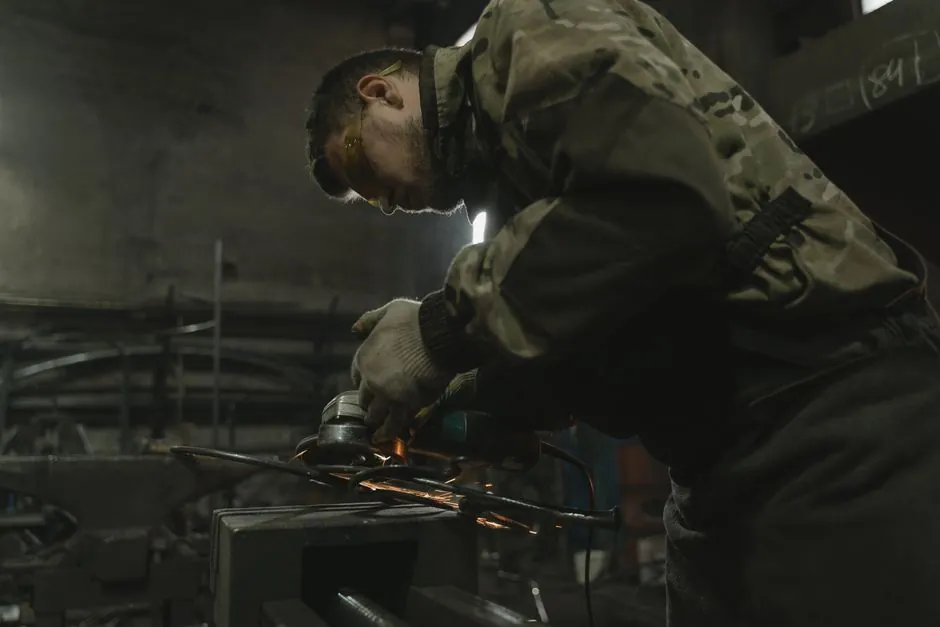
An impact drill is a rotary power tool that adds a per-revolution axial hammering pulse to a rotating bit, letting it break through brittle substrates that defeat a plain drill driver, with mid-range models commonly rated around 550-850 W corded or 18-20 V brushless cordless [S3][S4].
The tool sits in a three-tier electric-drill hierarchy (hand drill < impact drill < rotary hammer), with the impact drill differentiated from the rotary hammer by gear-driven rather than piston-driven percussion, which limits peak impact energy to roughly 1-3 J per blow versus the 8-20 J typical of an SDS-Plus rotary hammer [S3].
Impact Mechanism Variants: Dog-Tooth vs Ball-Type
Two impact-mechanism architectures dominate the impact-drill category: the dog-tooth (ratchet-tooth) design and the ball-type design, with the latter further broken down by the steel-ball count on the moving and fixed discs [S3][S6].
Ball-type units use a moving disc threaded to the main spindle carrying 12 steel balls, mated against a fixed disc (pinned to the housing) carrying 4 steel balls; under axial thrust, the 12 balls roll across the 4, converting rotation into intermittent rotary impact that the carbide bit transmits into masonry [S3][S6]. Disengaging the fixed disc converts the same gearbox back into a plain rotation-only drill, the standard 2-mode selector on consumer impact drills [S3].
Power Classes: Corded, Cordless Brushless, and Pneumatic
Impact drills split into three power-source classes, each with distinct duty cycles and operating envelopes: corded AC mains (typical 500-900 W input), cordless DC at 18 V or 20 V Max nominal (12-18 V nominal under load), and pneumatic for assembly-line and hazardous-area work [S1][S2][S4].
Brushless DC motors now dominate the cordless segment because they deliver higher usable torque per amp-hour, run cooler, and allow a shorter tool head than brushed equivalents, while corded AC units remain the reference for sustained heavy masonry work where weight and battery runtime are not constraints [S4]. Pneumatic impact drills (1/4" or 3/8" air inlet, ~90-110 psi / 6-7.5 bar working pressure) are specified where spark-free operation matters, such as refinery turnaround or paint-booth work, and pair naturally with industrial air impact wrench platforms on the same compressor ring [S7].
Comparison Matrix: Hand Drill vs Impact Drill vs Rotary Hammer
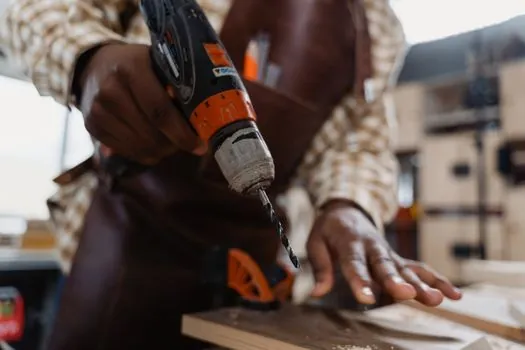
The defining selection question is substrate hardness, and three machine families map cleanly onto that axis, with the impact drill occupying the middle band. [S4]
Hand drill (drill driver) produces pure rotation, typically 0.8-10 mm chuck, no axial percussion; it is correct for wood, plastic, and thin-gauge metal under 3 mm [S3][S4]. Impact drill adds intermittent axial impact at 0-30,000 BPM (model-dependent) and a 10-13 mm keyed or keyless chuck; it will punch clean holes in brick, block, and unreinforced concrete up to about 10-12 mm diameter, and it will struggle or stall on rebar or aggregate above 12 mm [S3][S7]. Rotary hammer (SDS-Plus or SDS-Max) replaces the gear percussion with a pneumatic piston delivering 1.5-20 J per blow at 4,000-4,500 BPM, which is what enables productive drilling in reinforced concrete above 12 mm and chiseling work [S3].
For a procurement engineer, the rule of thumb that holds on most job sites: if the substrate is brick, block, or lime-sand brick, the impact drill is the cost-effective choice; if steel reinforcement is likely, step up to an SDS-Plus rotary hammer; if no percussion is needed and only holes in wood/metal are being drilled, the impact drill function can simply be switched off and the tool used as a plain drill driver [S3][S5].
Drive Train and Control Features That Drive Spec
Four control features separate a usable impact drill from a frustrating one, and each maps to a specific spec line on a data sheet. [S4]
First, a clutch collar with multiple torque position settings plus a drill-only setting, which prevents fastener head snap-off and protects small-diameter bits; second, a variable-speed trigger with a two-speed gear letting the operator start a hole slowly and ramp up; third, a forward/reverse rocker switch for fastener extraction; fourth, a brushless motor on premium cordless models, which removes brush wear as a maintenance item [S4].
Chuck type is a fifth decision point that engineers often underweight: keyed chucks (10-13 mm) hold bits more concentrically under impact load and are still preferred for production masonry work, while keyless plastic-jaw chucks (10-13 mm) dominate DIY and trim carpentry for speed of bit change. Auxiliary side handles are standard on impact drills above 700 W because the impact pulse transfers shock to the operator's wrist; the handle also gives a second reference point for keeping the bit perpendicular to the substrate [S3][S4].
Chucks, Bits, and Compatibility With Rotary Hammers
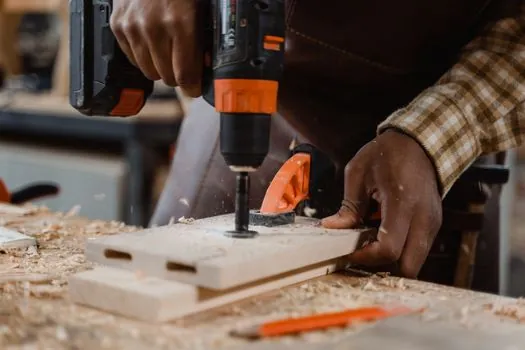
Chuck interface is the single most consequential compatibility point in this tool category, because an SDS-Plus bit will not seat in a keyed or keyless three-jaw chuck and a three-jaw chuck will not accept a 1/4" hex impact driver bit. [S4]
Standard impact drills use a three-jaw chuck (keyed or keyless) that accepts round-shank twist bits up to 10 mm in wood/metal and 6-12 mm masonry bits with carbide tips; rotary hammers instead use SDS-Plus (10 mm shank) or SDS-Max (18 mm shank) for the same drilling duty at far higher impact energy [S3][S7]. An impact driver (often confused with an impact drill) uses a 1/4" hex quick-change collet and is optimized for fastening rather than hole-making, with typical no-load speeds of 0-2,800 RPM and impacts at 0-3,500 IPM, but no precision chuck for drilling larger round holes [S1][S2][S4].
For procurement, the practical rule is: an impact drill is the right tool for a mixed-electrical-and-masonry job (running conduit through brick, mounting boxes on concrete block) where hole diameters stay at 12 mm or below, while any SDS-Plus rotary hammer is the right tool above 12 mm or in reinforced concrete, and the construction machinery and equipment line on a site should keep both classes available rather than over-spec one of them.
Failure Modes, Limits, and Sourcing Standards
Impact drills fail in three predictable ways, and each ties back to a specific spec limit on the data sheet. [S3]
Mode 1: chuck jaw slip on masonry bits, caused by under-sized chuck capacity (always leave 1-2 mm headroom above the largest bit shank) or worn jaw faces; replace the chuck rather than the tool if the body and motor are healthy [S4]. Mode 2: motor brush or commutator wear on brushed cordless units, which is why brushless is now specified for daily-trade use; brush life on a brushed impact drill is typically 200-400 hours before a service interval. Mode 3: gear-train fatigue on the impact sub-assembly, accelerated by forcing the tool in hammer-only mode into steel or dense aggregate, which is the misuse case the dog-tooth and ball-type mechanisms are least tolerant of [S3].
Standards coverage is light on the tool itself but heavy on the surrounding ecosystem: bit concentricity and hardness are governed by ISO 2351-1 for rotary hammer drill bits, while electrical safety on corded units falls under IEC 60745-1 (hand-held motor-operated electric tools, safety) with the impact-drill-specific part being IEC 60745-2-1. Cordless units additionally need IEC 62133 (battery safety) for transport, and on hazardous-area job sites the pneumatic variant is the default because it eliminates the ignition source entirely [S1][S7]. For the broader drill category, including right-angle and hammer-drill variants on the cordless side, see the air impact wrench reference, and for site lighting used with these tools the lamps and light fittings guide covers task-light specification.
Track these signals next: Metoree and similar industrial OEM directories list 10+ impact-drill manufacturers in 2026, with new brushless 18-20 V platforms and higher-impact ball-type gearboxes as the two main R&D vectors; cordless 12 V compact impact drills are displacing 18 V units on light-duty jobs, while corded impact drills are holding their share on construction sites above 800 W where sustained masonry drilling dominates.
Related analysis: Thermal Overload Relay Selection: Current Range, Trip Class, and Contactor Match.