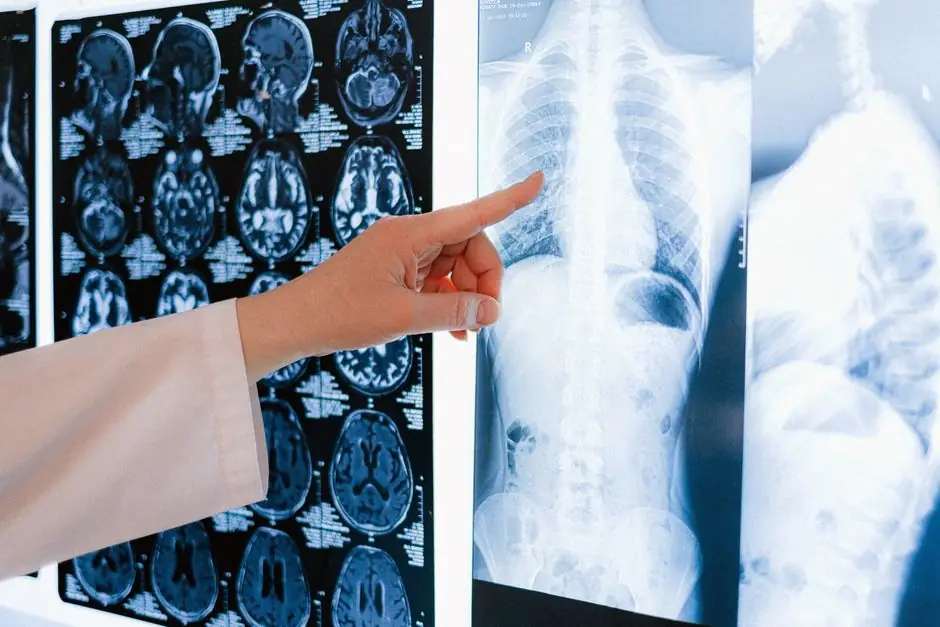
An in-line industrial CT system for EV cells targets a 3-second acquisition per part, supporting about 20 parts per minute on a moving line, while offline CT runs minute-scale to hour-scale scans on samples removed from the line [S4].
The decision is not really image quality versus speed, it is closed-loop production control versus forensic-grade resolution, and the two architectures are increasingly deployed as complementary stations in the same gigafactory rather than as competing options [S2][S5].
Where the two architectures sit on a battery line
An in-line CT scanner is mechanically integrated into the cell assembly or formation flow, fed by automated part handling, and tied into the manufacturing execution system so a defect can trigger an immediate reject signal before downstream value is added [S2]. Offline CT is a bench or lab system where technicians or robots move a sampled cell into a shielded cabinet, where scan time and X-ray dose can be increased freely to chase finer features [S2]. Both sit on the same physics: a rotating source-detector pair collecting projections that are reconstructed into a 3D density volume, and both can be paired with the same automated defect recognition model stack trained on labelled cell images [S3].
On a prismatic, cylindrical, or pouch line the practical distinction is throughput. Inline EV battery CT typically demands a full 3D scan in about 3 seconds, giving 20 parts per minute, a pace that the rest of the line must be designed around, and 2D X-ray line detectors are usually the higher-throughput fallback when 3D coverage is not required at every station [S4].
Defect coverage: what each method reliably catches
Offline CT resolves finer features and subtler anomalies because longer scan times and higher dose produce cleaner reconstructions, which is why it dominates first-article inspection, R&D, and failure analysis [S2]. In-line CT is tuned to the critical, production-relevant defect list and accepts slightly lower contrast resolution in exchange for cycle time [S2].
The two failure modes that 2D inline X-ray cannot adequately probe, anode-cathode overhang and particle contamination, are exactly where 3D CT earns its slot on the line, and 3D CT also delivers metrology on electrode alignment, coating thickness uniformity, jelly-roll curvature, and overhang across the full cell rather than along a single slice [S5][S6]. A 2024 open dataset of more than 1,000 CT scans across seven cell types (cylindrical, pouch, prismatic, both Li-ion and Na-ion chemistries) gave the community a common benchmark to train and compare those algorithms [S1].
Throughput, dose, and file size: the engineering trade-offs
Three factors cap how fast CT can be pushed on a moving line, scan time, reconstruction throughput, and the tens-of-gigabytes file size that each volume produces, and historically those three combined made CT a slow, lab-only tool [S1]. High-brightness reflective-target X-ray sources and large-area flat-panel detectors now cut acquisition windows into the low single-digit second range, and inline CT hardware is engineered for thermal stability, vibration tolerance, and consistent X-ray output so the system survives a 24/7 factory environment [S2][S5].
The payoff on a prismatic or cylindrical line is that a CT station can sit between winding/stacking and formation, catching foreign particles, electrode misalignment, and overhang defects before electrolyte filling and aging consume the cell's value, and a complementary post-formation CT station can then correlate cathode dimensions with measured cell energy for process control [S5]. For perspective, a single Tesla Model S pack weighs about 544 kg, and the average EV pack is near 450 kg, so a single defective cell discovered after pack build represents a much larger write-off than the same cell caught at the winding station [S4].
Decision matrix: pick by use case, not by spec sheet
Choose in-line CT when the requirement is every-cell coverage on a moving line, closed-loop reject to the MES, and the cell's value-added at the inspection station is still low enough that 100% inspection pays for itself [S2][S5]. Choose offline CT when the requirement is root-cause analysis on field returns, process-development imaging for new cell designs, first-article qualification, or detection of micron-scale features that demand multi-minute scans and the highest available signal-to-noise ratio [S2][S7].
Pick 2D inline X-ray (line detector) when the only question is gross electrode position and throughput must exceed what 3D CT can deliver; pick 3D inline CT when overhang, particle contamination, or layer thickness must be controlled across the full cell volume; pick offline CT when a known defect population is being characterised and the sample size is small enough that throughput does not matter [S4][S5]. For very high-volume gigafactories the trend is hybrid: a fast 2D X-ray screen on every cell, a 3D in-line CT on a sampled fraction, and an offline CT lab that feeds failure data back into the inline defect models [S5].
What the data, standards, and limits look like in practice
The Condon et al. 2024 dataset is now the de-facto public benchmark for training cell-defect models: over 1,000 CT scans, seven cell types, both Li-ion and Na-ion chemistries, and two large batches of 400 and 500 cells each where within-model manufacturing variability can be observed directly, with PNG slices rather than raw volumes to keep file size consumable [S1]. Industrial CT has been used for cell-level failure analysis since at least the mid-2010s on high-profile investigations, and the same hardware has steadily moved from forensics-only into pilot-line and now full gigafactory deployment [S7]. The honest constraint is that no single revision of a published standard specifies "in-line CT cycle time for EV cells", and the 3-second, 20 ppm figure remains a vendor-stated engineering target rather than a regulated threshold [S4].
For plants weighing capital, the right question is not "in-line or offline" but "which stations get 2D, which get 3D in-line, and which get offline", and the answer is set by the defect list the cell maker refuses to ship. A practical trackable signal in the next 6 to 12 months is whether more gigafactories publish correlated post-formation CT metrology with measured cell energy, the data pattern that turns 3D CT from a cost centre into a process-control sensor for formation recipes and coating-line feedback.
Spec-level background on the components involved: pressure transmitter, flow meter, and industrial valve.
For related coverage, see Two-Row vs Four-Row Circulating Ball Linear Guide: Spec Decision Matrix.