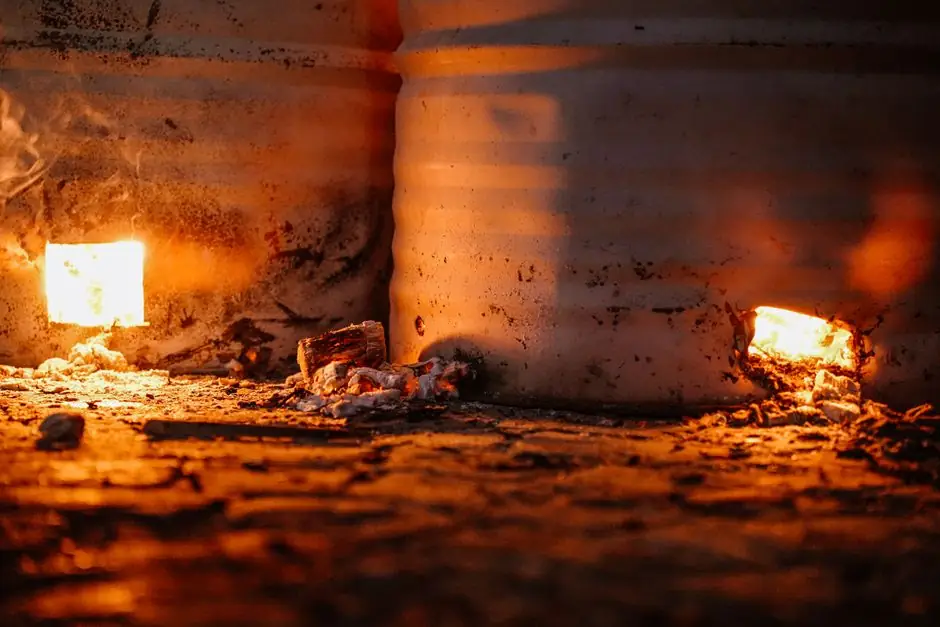
Lighting-fixture foundries typically pour brass, bronze, aluminium, and zinc die-cast alloys, and a coreless medium-frequency induction furnace is the dominant melting platform for batch sizes between 50 kg and 1,500 kg per heat [S2].
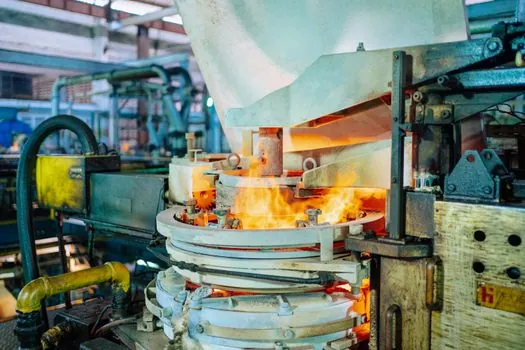
The coreless design, also called a high-frequency induction furnace, uses a refractory-lined crucible surrounded by a water-cooled copper coil, with no iron core, so the magnetic flux density is low and the supply frequency must rise to drive eddy-current heating (P_e proportional to B squared and f squared) [S2].
Furnace Types and Frequency Bands
Three coreless variants dominate the lighting-fixture supply chain: mains-frequency (50/60 Hz) channel furnaces for foundries pouring 500-5,000 kg of brass or bronze, medium-frequency (150-10,000 Hz) units sized 50-1,500 kg, and high-frequency (10-300 kHz) small-batch units for precision cast brackets, finials, and decorative components under 50 kg [S2].
A medium-frequency furnace rectifies three-phase mains AC to DC, then inverts it to adjustable current that feeds the inductor and capacitor bank, producing the dense magnetic flux lines that cut the metal charge and generate eddy currents [S9]. For lighting hardware, the medium-frequency band hits the sweet spot: enough stirring for alloy homogeneity, low enough frequency to limit skin-effect copper loss in the primary winding, and short melt cycles that keep zinc and aluminium oxide dross manageable.
Power Factor, Capacitor Banks, and Coil Cooling
Because the coreless geometry has poor magnetic coupling, the uncorrected power factor lands between 0.1 and 0.3, and static capacitor banks are switched in parallel to push the working power factor back near unity; capacitance is varied during the heat cycle because the load reactance drifts as the charge melts [S2].
The primary winding is built from hollow copper tubes rather than solid wire so cooling water can flow directly through the conductor, offsetting the skin-effect copper loss at high frequency [S2]. For foundries running two-shift production of brass lighting bodies, the practical water demand is 4-8 L/min per 100 kW of coil power, and chill blocks plus flow switches sit on the critical spares list because a water failure during a heat will pit the copper coil within seconds [S1].
Refractory Lining and Crucible Selection
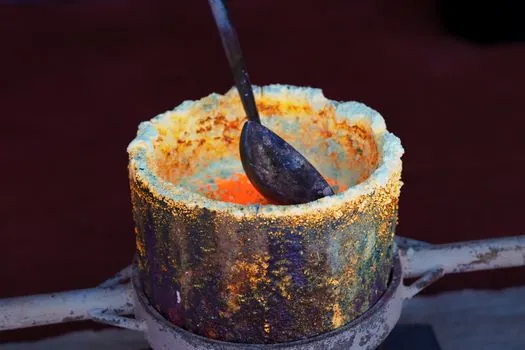
The crucible performs double duty: it contains the molten alloy and acts as the secondary winding of the air-cored transformer, so any crack in the lining breaks the electromagnetic circuit and shows up as melt-rate collapse before it shows up as a leak [S2].
For brass and bronze lighting hardware, alumina-spinel ramming mixes are standard; for aluminium components, higher-alumina or magnesia-based linings resist the aluminium-silicate attack that otherwise dissolves a silica-based crucible in a few hundred heats. Monolithic precast crucibles speed changeovers in jobbing foundries producing mixed alloy batches, and the typical campaign life at 1,200-1,250 degC brass temperatures is 200-400 heats before re-ramming.
Capacity Sizing, Pouring, and Stirring
Coreless furnaces tilt for pouring, and the lightweight crucible/coil assembly is sized to the pour weight of the largest lighting-fixture component in the production mix, plus a heel of 15-25 percent to keep the electromagnetic coupling stable on the next start [S2].
Stirring is a free benefit of the design: the induced eddy currents set up electromagnetic forces that circulate the bath, which is what gives coreless induction its reputation for uniform alloy chemistry, a non-trivial advantage when lighting foundries run tight colour matches on architectural brass. The trade-off is a convex meniscus that floats lighter oxides toward the wall, where they stick to the refractory instead of being skimmed, so operators pour from a clean central zone.
Spares, Brand Compatibility, and After-Sales Reality
Replacement components for induction melting furnaces are a measurable cost line for any lighting-fixture foundry, and the dominant brand names in the global spares market are Inductotherm, Electro Therm, Megatherm, AJAX Tocco, and Pillar, with common spare-part categories covering inverter SCR stacks (part codes such as 9102/9112/1133/9109), rectifier diodes, snubber networks, control cards, current-limiting reactors, water-cooled power cables, and chill blocks [S1].
One Indian spares supplier to those five brands ships to Argentina, Bangladesh, Canada, Croatia, England, Indonesia, Malaysia, Pakistan, the Philippines, Slovenia, South Africa, Sri Lanka, and the broader Middle East, a footprint that mirrors where lighting-fixture OEM foundries concentrate outside China [S1]. For a foundry engineer, the practical takeaway is that the same SCR/diode part number that fits an Inductotherm 1,000 kW steel melt can typically be cross-referenced to an AJAX TOCCO chassis running brass, which simplifies stocking when a plant runs mixed-product lighting hardware.
Selection Criteria Against Alternatives
Compare four melting platforms on the criteria that matter for a lighting-fixture foundry: coreless medium-frequency induction, coreless mains-frequency channel furnace, gas-fired crucible furnace, and resistance-heated holding furnace. [S2]
On melt rate per kWh, coreless medium-frequency leads the table, with cold-start-to-pour in 45-70 minutes for a 500 kg brass charge versus 90-120 minutes for a gas crucible. On atmosphere control, coreless induction is essentially neutral (no combustion gases) versus gas-fired (oxidising, dezincifies brass surface). On capital cost per tonne of installed capacity, mains-frequency channel furnaces win for foundries above 3 t per shift, while below 1 t per shift the medium-frequency coreless unit has the lower total installed cost. On flexibility to switch between alloys, the coreless medium-frequency furnace wins because the crucible can be emptied and recharged in minutes, while a channel furnace holds a large heel of one alloy and resists changeover [S2]. A holding furnace is the right companion downstream of the melter for steady tundish temperature, not a substitute for the primary melt.
Where the Source Material Lines Up, and Where It Does Not
The construction, working, and advantage data points in this article come from a published engineering tutorial on coreless induction furnaces dated 2026-07-15 [S2], the medium-frequency operating description from a Chinese reference entry dated 2024-12-24 [S9], and the brand-level spares picture from an Indian supplier dated 2025-12-16 [S1]. The lighting-fixture application context is supported by current US-based induction-lamp fixture vendors whose product line still includes induction ballasts, retrofit kits, and circular/rectangular induction bulbs alongside LED [S3][S5][S7], and by broader US lighting-fixture retail sites active through 2026-08-08 [S4][S6]. No source in the research set provides a direct quote of a named buyer installing induction furnaces specifically for lighting hardware; that connection is drawn from the typical alloy mix and batch sizes used in lighting-fixture foundries and is offered as engineering context, not as a sourced event. For related cross-industry selection logic, see Induction Furnace Selection for Aerospace Components and Induction Furnace Selection for Hardware Manufacturing.
The underlying component specifications are covered under lighting equipment and electric lamps.