
Industrial automation strategy is increasingly shaped by interoperability standards that simplify selection and deployment, the ISA/IEC 62443 international standard for industrial automation and control system security, and the migration of control logic toward software-defined, edge-native platforms.
The market is segmented into six product types (DCS, HMI, MES, SCADA, Asset Performance Management, and Simulation/Digital Twin), two deployment modes (Cloud and On-Premises), and three license structures (Perpetual, Subscription, and Consumption-Based) [S2]. End-user industries span automotive, electronics, aerospace, chemicals, food and beverage, oil and gas, and electricity/utilities, which is why a single deployment model rarely fits an entire fleet [S2].
Standards Stack Driving 2026 Procurement: IEC, OPC, and ISA/IEC 62443
IEC industrial automation standards govern the network communications layer, including industrial communication network profiles and fieldbus specifications, and serve as the baseline for multi-vendor interoperability in modern plants [S1]. ARC Advisory groups the standards landscape into four functional buckets: defining functionality, achieving interoperability, supporting operations, and supporting technology choices, and explicitly flags that end users and suppliers both struggle to choose which standards to support [S3].
On the data-exchange side, OPC Classic (specifically the OPC DA specification) remains the workhorse for application-level data exchange, having been integrated into production management and ERP systems running on Unix/Linux via Java as well as on controllers with real-time operating systems [S3]. For industrial control system security, ISA/IEC 62443 is now the reference framework, defining shared responsibility across asset owners, system integrators, and product suppliers, and is increasingly invoked in RFPs for SCADA software refresh projects [S8]. Procurement teams should treat the four ISA/IEC 62443 roles (asset owner, integrator, supplier, and operations/maintenance) as a contract allocation matrix, not just a compliance checkbox.
Software-Defined Automation and Edge-Native Control: What Changed in 2026
Software-defined industrial automation decouples control logic from proprietary hardware, treating the software layer (SCADA, MES, and edge-native application platforms) as the primary engineering artifact, while PLCs, sensors, actuators, and robotics remain the physical substrate [S6]. The practical consequences are three concrete shifts buyers can verify: every change carries an audit trail (initiator, approver, deploy time, diff), access is role-based at the engineer-and-system scope, and monitoring is proactive rather than reactive [S8].
Edge-native platforms now sit alongside SCADA and MES in the reference architecture, which means the boundary between OT and IT has moved from a network perimeter to an application deployment policy. For plants running on legacy on-premises stacks, a typical 2026 migration path is to keep the SCADA software layer on-premises for deterministic control while pushing MES, APM, and digital-twin workloads to a subscription or consumption-based cloud tier [S2][S6]. This split is also reshaping license negotiations: perpetual licenses are still standard for control-layer code, while subscription and consumption-based models dominate the supervisory and analytics layers.
Product Type and License Comparison: Six Software Categories, Three Commercial Models
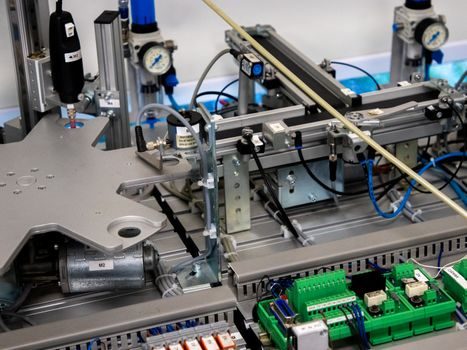
Buyers in 2026 can map requirements to six product categories: Distributed Control System (DCS), Human-Machine Interface (HMI), Manufacturing Execution System (MES), Supervisory Control and Data Acquisition (SCADA), Asset Performance Management (APM), and Simulation/Digital Twin [S2]. The commercial wrapper comes in three forms: Perpetual License (one-time capex, typical for DCS and on-prem SCADA), Subscription License (recurring opex, dominant for cloud MES and APM), and Consumption-Based (metered, common for digital-twin simulation and AI analytics) [S2].
On deployment, Cloud and On-Premises remain the two declared modes, but most 2026 reference architectures are hybrid: control and supervisory on-premises, optimization and analytics cloud. For process industries (chemicals, oil and gas, utilities), on-premises still dominates the control layer because of latency and air-gap policy; for discrete manufacturers (automotive, electronics), cloud MES and digital-twin consumption-based pricing are now the default [S2]. This split also affects the engineering skill mix: the same MES project may require IEC 62443 zone modelling on the on-prem side and cloud IAM (Identity and Access Management, with role-based controls matching the ISA/IEC 62443 zones) on the analytics side [S8].
Industry-Specific Drivers: Food & Beverage, Pharma, and Cold Storage
Industry-specific configurations are now a procurement requirement, not an option, particularly in food and beverage, pharmaceuticals, and cold storage, where regulatory traceability and environmental control constrain the software stack [S7]. For these sectors, MES and APM layers must support electronic batch records, lot genealogy, and temperature-chain audit trails, while SCADA must reconcile with validated control recipes.
The practical RFP filter for these regulated plants is whether the MES module is validated against GAMP 5 (Good Automated Manufacturing Practice, the ISPE guideline for computerized system validation in pharma) and whether the SCADA layer can export data in an OPC UA namespace that maps to ISA-95 (the B2MML/ISA-95 model that defines the integration between enterprise and control systems) functional hierarchies. For non-regulated discrete manufacturing, the same modules are typically deployed in a lighter, consumption-based configuration focused on OEE (Overall Equipment Effectiveness) and downtime tracking rather than batch traceability [S2][S7].
Who This Stack Is For (and Where It Breaks)
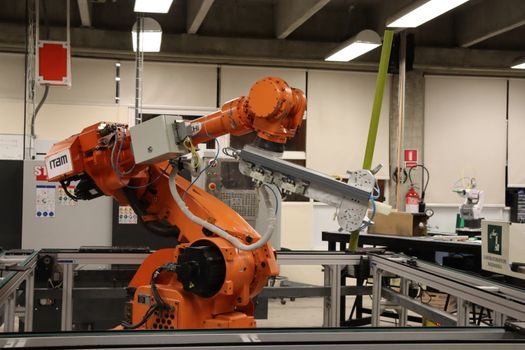
Software-defined automation with ISA/IEC 62443 governance and subscription MES is the right fit for plants that already have instrumented assets, a documented network topology, and an OT/IT boundary they can describe in a single page [S8]. It is a poor fit for brownfield sites with undocumented PLC fleets, single-vendor proprietary fieldbuses, or air-gapped networks that cannot accommodate subscription telemetry, because the audit-trail and role-based access features depend on a baseline of network and asset visibility that those sites lack [S8].
Common failure modes to watch in 2026: (1) mis-allocating ISA/IEC 62443 zones across the cloud MES tier, which expands the attack surface; (2) licensing a digital-twin module on a perpetual basis when the underlying physics models refresh quarterly, which creates version-drift debt; (3) deploying OPC DA on a Linux/Unix MES layer without confirming the bridge is supported, because OPC DA was originally specified for Microsoft COM/DCOM and integration to non-Windows stacks requires a vetted bridge [S3]. A useful internal check before signing is whether the supplier can produce a written ISA/IEC 62443 zone-and-conduit drawing for the proposed architecture.
What to Track Over the Next 12 Months
Two trackable signals will tell you whether the 2026 architecture is holding up: the share of new MES contracts that include a written ISA/IEC 62443 zone allocation in the SOW (Statement of Work), and the share of digital-twin modules sold on consumption-based rather than perpetual licenses, which is the cleanest proxy for whether the simulation layer has truly become a software-defined, continuously updated service rather than a shrink-wrapped disc [S2][S8].
For spec-driven sourcing, the most useful adjacent reference is the measuring instruments and ISO GPS overhaul map, because ISO GPS (Geometrical Product Specifications) revisions are landing in the same procurement cycle as the MES and digital-twin refresh, and a buyer managing both can negotiate a unified test-data export. For buyers cross-sourcing precision hardware alongside automation software, the loop calibrator 2026 sourcing signals piece is the right companion, since loop calibrators and HART-enabled transmitters are increasingly specified in the same ISA/IEC 62443 zone as the control layer.
Component reference pages worth checking: industrial adhesive, and industrial borescope.