
The industrial automation software market reached USD 40.83 billion in 2025 and is sized at USD 43.87 billion for 2026, tracking toward USD 62.9 billion by 2031 at a 7.45% CAGR [S1]. A second reading lands the 2025 base at USD 48.5 billion, with the 2030 value projected at USD 75.35 billion at 8.9% CAGR [S2][S3]. The spread between reports (USD 40.83B to USD 48.5B for 2025) reflects whether services, integration, and adjacent control-system software are bundled into the same envelope.
Demand is being pulled by AI moving from pilot to embedded functions inside supervisory control, plant asset management, and manufacturing execution platforms [S1]. Cloud-native deployments, predictive maintenance, and IIoT integration are the four engines cited by every 2026 forecast reviewed [S1][S2][S3]. Cybersecurity, specifically IEC 62443, is now tied to capital allocation under government-backed Industry 4.0 programs, which is shifting plant-level procurement from feature-led to compliance-led buying [S1].
Market Size 2025–2031: Reconciling the Forecast Spread
The 2025 base case ranges from USD 40.83 billion (Mordor Intelligence) to USD 48.5 billion (The Business Research Company), a 19% gap that is normal across competing scopes [S1][S3]. A third 2026-era model, FactMR, sizes the broader industrial automation and control systems category at USD 279.44 billion in 2026, growing at 11% CAGR to USD 793.45 billion by 2036, which is roughly 6.4 times the software-only envelope and reflects hardware and services inclusion [S6]. FMI pegs the wider industrial automation market at USD 49.9 billion by 2026-end at 6.9% CAGR, with industrial robots at a 22.0% share and SCADA at 21.0% [S7].
Software-defined automation is the fastest-adjacent segment, forecast to reach USD 96.98 billion by 2030 at a 15.7% CAGR, more than double the headline rate, because it absorbs AI-driven process optimization and IoT integration workloads [S8]. Engineering buyers should treat the 7.45% CAGR as the conservative planning anchor and the 8.9% CAGR as the upper-band anchor for capex models [S1][S2].
Solution-Type Mix: SCADA, MES, DCS, HMI, PLC
SCADA held 33.92% of the 2025 software mix and is forecast to remain the single largest line item through 2031, while plant asset management and analytics platforms expand fastest at 8.12% CAGR [S1]. The product segmentation used by The Business Research Company explicitly names SCADA, DCS, MES, HMI, PLC, IT/software environment integration, production process test systems, and coordinated data management as the eight sub-categories that procurement teams must spec against [S2].
On-premises deployments still command 55.86% of the 2025 spend, a number that matters because brownfield plants cannot migrate control logic to a SaaS abstraction without re-validating safety instrumented functions [S1]. Cloud-based deployment is forecast at 8.31% CAGR for 2026–2031, outpacing the headline rate and confirming the multi-year shift toward hybrid architectures [S1]. For a primer on the SCADA layer itself, the SCADA software reference covers the architecture and selection criteria that procurement specs must reference.
End-User Split: Automotive Leads, Chemicals Growing Fastest
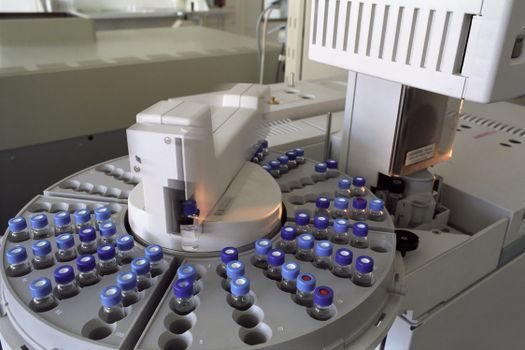
Automotive and transportation captured 33.05% of 2025 software spend, the single largest end-user vertical, while chemicals and pharmaceuticals are the fastest-growing at 8.02% CAGR through 2031 [S1]. Process industries covered in the end-user matrix include oil and gas, chemicals and materials, paper and pulp, pharmaceuticals and biotech, mining and metals, food and beverage, power, consumer goods, and automotive [S2]. The growth tilt toward chemicals and pharma is consistent with the IEC 62443 compliance mandate noted above, because batch and recipe-driven plants carry the highest audit burden [S1].
Large enterprises held 72.05% share in 2025, but small and medium enterprises are the growth outlier at 8.41% CAGR for 2026–2031, driven by cloud-native subscription pricing that lowers the capex barrier [S1]. For buyers outside the top tier, the practical question is no longer whether to automate but which deployment mode carries the lowest five-year total cost of ownership.
Regional Distribution: Asia Pacific Dominance
Asia Pacific held 38.22% of 2025 global software spend and is forecast to grow at 8.09% CAGR through 2031, the strongest regional rate among the five tracked regions [S1]. North America and Europe retain the cybersecurity-led share because IEC 62443 compliance work is concentrated in regulated critical infrastructure [S1]. Demand-side growth across the hardware-and-software envelope is shaped by industrial, commercial, and institutional end-use requirements, with process, discrete, and hybrid automation specifications each pulling different sub-segments [S6].
For engineering sourcing teams, the APAC growth premium is a real signal for two reasons: vendor footprint expansion tracks regional growth, and the largest concentration of SCADA and MES engineering talent is also in the region. Buyers running cross-region rollouts should weight language support, time-zone coverage, and IEC 62443 certification parity when shortlisting vendors.
Selection Criteria: On-Prem vs Cloud, Capex vs Opex

Deployment-mode decision is the most consequential early choice: on-premises (55.86% share) fits plants with deterministic latency, air-gapped safety systems, or local data-residency rules, while cloud-based at 8.31% CAGR suits greenfield lines, MES rollouts, and analytics workloads that scale elastically [S1]. The right criterion is the control-loop latency budget. Any loop under 100 ms typically requires on-premises or edge-resident control, while historian, analytics, and reporting layers can move to cloud with no functional penalty. Buyers evaluating greenfield lines can also reference the industrial camera selection guide for vision-system integration into MES quality workflows.
AI capability is now table stakes: reinforcement-learning agents tuning process parameters continuously, driving yield and energy savings across chemicals, automotive, and electronics plants, is the cited use case from the 2026 Mordor dataset [S1]. Low-code and no-code platforms contribute a +0.9% CAGR uplift, concentrated in North America, and are most relevant to mid-tier integrators that lack deep PLC programming benches [S1].
Drivers, Constraints, and 2026 Risk Factors
Six drivers carry quantified CAGR uplift in the 2026 Mordor model: Industry 4.0 adoption (+2.1%), real-time data analytics and IIoT (+1.8%), labor cost and efficiency (+1.5%), cybersecurity in critical infrastructure (+1.2%), low-code/no-code convergence (+0.9%), and AI-driven autonomous optimization (+0.5%) [S1]. The first three together explain roughly 5.4 percentage points of the 7.45% headline CAGR, which is the engineering takeaway for budget defense [S1].
Constraint-side risk factors are well documented across 2026 vendor briefings: tariff exposure on industrial PCs and edge gateways, geopolitical fragmentation of cloud regions, and the widening skills gap for OT cybersecurity talent. Buyers running MES or SCADA modernization should plan for a 12–18 month integration window where the legacy system and the new platform must operate in parallel, and where IEC 62443 zone-conduit modeling must be re-validated rather than assumed. The loop calibrator 2026 spec guide covers the field-instrument side of the same modernization cycle, including HART and Foundation Fieldbus verification gates that pair with any MES or SCADA rollout.
Standards, Sourcing, and Verifiable Next Signals

IEC 62443 is the single most cited standard in 2026 procurement documents, tied explicitly to Industry 4.0 capital programs [S1]. For process plants, ISA-95 remains the integration reference between enterprise and control layers, and ISA-95.00.01 batch-control models are still the procurement checklist for MES RFPs. Buyers in regulated verticals (pharma, food, power) should also confirm GAMP 5 and NERC CIP applicability alongside IEC 62443 zone definitions. Vendor shortlists in 2026 should require proof of IEC 62443-3-3 system security capability ratings and SL-2 or SL-3 target security levels, with the level pinned to the zone rather than the product. The measuring instruments 2026 sourcing criteria piece carries the same spec-gate logic for field instrumentation, useful as a cross-reference when validating plant-floor data integrity into MES.
The 7.45% to 8.9% CAGR band is the working planning range until the 2026 actuals are restated by Q1 2027.
Component reference pages worth checking: industrial adhesive.