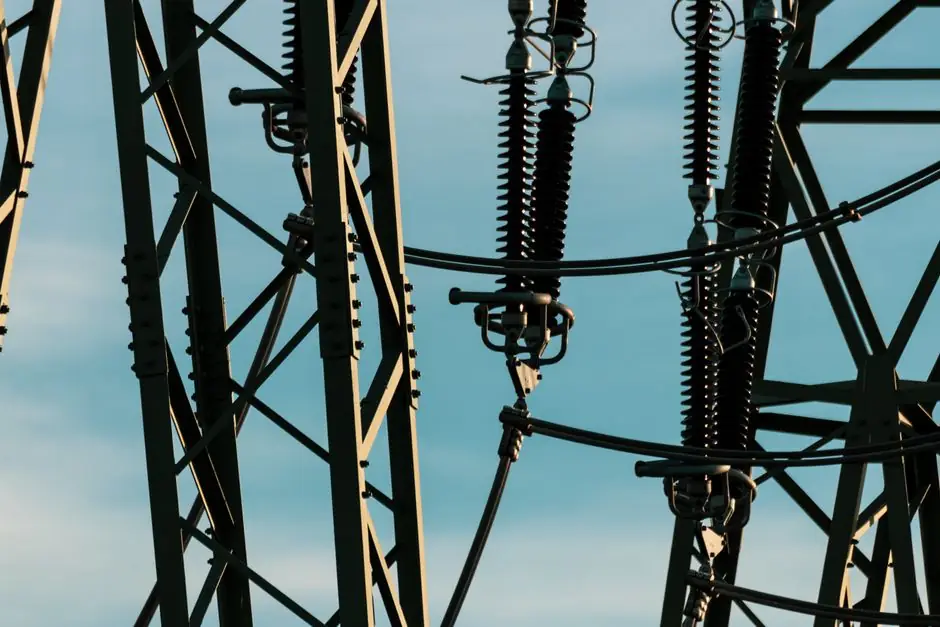
Industrial ceramics in the energy sector fall into four primary families: alumina (Al2O3), zirconia (ZrO2), silicon carbide (SiC), and silicon nitride (Si3N4), each selected against operating temperature, thermal-shock, wear, and chemical exposure [S2]. Alumina is specified in purities from 74% up to 99.96% for sensor bodies, wafer-handling components, and brazed ceramic-to-metal feedthroughs where hermeticity is required [S3].
Wear-resistant ceramics are used across bearings, valves, seals, spheres, pumps, and sheaths inside power-generation machinery, while dense high-purity grades handle arc-resistant insulators and high-voltage bushings [S7]. For low- and medium-voltage insulation, steatite and cordierite fill the cost-sensitive slots that alumina would otherwise over-spec [S4].
Property Bands That Drive Selection
Alumina delivers high hardness, electrical resistivity, and chemical inertness, making it the default ceramic for pump seals, cutting tools, and insulating substrates in process equipment [S2]. Zirconia is specified where fracture toughness and crack resistance dominate, including bearings, cutting tools, and impact-loaded structural parts, accepting a cost premium for that toughness [S2][S4].
Silicon carbide is the material of choice when thermal conductivity, chemical resistance, and thermal-shock survival converge, as in heat-exchanger tubes, furnace linings, and chemical-plant wear liners [S2][S4]. Silicon nitride is reserved for high-speed rotating components such as turbocharger rotors and hybrid bearings, where low density plus thermal-shock resistance matters more than raw hardness [S2][S4]. For energy-sector sensor and meter assemblies, ceramics are favored for the same reasons that make them attractive in pressure transmitters and process instrumentation: dimensional stability, chemical inertness, and high sensitivity in vibrating-element sensors [S5].
Comparison of the Four Main Options
Three selection criteria from ceramic construction guides cover most energy-equipment ceramic picks: high hardness and wear resistance, thermal stability, and chemical corrosion resistance. The following matrix is consistent with manufacturer-published guidance [S2][S4][S8]:
Alumina (Al2O3): good wear and chemical resistance, moderate thermal-shock survival, lowest cost of the four, and a 74-99.96% purity range that lets buyers tune dielectric and mechanical performance [S3][S4]. Zirconia (ZrO2): best fracture toughness and crack resistance, moderate temperature limit, higher cost, used where impact and stress concentrate [S2][S4]. Silicon carbide (SiC): highest thermal conductivity among the four, excellent chemical and thermal-shock resistance, used in heat-exchanger tubes, chemical-plant liners, and molten-metal-contact wear parts [S2][S4]. Silicon nitride (Si3N4): low density, high strength, very good thermal-shock resistance, specified for high-speed bearings and turbocharger rotors [S2][S4].
For chute, conveyor transfer, hopper, separator, and pipe applications exposed to abrasive flow, ceramic-block geometry and backing selection matter as much as material choice; alumina, SiC, and wear-resistant composites are the typical candidates [S8]. The material decision is rarely separable from the equipment it goes into, and the same logic that governs wear liners on a coal-handing chute governs ceramic tile selection in process vessels and similar heavy-service assemblies [S8].
Ceramics in Energy Equipment
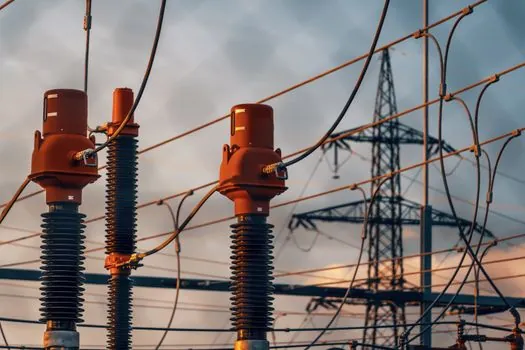
Alumina is used in sensor components, wafer and substrate handling, brazed feedthroughs and assemblies, arc-resistant housings, and high-voltage insulators, particularly in 96% and 99.5% grades where dielectric loss must stay low [S3]. Zirconia appears in hydrogen-generation system components, high-strength structural parts, and dense catalytic tubes where toughness under thermal cycling is required [S3].
Silicon nitride is specified for electrical insulation with lighter weight and higher lubricity in moving parts, which suits high-efficiency rotating machinery in power and alternative-energy subsystems [S3]. Silicon carbide is broadly deployed in heat-exchanger tubes, protection tubes, thermocouple tubes, recovery pump components, submersible pump parts, and syngas-system components [S3][S5]. For the power-distribution side, ceramic insulators, vacuum interrupters, standoff insulators, switch housings, and high-voltage feedthroughs lean on alumina and steatite in voltage classes that match the dielectric strength of each grade [S3][S5].
Alternative-energy subsystems (solar, wind, nuclear, fusion, biomass, plasma gasification) draw on the same material palette: ceramic rollers and guide rods for solar-panel glass-substrate production, insulating ceramics for polycrystalline-silicon growth, and structural insulators for high-voltage transmission [S3][S5]. The same wear- and corrosion-driven logic that drives ceramic selection in energy-handling equipment also applies to process-control and monitoring hardware such as flow sensors, level sensors, oxygen probes, and NDT probes, where ceramic housings and insulating elements protect sensing elements in harsh service [S5].
Limits, Failure Modes, and Cost Trade-offs
Advanced ceramics including silicon carbide and zirconia offer higher performance but cost more than alumina, so the budget constraint is explicit in selection guidance for large-scale or high-volume parts [S2]. Zirconia is repeatedly flagged as more expensive than other ceramics, justified only where critical durability or impact resistance is non-negotiable [S4]. Cordierite and mullite sit at the low-cost end for thermal-cycling, thermal-shock, and kiln-shelf duties, accepting lower strength and narrower temperature ceilings than SiC or Si3N4 [S4].
Failure modes follow material physics: alumina is hard but brittle, with chipping under point impact; zirconia resists crack propagation but degrades in low-moisture high-temperature service unless the grade is stabilized; silicon carbide handles thermal shock well but is difficult to machine to tight tolerances after firing, which raises part cost; silicon nitride loses strength above roughly 1200 degrees Celsius depending on grade and is not a universal high-temperature answer [S2][S4]. Ceramic components used in bearings, valves, seals, spheres, and pumps inherit these limits, so geometry, surface finish, and assembly tolerance must be designed with the specific failure mode in view [S7].
Who Should Specify Ceramics, and Who Should Not
Specify ceramics where at least one of the following holds: abrasive wear would consume a metal part quickly, the operating temperature is elevated, the chemistry is aggressive (strong acids or alkalis), or electrical insulation with low loss is required at high voltage. Do not specify ceramics where high tensile ductility, high impact loading at sub-zero temperatures, or repeated large plastic deformation is required, as ceramics are brittle and will fracture [S2].
For plant buyers cross-referencing ceramic wear liners against metallic options, the rule of thumb is that ceramics win on wear life and chemical resistance in sliding or particle-laden service, while metals win on impact resilience, field-repairability, and unit cost at large thicknesses [S6][S8]. When energy-system assemblies move into the lighting and arc-handling domain, similar selection logic drives lamp and lighting-component ceramics for high-intensity discharge and specialty lamp envelopes [S3]. When a ceramic must also control static dissipation or surface charge in an energy enclosure, that constraint pushes the spec toward anti-static ceramic composites or coated grades rather than the default insulating formulations discussed in the anti-static equipment family [S6][S7].
Standards, Sourcing, and Qualification Anchors
Energy-sector ceramic components are commonly supplied under quality systems aligned with AS9100 and ISO 9001, with compliance to RoHS, REACH, DFARS, and ITAR where the buyer specifies them [S3]. Material-grade reference points for energy ceramics include alumina purity bands (74% to 99.96%) and the standard trade groupings of zirconia, silicon carbide, silicon nitride, cordierite, mullite, and steatite [S3][S4].
Practical sourcing: identify the dominant failure mode (wear, thermal shock, corrosion, electrical breakdown), set the operating envelope (temperature, thermal cycle count, chemistry, voltage class), then pick the lowest-cost family that meets all four, escalating to SiC or Si3N4 only when alumina or cordierite is technically ruled out [S2][S8]. For wear-block geometry, match the ceramic layout to the equipment type (chute, transfer point, hopper, separator, pipe) before finalizing the material grade, since geometry drives installation cost as much as material drives service life [S8].
Trackable signals for the next 6 months include vendor disclosures of new alumina purity grades for high-voltage feedthroughs, expanded SiC heat-exchanger tube offerings for molten-salt service, and revised cost curves for zirconia structural parts as rare-earth precursor supply normalizes.
For related coverage, see Industrial Rubber Selection for Electronics: 2026 Elastomer Spec Map.