Industrial coatings buyers in 2026 are working a supply chain reshaped by titanium-dioxide (TiO2) spot-price swings, epoxy-resin allocation in Asia, and a fast-growing layer of AI-driven inventory and freight tools, with regional logistics events now anchored in Jakarta and Mumbai as parallel sourcing gateways [S2][S4].
The market context is one where raw-material inputs (TiO2 pigments, epoxy and alkyd resins, zinc phosphate, solvent carriers) are global commodities, while finished paint and powder-coat production remains regional. The gap between those two layers is where 2026 supply risk concentrates, and where procurement teams are tightening specifications, dual-sourcing carriers, and re-thinking safety-stock math [S1][S2].
Feedstock layer: TiO2, epoxy resin, and zinc-rich primer inputs
TiO2 remains the single largest volume and cost driver in decorative and protective coatings, and 2026 contracts are being written with quarterly price-revision clauses tied to sulfate-route versus chloride-route spread indices, not annual fixed prices, per industry guidance on volatility pass-through [S1]. Epoxy-resin (liquid epoxy, BPA-based) allocation continues to favour Asian integrated producers, with lead times for tanker-truck lots routinely running 4-8 weeks versus 2-3 weeks pre-2024.
For heavy-duty marine and offshore primers, zinc-rich epoxy systems require zinc-dust pigment (typically ASTM D520 Type II for non-sacrificial purity), and that input competes directly with the brass, hot-dip galvanising, and industrial catalyst and feedstock supply shock 2026: helium, sulfuric acid, ammonia chains for sulphuric acid used in zinc processing. Buyers writing 2026 specifications should confirm whether the zinc-dust lot carries a Type II or Type III ASTM D520 classification, since the Type II limit of 0.01% lead max directly affects potable-water and food-plant coating qualification.
Logistics and packaging layer: regional hubs, containerisation, yard management
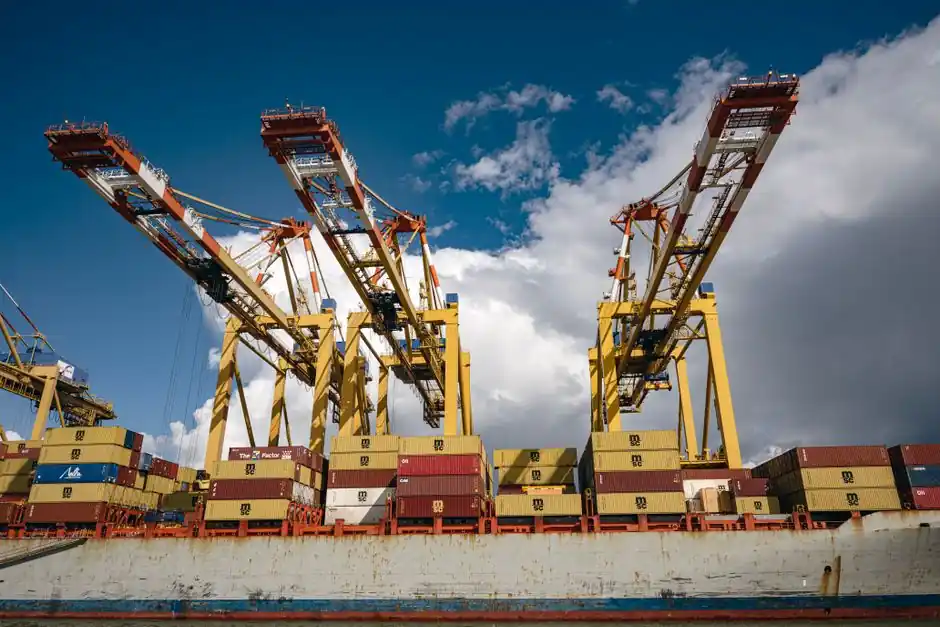
Two 2026 logistics anchor points are shaping how coatings reach end users. The first is the Indonesia Supply Chain 2026 exhibition at NICE Jakarta on 25-27 November 2026, co-organised by Deutsche Messe (Hannover Messe / CeMAT network), LogiSYM, and Debindo, with explicit exhibition tracks for warehousing, material handling, and supply-chain technology including AI, IoT, and data analytics [S2]. The second is the Mumbai-based industrial packaging corridor (ClassicProducts CPPL, 39+ locations, 2500+ staff, 20-year operating history) that handles on-site packaging, containerisation, warehousing, and yard management for industrial goods moving through western India [S4].
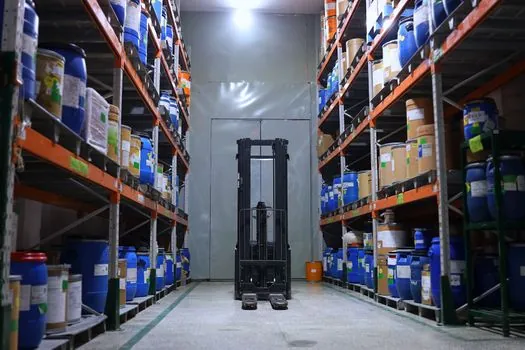
For coatings specifically, containerisation is not optional: most solventborne systems ship under IMDG Code Class 3 (flammable liquids) or Class 9 (miscellaneous dangerous goods, for environment-hazardous), so packaging decisions about UN-rated drums, IBC totes, and dunnage become part of the spec, not an afterthought. CPPL-style turnkey contracting on container-space utilisation directly maps onto coatings-freight cost reduction, where a 20-foot standard container rated ~26-28 m³ of internal volume typically loads 14-16 metric tonnes of solventborne paint depending on flash point and packing group [S4].
AI and visibility layer: 2026 platform comparison and decision criteria

Industrial AI software for supply-chain planning in 2026 breaks into four main option families, and the choice depends on whether the buyer needs demand-sensing, network design, freight optimisation, or warehouse execution: (a) cloud-native planning suites from the major ERP vendors, (b) specialised demand-sensing platforms (o9 Solutions, Kinaxis, Anaplan) that run scenario simulation, (c) freight-specific TMS and visibility platforms, and (d) warehouse-execution systems where Symbotic-style autonomous mobile robots handle pallet put-away and picking [S3].
For a coatings operation, the four decision criteria are: integration depth with the existing ERP and batch-tracking system (recipes, lot genealogy, MSDS linkage), the ability to handle hazardous-goods constraints in route optimisation, the model's accuracy on multi-echelon inventory of slow-moving specialty finishes, and total cost of ownership per planning seat. Generic AI-trend-analysis platforms win on executive dashboards but typically lose to specialised tools on resin-allocation modelling, where lead-time variance and minimum-order-quantity rules dominate the math [S3].
Risk-management and resilience: 2025-2026 carryovers
Three resilience actions from the 2025 supply-chain playbook are still the most-cited in 2026 coatings procurement: (1) optimise network design using AI-driven insights to balance cost, service efficiency, and adaptability, (2) conduct risk assessments on supplier locations, transport routes, and financial stability, and (3) foster collaborative ecosystems with shared real-time risk monitoring [S1]. For coatings, that translates into: dual-sourcing TiO2 across at least two sulphate-route and one chloride-route producer; qualifying secondary drum and IBC suppliers in two different states or countries; and joining an industry visibility platform that publishes lane-level delays and weather disruptions.
Geopolitical and weather risk remain the two non-controllable inputs. European TiO2 output is sensitive to natural-gas pricing via the chloride route, and Asian monsoon patterns (May-October) consistently delay coatings shipments through Mumbai, Chennai, and Jakarta ports by 3-10 days. Procurement contracts written in 2026 should include force-majeure carve-outs and weather-delay clauses that go beyond the boilerplate, since the power semiconductor demand 2026-2030: SiC, IGBT, and the wide-bandgap capex wave is one downstream driver of coatings demand (semiconductor fab cleanroom epoxy flooring and EMI-shielding conductive coatings) that competes for the same resin allocation.
Selection criteria for coatings buyers: who this is FOR and who it is NOT for
AI-driven supply-chain platforms, multi-source resin qualification, and regional logistics-hub participation are FOR large industrial coatings manufacturers (5000+ t/yr), protective-coatings contractors serving oil-and-gas or infrastructure, and OEM paint shops with tight just-in-sequence delivery windows. They are NOT for small job-shop coaters with fewer than 200 t/yr throughput, for whom the fixed cost of a dedicated TMS seat, demand-sensing licence, or dual-source qualification programme is uneconomic at typical 2026 list prices [S1][S3].
For a mid-volume industrial coater (500-3000 t/yr), the practical 2026 specification is: one ERP-integrated demand-sensing module rather than a stand-alone planning suite, a single regional logistics partner with on-site packaging capability, and a documented two-supplier policy on each of TiO2, epoxy resin, and zinc dust. That configuration delivers most of the resilience upside without the per-seat licence overhead of an enterprise platform, and it lines up with the casting ladle selection for hardware manufacturing: 2026 spec gates logic of spec-driven sourcing at the right scale, not the largest scale.
Limitations and failure modes in 2026
The most common 2026 failure mode for AI-driven coatings supply chains is garbage-in-garbage-out from SKU master-data decay: a 3-5% annual SKU churn from discontinued colours, customer-specific codes, and regulatory reformulations (VOC limits, REACH SVHC additions) will silently degrade a demand-sensing model's accuracy to below 60% MAPE within 18 months if not actively maintained. The second is over-automation: handing full replenishment authority to an AI model without a human override on safety stock for low-volume specialty finishes, which can cause stockouts that a 1-day human review would have caught [S1][S3].
A third failure mode specific to coatings is treating all resins as fungible. BPA-based liquid epoxy, novolac epoxy, and alkyd resin behave differently in cure, chemical resistance, and food-contact approval, and substituting one for the other without re-qualifying the formula voids the spec. Similarly, freight booking on a generic TMS without IMDG / ADR / 49 CFR hazmat-aware routing can route solventborne paint through a tunnel-restricted corridor, producing compliance fines and shipment rejections at the destination [S1].
Standards and sourcing discipline
Coatings supply-chain specs in 2026 should anchor on these standards: ASTM D520 for zinc-dust pigment type classification, ASTM D3960 or EPA Method 24 for VOC content reporting, ISO 12944 for corrosion-protection paint systems on structural steel, and NACE / AMPP SP0108 for protective-coating application inspection. For hazardous-goods transport, the IMDG Code (Amendment 41-22 in force, 43-24 in 2025-2026), ADR 2025 for European road, and 49 CFR 173 for US road/rail each define the drum, IBC, and labelling requirements that the packaging spec must reference [S2][S4].
The next trackable signals for buyers: TiO2 spot-price index movements on a weekly cadence through 2026 Q3, the Indonesia Supply Chain 2026 exhibition floor plan and exhibitor list release (the supplier list was still listed as "Coming Soon" as of 01 August 2026) [S2], and the next round of AI-platform vendor benchmark releases expected in late 2026 [S3]. Cross-reference each against your own resin-allocation and freight-lane dashboards before the next quarterly review.
For the relevant spec sheets and selection criteria, see power supply, dc power supply, and industrial ups.