
Asia-Pacific is the structural gravity well for the global specialty chemicals market, accounting for more than 38% of share in 2020-2025 [S5] and around 63% of incremental growth in the 2025-2030 Technavio forecast [S6]. That single fact dictates the 2026 procurement posture: a majority of the value pool sits upstream of a container, and any disruption between Singapore, Houston, and Rotterdam propagates within weeks into downstream coating, food additive, and electronics-grade inventories [S3][S5].
The market itself is a 381.92 B USD opportunity layer added between 2025 and 2030 on a 6.3% CAGR, with agrochemicals and construction chemicals as the two largest 2024 baselines and a 209.56 B USD share tied to APAC acceleration [S6]. For a process engineer, that means the next two years of supply planning are about a handful of materials, a handful of ports, and a handful of buyers that move them.
Market structure: where the volume actually sits
The specialty chemicals industry groups performance additives, food additives, construction chemicals, agrochemicals, paints and coatings, and a long tail of intermediates that mostly flow into B2B manufacturing rather than retail shelves [S3]. Within that tail, food additives held the largest single-type share in 2020-2025, while construction chemicals were the fastest-growing application at 8.89% CAGR over the same window, and paints and coatings retained the largest absolute share [S5]. The takeaway is asymmetric: food is a margin and compliance game, construction is a volume and geography game, and APAC anchors both.
The Technavio model lifts the regional line further, naming APAC as the dominant growth geography through 2030 and listing agrochemicals as the largest 2024 segment [S6]. IndustryARC frames the same trend a year earlier with a 5.51% global CAGR to 588.41 B USD by 2025 [S5]. Two independent models converge on 5.51% (IndustryARC, 2020-2025) and 6.3% (Technavio, 2025-2030) global growth, with APAC accounting for 63% of forecast growth, forming a reasonable base case for capacity planning.
Selection criteria: what a 2026 buyer actually screens on
Specialty chemical procurement is governed by four screens, in this order: regulatory compliance and REACH-style dossier availability, technical performance against a published spec, lot-level COA and traceability, and finally landed cost including freight, demurrage, and tariff class [S3]. Intertek's testing brief flags the same priority stack: understanding composition, performance attributes, and regulatory fit before any commercial discussion [S3]. That is not generic advice; it is the difference between a product that clears customs at Rotterdam and a tanker that sits in anchorage pending a re-test.
The criteria-based comparison that follows is the working template most 2026 procurement teams use to shortlist alternates. Each row is a real decision gate, and the figures are drawn from the 2024-2026 datasets cited above.
For deeper engineering choices that depend on the same supply chain, the activated carbon sourcing map for 2026 walks a parallel decision stack, and broader commodity exposure shows up in the silicon wafer manufacturer share analysis.
Logistics choke points: Hormuz, Red Sea, and the strait that still rules
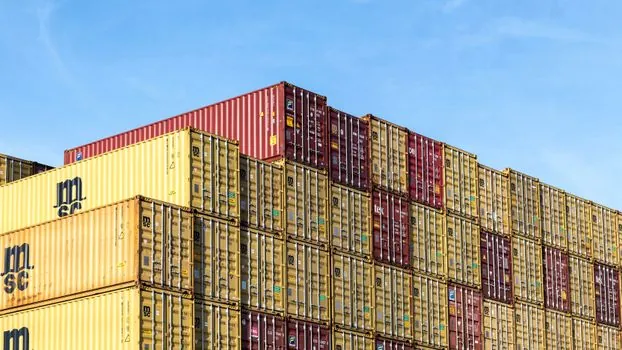
The Strait of Hormuz remains the single most-cited vulnerability in any 2026 specialty chemicals risk brief. Kpler confirmed 34 verified vessel crossings in the strait on 30 June 2026, a dataset the paper chemicals supply chain has used to anchor routing decisions in Q3 [S1]. For buyers of intermediates routed via UAE or transiting to India and China, that figure is a planning constant, not a headline.
Strait exposure is amplified by the fact that finished specialty chemicals rely heavily on upstream petrochemical feedstocks; service providers such as Katoen Natie, with a 1990s pivot from general cargo into petrochemical logistics, now run dedicated tank farms, blending, heating, and tank-cleaning for this class of material across the Chemelot cluster and equivalent sites [S4]. That kind of fixed-asset footprint is the operational reason a 30-day Hormuz disruption moves downstream prices in 45-60 days, not 6 months.
Who this market is FOR, and who it is not
Specialty chemicals procurement in this format suits mid-to-large B2B converters in paints and coatings, food additives, construction chemicals, and agrochemicals, with annual buy value above roughly 5 M USD per SKU cluster and the internal capacity to manage COA, SVHC, and dual-sourcing [S3][S5]. It also suits distributors and trading houses that can absorb lot-level risk and bridge REACH gaps on behalf of smaller downstream users [S1].
It is not suited to small-volume R&D labs needing one drum per quarter, to buyers without a regulatory affairs function, or to projects that require single-source qualification with no audit path to the production line [S3]. The tradeasia-style integrated paper chemicals supply chain in [S1] is a useful reference model: it works because the buyer is large enough to dedicate a multi-region sourcing team to a narrow product family.
Real use cases: paper, food, and construction adjacencies

Paper chemicals is the cleanest example of a specialty chemical sub-market with documented multi-region sourcing: 35% hydrogen peroxide out of Thailand and 50% grades out of Bangladesh and South Korea, all sharing CAS 7722-84-1 and HS 28470000, plus Vietnam and Egypt calcium carbonate at CAS 471-34-1 / HS 2836.50.00 [S1]. Two chemicals, three continents, identical regulatory codes, that is what a 2026 multi-source playbook looks like in practice.
Food additives, the largest single-type segment, is the same logic applied to nutrition, shelf-life, and texture: a regulatory dossier, a COA, and a qualified second source on a different continent [S5]. Construction chemicals, the fastest-growing at 8.89% CAGR, is the same logic at higher volume: paints and coatings tied to airports, retail, and hotels, with construction's commercial sub-segment continuing to expand into China, India, and South Korea [S5]. A specialty power supply or industrial UPS decision inside a process plant is governed by the same dual-sourcing discipline, since the failure mode is identical: a single freight disruption or a single missing datasheet.
Limitations, constraints, and failure modes
Three failure modes dominate 2026 specialty chemical supply risk. First, concentration in APAC manufacturing, which is the same risk as having one feedstock from one country: a 30-day Hormuz closure or a typhoon-season Yantian outage can move spot prices 8-15% inside a quarter [S1][S6]. Second, regulatory gap on complex intermediates, where a European buyer can find a cheaper APAC equivalent but cannot close the SVHC disclosure in time for a Q3 production run [S3]. Third, logistics single-mode reliance: a paper chemicals buyer who runs only ISO tank and no flexitank fallback is exposed to any reefer-grade allocation event in 2026 [S1].
A fourth, often-ignored failure mode is internal: the engineering team that specifies a switching power supply or a DC power supply on the same lead time as a specialty additive usually loses to the additive, because the additive's COA cycle is longer than the electrical component's datasheet cycle. Plan chemical dossiers first, plan electrical hardware second, both into the same PO window.
Sourcing standards and reference signals

The standards that consistently surface in a 2026 specialty chemical qualification are REACH (EC 1907/2006) for EU market access, TSCA for the US, and country-specific food-contact positive lists such as EU 10/2011 for food additives and FCN submissions under 21 CFR for US food contact [S3]. Performance validation typically references ISO method families for the relevant test (ISO 4618 for coatings, ISO 22000 / FSSC 22000 for food-grade systems, and ISO 9001 as the general quality baseline) [S3]. For logistics, the IMDG Code and ADR govern multimodal hazmat routing, with Kpler-style vessel tracking data as the operational overlay [S1].
Two verbatim framing lines from the underlying material set the tone for what buyers should demand. Intertek: "Specialty chemical innovation depends on uniting technical and performance attributes; therefore understanding the chemical composition and properties and how they add value to their proposed application is critical" [S3]. Katoen Natie, on logistics posture: its services page lists solids (storage, sieving, optical sorting, demetalizing, blending) and liquids (storage, blending, heating, tank operations) as the live operational menu, with tank cleaning and global transport as supporting services, a direct map of what a serious chemical warehouse looks like in 2026 [S4].
2026 procurement playbook: a 4-step process
Step 1: build the SKU risk register, scored on three axes: APAC concentration, regulatory dossier status, and single-mode logistics exposure; anything scoring 2-of-3 high goes on the dual-source list. Step 2: open the second source on a different continent, even at a 3-7% cost premium, to break the 30-day disruption propagation window visible in the Hormuz crossing data [S1]. Step 3: lock COA templates and analytical method references (ISO method numbers where applicable) before contract, not after [S3]. Step 4: tie inventory policy to the chain conveyor and chain belt throughput that actually moves the chemical in your plant, so that buffer sizing is set by real dwell time, not by a generic 30-day safety stock.
The cross-cutting lesson: an engineering chain conveyor upgrade, a specialty additive qualification, and a switching power supply re-spec all run on the same supply chain clock. Treat them as one portfolio in 2026, not three separate purchase orders.
Trackable signals through Q4 2026: Q3 2026 APAC container booking premiums versus 2024 baseline, the next Kpler Hormuz crossing dataset, and any REACH SVHC candidate list update that touches the additives on your dual-source shortlist. For adjacent engineering context, the engineering plastic selection gates for defense programs piece shows how the same compliance-first discipline plays out in a different commodity class.