Three suppliers, Zebra Technologies, Honeywell, and Datalogic, control the bulk of North American and European industrial code reader sales, with camera-based 2D imagers now standard across fixed-mount and handheld lines [S1][S3].
Codes read in industrial settings span 1D (Code 39, Code 128, UPC/EAN) and 2D (DataMatrix, QR, PDF417), and the same physical unit often must handle DPM (direct part marking) on metal, plastic, or glass surfaces [S1]. Buyers should treat the supplier decision as a five-year total-cost decision: sensor type, symbology firmware licences, housing rating, and connectivity back to PLCs or MES determine the lifetime economics, not the unit price on a distributor sheet [S3].
Market Structure and the Three Dominant OEMs
Zebra Technologies, Honeywell, and Datalogic together set the de-facto benchmark for industrial code reader specification in the USA, per the 2025 Effon supplier guide [S3]. The guide notes Fortune 500 adoption of barcode technology in the 80 to 90 percent range, a figure attributed to Fortune and widely cited in vendor white papers [S3].
Zebra's industrial line emphasises 2D and 3D scanning with Bluetooth and IoT/cloud integration, which positions it strongly in retail, healthcare, and logistics deployments [S3]. Honeywell, founded in 1906, ships the Voyager XP and Xenon Ultra families with algorithms tuned for damaged or low-contrast labels, plus wearable ring scanners for hands-free picking in warehouses [S3]. Datalogic's manufacturing-industry playbook covers fixed industrial barcode readers, laser marking, and handheld data-capture terminals, with explicit emphasis on supply-chain visibility from raw material receiving through finished goods [S1].
Sensor Technology Comparison: Laser vs Linear Imager vs 2D Area Imager
Industrial code readers split into five physical form factors, slot scanners, pen wands, laser scanners, image (area) scanners, and CCD (linear imager) scanners, with each form factor tied to a typical use case [S3]. The five-way table reproduced in supplier guides maps slot to card reading, pen wand to contact applications, laser to long-range warehouse work, image scanner to 2D and QR codes, and CCD to close-range checkout [S3].
For most 2026 industrial buyers the decision is no longer between laser and CCD but between 1D laser and 2D area imager, because DataMatrix and QR codes have displaced Code 39 on automotive, pharmaceutical, and electronics part marking [S1]. A practical comparison for spec writing: laser scanners win on range, often 0.5 m to 10 m on reflective 1D labels, but fail on 2D codes; 2D area imagers read both 1D and 2D at shorter focal distances, typically 50 mm to 600 mm, and handle DPM when paired with controlled illumination. Pen wands remain the lowest-cost option for manual, contact-based scanning on production-line sub-assemblies where no power is available [S3].
Industrial Housing, Connectivity, and Integration Specs
Fixed-mount industrial code readers are typically specified to IP65 or IP67 ingress protection, with operating temperature windows of 0 to 50 °C for general factory floors and -10 to 60 °C for cold-chain or outdoor conveyor lines [S1]. Communication back to the line controller is most commonly done over Ethernet/IP, PROFINET, EtherCAT, or IO-Link, with serial RS-232/RS-485 still common on legacy automotive cells [S1].
Handheld SKUs in the same product families add Bluetooth pairing to Android terminals or Wi-Fi direct to warehouse-management software, with Honeywell's wearable ring scanner and Zebra's WT6000-series wearables as reference form factors for hands-free picking [S3]. For integration engineers the single most important data point on a datasheet is the supported industrial Ethernet protocol stack and whether the unit supports OPC UA pub/sub, because that choice determines whether the scanner becomes a native MES citizen or a gateway-attached peripheral [S1].
Automotive Aftermarket vs Industrial OEM: Two Different Buying Tracks
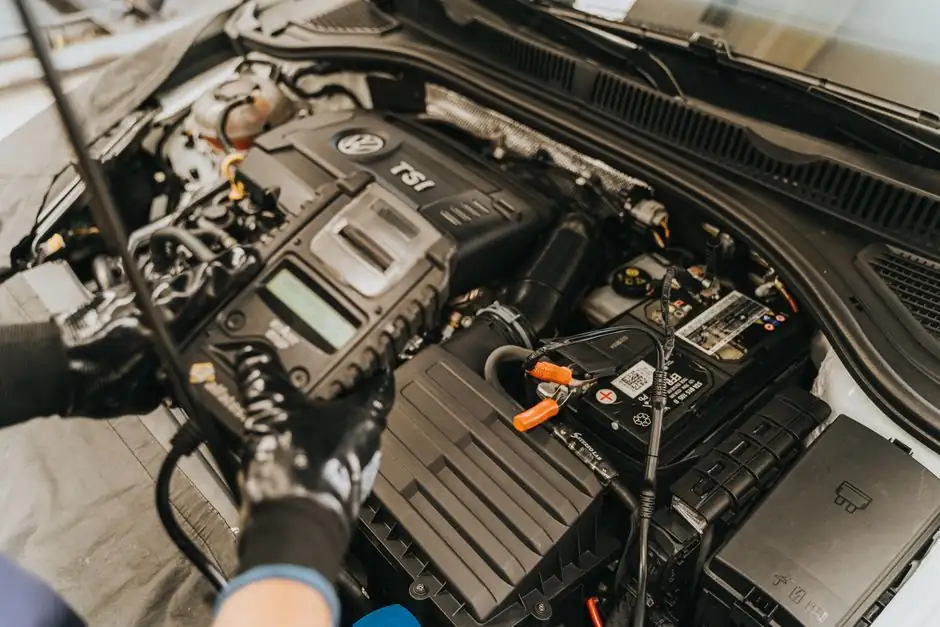
The same words, code reader, cover two very different product lines: industrial machine-vision readers and consumer OBD-II automotive diagnostic scanners [S4]. An OBD-II code reader plugs into a vehicle's J1962 diagnostic link connector and reads standardised P, B, C, and U fault codes from the on-board diagnostic system, and Amazon's best-seller list in this segment is led by sub-$50 handheld units such as the ANCEL AD310 [S2][S4].
Industrial code readers, the subject of this guide, are specified by reading distance, symbology licence, IP rating, and fieldbus protocol, and they are sold to plant engineers rather than vehicle owners [S1][S3]. Buyers who confuse the two categories will under-spec an industrial line or over-spend on a car. For an engineering buyer, the diagnostic-tool acronym OBD2 should signal, walk away from this SKU for plant use, and look at the fixed-mount or industrial-handheld lines from the same OEM [S4].
Selection Criteria: A Five-Point Vendor Shortlist Test
Industrial buyers in 2026 should run every candidate supplier through a five-point filter before issuing an RFQ [S3]. The five points: (1) symbology coverage including 1D, 2D, and DPM; (2) housing rating at IP65 minimum for washdown environments; (3) supported industrial protocols, with EtherNet/IP, PROFINET, or EtherCAT as the baseline; (4) service network with next-business-day RMA in the buyer's region; and (5) firmware lifecycle policy, specifically the number of years the vendor commits to security patches and symbology updates [S1][S3].
Total cost of ownership over a five-year window is the more honest number than unit price, because a $400 industrial imager with a 10-year firmware commitment and free firmware upgrades will undercut a $280 imager that requires paid licence renewals at year three [S3]. Specifying engineers should request a written firmware support letter before PO and require the vendor to disclose the end-of-life date for each model code at quotation, not at end-of-service surprise.
Related Reading from the SourceBySpec Catalogue
The companion sizing guide walks through reading-distance calculations, focal-depth selection, and trigger-mode choices that the supplier decision above depends on, see Code Reader Sizing and Selection: 2026 Industrial Buyer's Field Guide. A second pass through sensor, speed, and symbology decision logic lives in How to Choose an Industrial Code Reader: Sensor, Speed, Symbology, useful for engineers who have already shortlisted two or three vendors and need a side-by-side scoring sheet. For cross-discipline context on instrumentation selection in adjacent process-control work, the Dissolved Oxygen Meter Sizing and Selection Map applies the same five-point filter pattern to a different sensor family. [S3]
Trackable signals to watch over the next two quarters: (a) any new product launches from Zebra, Honeywell, or Datalogic with native OPC UA pub/sub over IO-Link, which would shift the integration-cost calculus for retrofit lines, and (b) firmware end-of-life announcements on legacy 1D-only laser families, which typically force a 12 to 18 month migration window for installed-base users. For reference definitions of the device class covered here, see the code reader encyclopedia entry, and for the broader plant-floor context in which these readers sit, the construction machinery and equipment reference, and the lamps and light fittings reference for the controlled-illumination side of DPM work.
