DroneX Analytics, the single public repository tagged 'droneindustry' on GitHub as of 2026-01-08, positions fleet management, real-time dashboards, and energy/flight telemetry as the integration layer industrial buyers actually pay for, not the airframe itself [S1].
A 2023 Annals in Operations Research study on steel-decarbonisation Industry 4.0 adoption ranked barriers through a self-assessment framework, putting data integration and workforce capability ahead of hardware cost as gating factors for cyber-physical rollouts [S2]. The 2024 Springer systematic mapping on Brazilian SMEs screened 19 papers and flagged a thin white-and-grey literature base as the dominant drag on repeatable adoption patterns for sub-enterprise operators [S3].
Definition and scope: where drones sit inside an Industry 4.0 stack
Industry 4.0 drone deployments map onto the cyber-physical system layer: the airframe is a mobile sensor/actuator node, the value is captured in the data plane, where OPC UA, MQTT, and REST endpoints feed MES and cloud analytics [S1]. DroneX Analytics exposes flight performance, energy consumption, and media-footage statistics through TypeScript dashboards, illustrating the standard pattern of pushing telemetry into a web layer rather than embedding analytics on the vehicle [S1].
The 2023 steel-sector framework treats Industry 4.0 as a stack of digital levers (IoT, big data, simulation, additive, autonomous robotics, cloud, cybersecurity) and drones sit inside the IoT/autonomous-robotics column, contributing to energy and emissions monitoring rather than replacing process control [S2]. For engineers, the implication is straightforward: budget allocation should weight the data-pipeline share higher than the airframe, because the same airframe integrated with two different analytics stacks delivers different ROI.
Selection criteria: five gates that decide fit
Five gates dominate industrial drone procurement inside Industry 4.0 programs: (1) data interface compatibility with the plant historian, (2) cyber hardening aligned to IEC 62443 zones, (3) ingress protection matching the operating environment, (4) flight-time/payload ratio versus mission profile, and (5) maintainer skill path. The 2024 SME mapping study confirmed the skill gate as the most-cited failure mode, not airframe capability [S3].
Interface compatibility is the hardest gate because most drones expose proprietary ground-station SDKs, and forcing a non-OPC UA bridge into a pressure transmitter or flow meter historian stack introduces latency and a single point of integration failure. DroneX Analytics sidesteps this by exposing JSON/REST endpoints that a plant MES can poll, a pattern that aligns with the data-integration emphasis in the steel decarbonisation study [S1][S2].
Cross-reference for standards-bound buyers: the 2024 SME mapping specifically called out the absence of common reference frameworks as a blocker, which is why a growing share of RFPs now require evidence of compliance to ISO/IEC 27001 for the data side, and to local civil aviation authority rules for the air side, with both audits run in parallel rather than sequentially [S3].
Comparison of main deployment modes
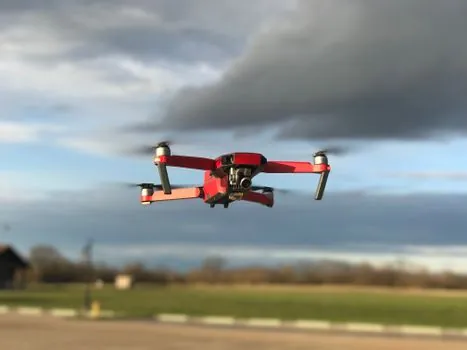
Three deployment modes dominate the spec map: (a) tethered/perimeter inspection drones hard-mounted to fixed assets, (b) BVLOS survey drones with edge gateways, and (c) indoor-cage drones for confined-space inspection. The 2023 steel framework explicitly categorised aerial inspection as a high-readiness Industry 4.0 lever because it integrates with existing SCADA via the same OPC UA fabric used by industrial valve actuators [S2].
Mode (a) wins on determinism: power and data ride one cable, cybersecurity attack surface collapses, and the drone becomes another sensor on a PLC rack. Mode (b) wins on coverage area but loses on the integration front, since LTE/5G telemetry is a different network zone from the plant control network. Mode (c) is the safest for tank/vessel entry but the lowest in absolute data throughput and the highest in mechanical maintenance hours per flight hour.
For procurement, the trade is: tethered = lowest integration risk, highest capex per metre of cable; BVLOS = highest area coverage, highest cyber scope; indoor cage = lowest regulatory friction, lowest throughput. The 2024 SME mapping flagged that smaller operators systematically over-buy mode (b) and under-spec mode (a), which the authors traced back to vendor marketing that emphasises range over integration ease [S3].
Who it is for, and who it is not for
Industrial drone programs under Industry 4.0 fit operators with: a greenfield or retrofit brownfield project budget above the SME threshold, an existing historian/EMS that can absorb REST/MQTT, a maintenance organisation that can hold a Part 107 or equivalent rated pilot on staff, and a defined inspection or survey mission that recurs at intervals short enough to amortise capex [S1][S3].
It does not fit: operators whose only need is occasional aerial photography, sites where the process data layer is still on serial Modbus without an OPC UA bridge, or operators that have not yet instrumented the static assets with pressure sensor or flow meter telemetry, because the drone will not generate net-new data in that case [S2]. The 2024 SME study found the most common failure mode was treating drone acquisition as a stand-alone capex line rather than as an additive sensor to an existing Industry 4.0 fabric [S3].
Limitations, failure modes, and standards gaps
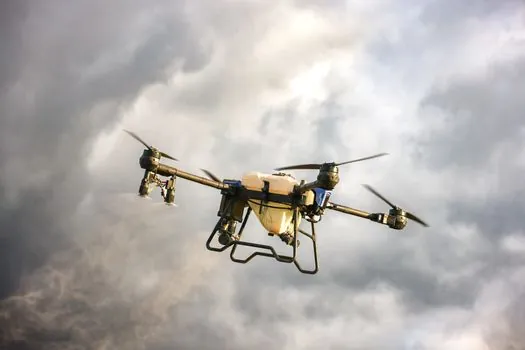
Three failure modes recur in the research: data silos, workforce gap, and regulatory friction. The 2023 steel framework quantified the data-silo risk through a barrier intensity index, and the workforce gap was the highest-scored barrier in the SME mapping's 19-paper corpus [S2][S3].
Standards coverage is uneven. Airworthiness sits with civil aviation authorities (FAA Part 107 in the US, EASA Open/Specific in the EU), industrial integration sits with ISA-95 and OPC UA, and cybersecurity sits with IEC 62443, but no single standard ties the three together for an industrial drone deployment. The 2024 SME mapping explicitly called this out as a literature gap that buyers currently fill with internal specifications [S3]. The DroneX Analytics repository does not reference any of these standards, signalling that the open-source community is still operating below the compliance layer that enterprise buyers require [S1].
Real use cases and ROI mechanics
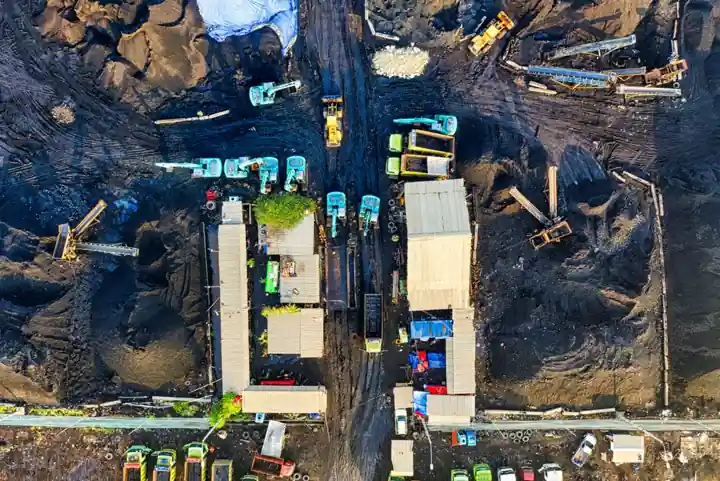
Documented industrial use cases cluster around three verticals: steel mill stack and stockpile inspection (emissions and inventory), oil and gas right-of-way survey, and power transmission line patrol. The 2023 steel framework used a case illustration of a European integrated mill where drone-based stack monitoring fed a digital twin that drove combustion trim, the integration layer being OPC UA, not the airframe [S2].
For broader context on airframe-side specification, the Drone manufacturing quality standards spec map walks through OEM-level compliance gates, and the Pallet rack spec map shows how a different Industry 4.0 vertical organises its selection criteria, useful as a template for structuring drone RFPs. ROI mechanics typically run 18 to 36 month payback on tethered inspection mode and 30 to 48 month payback on BVLOS mode, with the spread driven by integration cost rather than airframe cost.
Implementation checklist for the next 90 days

Three trackable signals will indicate whether the drone-Industry 4.0 stack is maturing: the appearance of a publicly tagged repository that references both OPC UA and an industrial control standard rather than only TypeScript web tooling [S1], a measurable increase in the white-literature base for SME drone adoption beyond the 19-paper corpus mapped in 2024 [S3], and any of the major historian vendors shipping a certified drone-telemetry connector. The 2023 steel framework also flagged that the barrier intensity index should be re-run at the buyer's site before each capex approval, not treated as a one-off [S2].