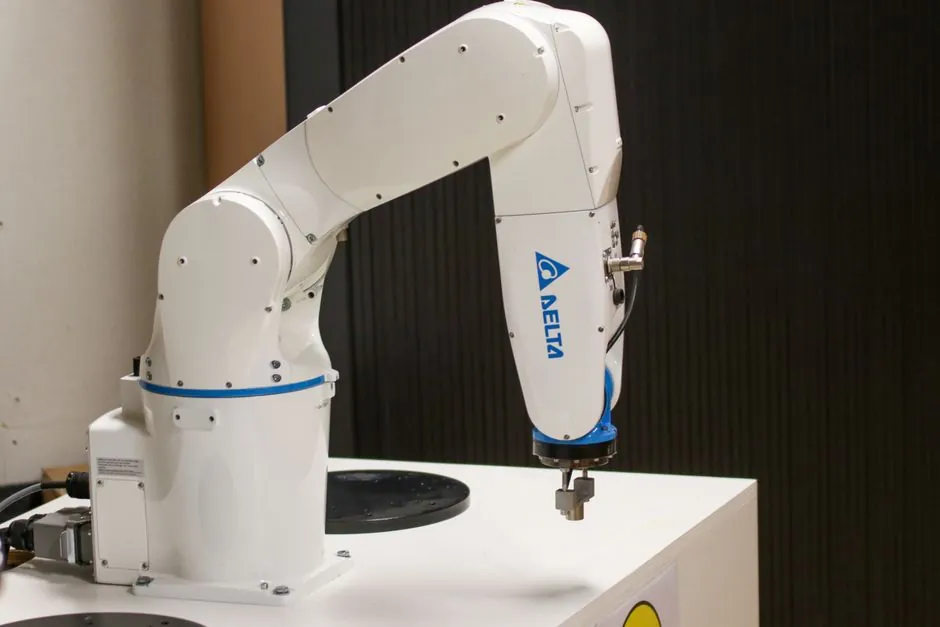
For warehouse robotics, OEM (Original Equipment Manufacturer) means the brand owner holds the design, the Bill of Materials, and the IP, and contracts a factory to build the unit to spec; ODM (Original Design Manufacturer) means the factory supplies both the design platform and the build, and the buyer adds branding, localization, and software layers on top [S3][S6].
AMR payload classes span 20–2000 kg across medical, commercial, warehouse, and factory-handling variants, so the manufacturing model has to be matched to the payload, navigation stack, and WMS/ERP integration depth rather than picked from a brochure [S1].
What each model actually owns: design, IP, and tooling
Under OEM, the client owns the product concept, engineering drawings, performance and regulatory specifications, and the critical-component selection; the manufacturing partner executes the BOM and handles mass-production assembly, with the client retaining IP throughout [S3]. The classic reference is Apple designing the iPhone while Foxconn runs the assembly line, a model in which the brand controls every spec and pays for the engineering upfront [S3].
Under ODM, the manufacturer owns the design architecture and technical documentation from concept through prototype and pilot run, then licenses or rebrands the result; the buyer contributes market-facing customizations such as exterior panels, UI, and language localization [S5][S6]. The trade is explicit: lower development cost and faster time-to-market in exchange for shared IP and slimmer differentiation [S2].
Decision matrix: OEM vs ODM on six engineering criteria
When warehouse-robotics programs are compared head-to-head, the engineering deltas fall along six lines: design ownership, upfront cost, time-to-market, customization ceiling, IP control, and per-unit margin [S2][S5][S8]. OEM wins on design ownership and IP control because the client sets every spec; ODM wins on upfront cost and time-to-market because the manufacturer amortizes platform R&D across multiple buyers [S2][S5].
Customization ceiling is a close call: OEM allows any mechanical or firmware change the client can pay to validate, while ODM is bounded by the manufacturer's design platform, with custom chassis, payload, and navigation stacks (Laser SLAM, vision fusion, QR) available but constrained to the partner's engineering envelope [S4][S5]. On per-unit margin, OEM buyers keep more profit because they control the BOM and the brand premium, whereas ODM buyers operate on the manufacturer's cost-plus pricing and typically see slimmer margins [S2]. Lead-time asymmetry is the strongest single argument for ODM: pilot production can run in parallel with validation testing, while OEM programs usually need a frozen design lock before tooling kicks off [S5].
Matching the model to the AMR workload

Payload and navigation stack are the two filters that actually decide the manufacturing model. Warehouse-logistics AMRs (300–1500 kg, LiDAR SLAM) and factory-handling AMRs (500–2000 kg, LiDAR + vision) are heavy-duty platforms with long lifecycles; OEM is the common choice here because the buyer needs full control of safety certification, docking accuracy, and WMS handshake [S1][S4].
Medical-delivery AMRs (50–200 kg, visual SLAM) and commercial-delivery AMRs (20–100 kg, visual navigation) are lighter, shorter-lifecycle, and more UI-driven; ODM is the frequent fit because the buyer's differentiator is software, multi-compartment storage layout, and exterior branding, not the chassis [S1]. Across both classes, a hybrid model is common: OEM for the safety-critical drivetrain and ODM for the cart body, sensor pod, or HMI enclosure [S2][S8].
Supplier evaluation: what to audit on the factory floor
Navigation accuracy, scheduling efficiency, system stability, rated load, and documented project case studies are the five quantitative axes buyers should score AMR OEM/ODM partners on, per FDATabot's 2026 selection guide [S1]. Beyond the spec sheet, the audit needs to cover software-system capability (WMS/ERP and AI fleet-management hooks), hardware R&D depth, and supply-chain stability for long-lead items such as LiDAR modules and servo drives [S1][S4].
For ODM specifically, the audit must confirm that the manufacturer retains a dedicated engineering team covering materials science, mechanical design, electronics integration, and regulatory compliance, and that the partner will support design updates, component-substitution recommendations, and cost-reduction initiatives across the product lifecycle [S5]. Quality-system evidence (ISO 9001, functional safety documentation for mobile robots, and traceability of safety-certified components) is non-negotiable for any partner whose platform will carry people-adjacent loads [S1][S4].
Integration depth: WMS, ERP, and AI fleet layers
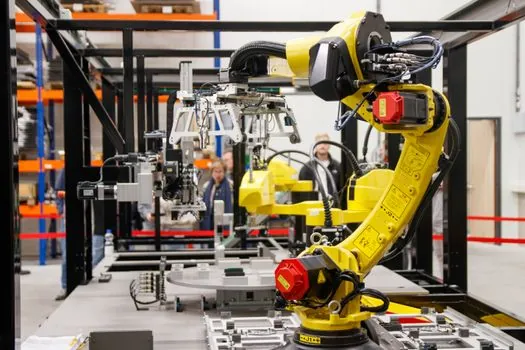
Modern warehouse robotics is no longer a hardware buy; the AMR must integrate with WMS, ERP, and AI fleet-management platforms on day one. OEM programs typically carry the deepest integration because the brand owns both the firmware and the API surface; ODM programs rely on the partner's API and the buyer's middleware to bridge into the customer's stack [S4].
Reeman's published OEM/ODM model illustrates the split: OEM customers get ready-to-market autonomous forklifts and focus on branding, localization, and distribution, while ODM customers co-design chassis, payload, and navigation stack (Laser SLAM, vision fusion, QR) and integrate their own software layer, with AI features such as predictive diagnostics, intelligent path planning, and remote performance tuning exposed through cloud APIs [S4]. For buyers evaluating partner fit, the question is not "OEM or ODM" but "where on the stack do we own the IP, and where do we depend on the partner's roadmap." A practical reference for stacking these decisions against other industrial sourcing choices is the PCB raw-material sourcing guide, which uses the same cost-versus-control logic at the component level.
When OEM is the wrong call, and when ODM is
OEM is the wrong call when the buyer's differentiator is software and route economics, not chassis mechanics, because the upfront NRE for a clean-sheet AMR design can swallow 18–24 months of runway before the first revenue unit ships [S3][S5]. ODM is the wrong call when the application demands a safety-certified, non-standard payload profile (for example a 2000 kg factory-handling AMR with line-side docking tighter than the ODM platform's envelope), because customization beyond the partner's design window erodes the cost and lead-time advantage that justified ODM in the first place [S1][S4].
A useful sanity check: if the buyer's competitive moat is brand, channel, and software, ODM is almost always the lower-risk route; if the moat is mechanical IP, safety certification, or a novel sensor payload, OEM is the only route that preserves it. The hybrid option, OEM drivetrain plus ODM cart body and HMI, is the dominant compromise for 300–1500 kg warehouse-logistics AMRs sold into multi-tenant 3PL operations [S1][S2].
Trackable signals to watch in the next sourcing cycle

Two signals are worth instrumenting on the next vendor shortlist. First, the manufacturer's published navigation-accuracy and scheduling-efficiency benchmarks, with repeatability and stop-position tolerance quoted in millimetres, because those numbers gate most 3PL RFPs [S1]. Second, the partner's API stability and roadmap for AI fleet features (predictive maintenance, digital-twin simulation, remote tuning) because the OEM/ODM line continues to blur as AI-based design optimization becomes a co-development activity rather than a buyer-side task [S4]. A practical adjacent read for spec-led sourcing discipline is the industrial lubricant selection guide, which applies the same criterion-by-criterion trade-off logic to a different category.
For the relevant spec sheets and selection criteria, see additive manufacturing material, pressure transmitter, and flow meter.