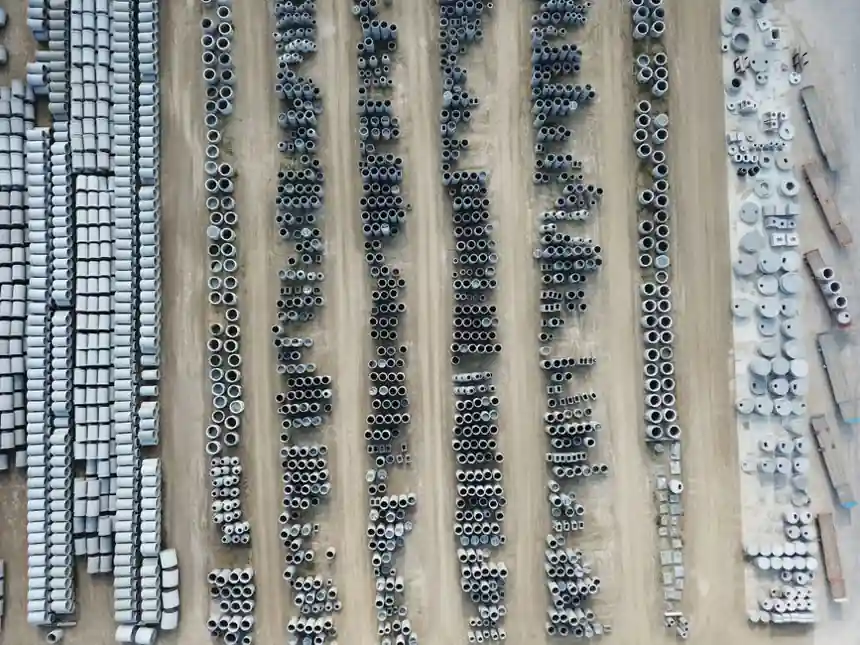
Seamless steel pipe purchase price is only the visible slice of a project's true cost: raw materials alone account for 70–80% of the ex-works price, and execution, inspection, coating, logistics, and pipe-surplus charges routinely push landed cost 20–60% above the quote sheet [S3][S1].
Procurement teams that evaluate only FOB price miss the dominant variables, because grade selection (alloy vs carbon vs P91/P92), process route (hot-rolled vs cold-drawn), NDT coverage, and country of origin each move the bill of materials by 10–200% before freight is added [S3].
What TCO Actually Covers Beyond the Invoice
TCO model breaks final pipe price into four blocks: initial pipe price, execution costs, unforeseen costs, and pipe surplus accumulated from FEED through plant operation [S1]. Variable cost buckets inside that envelope include variation of stock quantities, last-minute isometric changes, complex logistics, inspection costs, financial risks, pipe price variation, and piping delays [S1].
The Tenaris TCO framework targets EPC projects where late design changes and surplus material routinely erode margin, and a fixed-price offer is structured to lock the pipe price defined at the beginning of the project to the end [S1]. For a deeper look at how seamless pipe performance compares against welded alternatives, the seamless steel pipe strengths and trade-offs reference maps selection criteria to operating envelope.
Cost Driver Stack, Ranked by Magnitude
Raw materials dominate the cost stack: a 10% rise in iron ore and coke translates to roughly a 5–7% rise in pipe cost, while nickel drives stainless grade premiums, putting 316L at about 1.3–1.5× the price of 304 [S3]. Material grade premium on top of carbon steel runs +30–50% for alloy steel such as 15CrMoG, and +100–200% for high-alloy P91/P92 grades used in supercritical boiler tubes [S3].
Manufacturing route layers the next wedge: cold-drawn seamless pipe adds 10–30% over hot-rolled, normalizing or tempering adds $30–80/ton, quench-and-temper adds $100–200/ton, and mandatory UT/hydrostatic testing adds another $20–60/ton [S3]. Dimensional scaling is non-linear: wall thickness doubling pushes cost up 90–110%, and large-diameter pipe (≥406 mm OD) costs 10–20% more than small-diameter equivalents of the same schedule [S3].
Seamless vs Welded: The Price Gap and What Buys It Back

ERW pipe typically lands 20–40% below seamless pipe of identical material, size, and specification, because the ERW route skips billet piercing and pilgering [S8]. Seamless CS pipe, by contrast, typically carries a 15–30% premium over ERW or submerged-arc-welded alternatives at the FOB stage [S2].
The premium is recovered through three quantifiable channels. First, inspection: welded pipe requires 100% NDT on every joint and seam, including radiography, ultrasonic testing, and hydrostatic testing, which adds 7–12 days to project timelines and increases third-party QA cost by $85–140 per meter on Class I piping [S2]. Seamless pipe, per ASTM A106 Section 8.2, is exempt from mandatory seam radiography, reducing NDT scope by up to 65% and cutting inspection time to roughly 1.2 hours per meter versus 3.8 hours for welded [S2]. Second, downtime: field weld failures account for an estimated 42% of unplanned shutdowns in oil & gas and power generation per API RP 581 failure-mode data, and seamless pipe's uniform metallurgical structure with no heat-affected zone lowers in-service crack initiation risk by an estimated 3.8× under cyclic thermal stress [S2]. Third, insurance and risk: seamless pipe often qualifies for lower risk classification and reduced insurance loading in oil transport service, which materially affects the lifetime cost model [S4].
For chemical-plant applications involving aggressive media, pinch valve selection criteria illustrate how material-grade choices cascade into adjacent equipment cost, the same logic that drives seamless grade selection upstream.
Coating, Logistics, and Tariff Layer on Landed Cost
Surface treatment is the smallest cost block in percentage terms but a hard dollar add: black painting adds $10–25/ton, 3LPE or 3LPP coating adds $80–150/ton, and galvanizing tracks zinc price at $120–500/ton [S3]. The 3LPE band is the typical spec for buried oil & gas transmission; galvanizing is the default for structural and water-service duty where corrosion is moderate.
Logistics and country of origin swing landed cost by 20–50% in practice. China, India, and Turkey FOB prices run 10–20% below European or US mills, but ocean freight adds $50–150/ton, and anti-dumping duties plus import tariffs add another 10–30% on top, depending on destination market [S3]. Order quantity and lead time then re-modify the curve: small or expedited orders pay setup-adjustment and rush-logistics premiums that can outweigh the country-of-origin advantage [S3].
Decision Matrix: When Seamless Pays Back, and When It Does Not
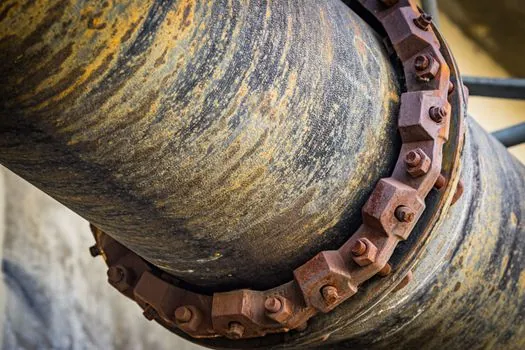
Seamless pipe justifies its premium where any of five conditions hold: operating pressure above 1,000 psi (boiler feedwater, steam headers, hydraulic lines); cyclic thermal loading with ≥50°C swings over ≤2-hour intervals (process reactors, heat exchangers); corrosive service with chloride above 50 ppm or H₂S partial pressure above 0.05 psi, where NACE MR0175 / ISO 15156 compliance is required; zero-leakage instrumentation, fire suppression, or pharmaceutical clean utilities; and design life of 30 years or more with limited access for inspection [S2]. Outside these envelopes, ERW or LSAW welded pipe is the lower-TCO choice, because the NDT, downtime, and risk premiums of seamless do not collect enough value.
Market context matters for budget planning: the global seamless steel pipe market reached $158.2 billion in 2025 and is projected to reach $241.3 billion by 2034 at a 4.8% CAGR, indicating sustained demand-side pressure on raw material and energy inputs that feeds back into TCO [S6]. A practical procurement signal to track: the ERW-to-seamless price spread (currently 20–40% [S8]) and the LME nickel strip, since each 10% nickel move flexes stainless seamless pipe tags by roughly the same magnitude [S3].
For related material-handling cost logic, the gas-fired aluminum melting furnace spec guide shows how energy and refractory choices propagate into a similar lifecycle-cost model, and the underlying seamless steel pipe definition and properties page anchors the metallurgical baseline used throughout this analysis.
The underlying component specifications are covered under total station, and steel pipe.