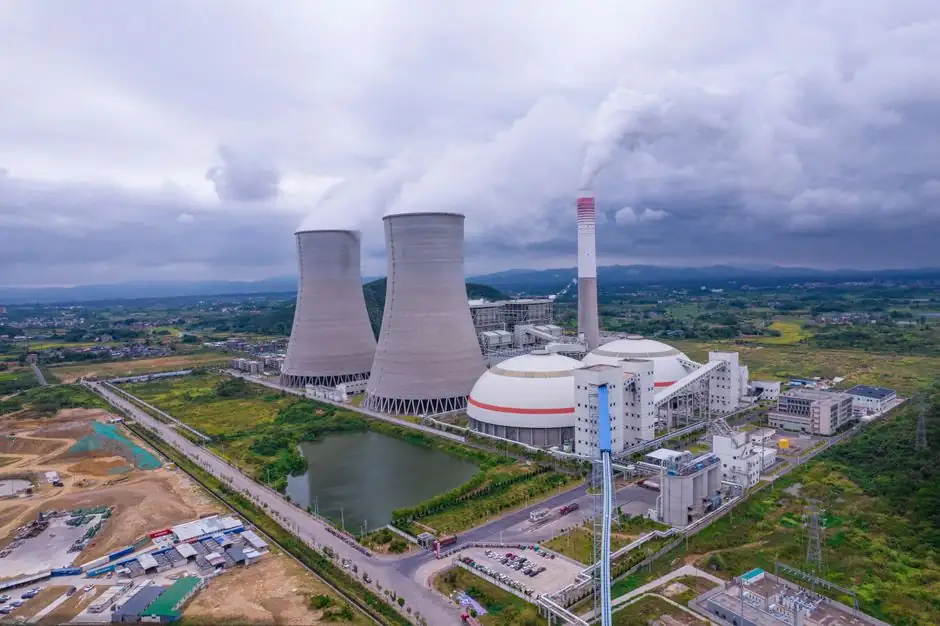
Self-priming centrifugal pumps are the default choice in power-plant auxiliary circuits where the pump must sit above the wet well and still pull a flooded suction, with one atmosphere capping theoretical lift at approximately 33.9 ft (10.34 m) of water and field conditions typically trimming the working envelope to about 25 ft (7.6 m) [S4]. The same physics that limits any suction pump applies here, which is why specifying self-priming for power generation is a layout decision first and a brand decision second.
Selection in a power-generation context centres on four engineering inputs: required flow in GPM, total dynamic head against the pump curve, net positive suction head available (NPSHa) versus required (NPSHr), and the type of liquid being moved (clean cooling water, boiler-feed condensate, diesel-day-tank transfer, or ash-sluice slurry with entrained solids) [S1][S2]. The unit is then matched as a basic pump, flex-coupled, v-belt driven, or engine mounted depending on the available driver and standby philosophy [S1].
Operating Envelope and Suction-Lift Ceiling
The 33.9 ft (10.34 m) theoretical limit is set by atmospheric pressure at sea level; altitude, water temperature, and friction losses each cut into that margin, and the working rule of thumb used in the field is roughly 25 ft (7.6 m) for clean water at moderate temperatures [S4]. For a power plant sited at elevation, every 1,000 ft of altitude costs roughly 1 ft of usable lift, so a unit rated 25 ft at sea level can fall to about 20 ft at 5,000 ft without re-rating the impeller.
Net positive suction head is the gatekeeper, not the lift number alone: NPSHr must be less than NPSHa by a safety margin of typically 1-3 ft depending on the Hydraulic Institute acceptance class, and most self-priming centrifugal frames on the industrial market are designed for 20-500 GPM flow ranges with solids-handling variants clearing up to 2-inch spherical trash [S4]. The standard test reference for centrifugal performance is ANSI/HI 14.6-2022 (rotodynamic acceptance) [S4].
Construction and Material Choices for Power-Plant Service
Common wetted materials for industrial self-priming frames are cast iron, 316 stainless steel, and bronze, with the choice driven by the chemistry of the liquid and the chloride or dissolved-oxygen exposure of the circuit [S4]. For boiler-condensate return, 316 stainless is the default; for raw cooling-water intake with possible entrained debris, cast iron with a replaceable wear plate is more common and more economical to refurbish.
Solids-handling variants use an open or semi-open impeller with extended clearance to pass 2-inch spherical solids, while clean-liquid high-head frames (for example, the Gorman-Rupp O Series) use an enclosed impeller to push head efficiency higher at the cost of solids tolerance [S1]. Gorman-Rupp's Super T and 10 Series are explicitly positioned as heavy-duty solids-handling, medium-head, self-priming centrifugal frames with reprime capability from a partially filled casing and a fully dry suction line [S1].
Driver Coupling, Mounting, and Standby Architecture
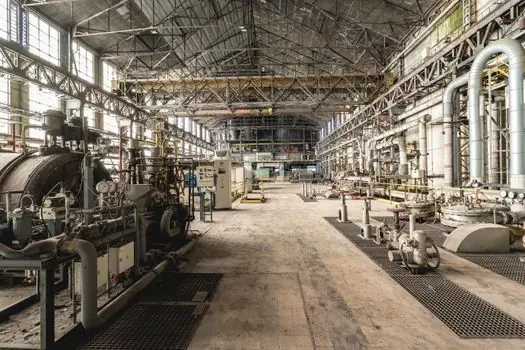
Driver selection in a power plant is rarely a single motor. Engine-driven self-priming units (such as the Super T and 10 Series engine-driven variants) are specified for fire-water and emergency sump service where grid power cannot be assumed, while flex-coupled electric-motor drives dominate the normal-duty cooling-water and condensate-return loops [S1]. V-belt drives remain common where the motor and pump shafts cannot be aligned within coupling tolerance or where a deliberate speed reduction is needed to land on a specific operating point.
A good rule of thumb is to size the motor to cover the entire length of the selected pump curve, not just the design point, so the driver does not stall on the right-hand end of the curve where head is lowest and power draw peaks [S2]. For engine-driven fire-pump service, NFPA 20 typically governs the driver rating, the fuel system, and the auto-start sequence, while the underlying pump performance still traces back to the manufacturer's published curve tested to ANSI/HI 14.6-2022.
Self-Priming Versus Non-Self-Priming Trade-Offs
Self-priming pumps are typically less energy-efficient than non-self-priming equivalents because the same casing volume that retains priming liquid also recirculates a small slip stream during normal operation, costing roughly 3-8 percent in hydraulic efficiency versus a flooded-suction end-suction pump on the same duty point [S3]. The trade is worth it wherever the suction cannot be flooded by gravity or a foot valve, the unit must restart automatically after a power loss, or the operator does not want to enter a wet well to prime manually.
Self-priming frames also demand slightly more maintenance, because the recirculation port, the air-separation chamber, and the priming reservoir are additional wear surfaces that a non-self-priming pump simply does not have [S3]. For clean, flooded-suction cooling-water service inside the plant boundary, a horizontal end-suction centrifugal remains the lower-maintenance choice; for raw-water intake, ash-sluice recirculation, or diesel-day-tank transfer, self-priming wins on layout flexibility and operational autonomy. The same engineering logic that pushes a plant toward jaw couplings for driver alignment on auxiliaries, as covered in Jaw Coupling Selection for Marine Drives: Spec-First Guide, applies to the driver side of these pumps.
Selection Criteria and a Side-by-Side Comparison
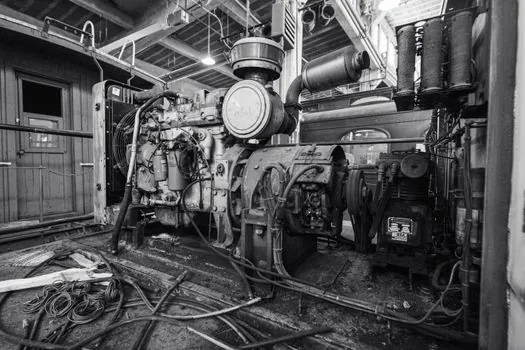
Four criteria usually decide between the three common frame types in a power-generation bid: solids handling, head class, reprime capability, and driver type. Heavy-duty trash-handling medium-head frames (Super T, 10 Series) cover most ash-sluice and raw-water duties; high-head limited-solids frames (Super U, O Series) cover clean-water booster and condensate duties; engine-driven variants of the same frames cover fire-water and emergency service. [S4]
The pattern is consistent: as head climbs and solids shrink, efficiency climbs and reprime robustness drops, so the specifier is trading one for the other. Cross-check any shortlisted frame against its published curve tested to ANSI/HI 14.6-2022, not against marketing flow numbers, and confirm that the operating point lands inside the preferred operating region (POR) defined by the manufacturer, not on the curve's tail-end runaway area.
Failure Modes, Limits, and What Self-Priming Cannot Fix
Self-priming does not buy unlimited suction lift. Above roughly 25 ft of lift, even a perfectly primed unit will vapour-lock or simply fail to pull, and the specifier must move to a submersible, a vertical turbine, or a flooded-suction arrangement instead [S4]. Long horizontal suction runs compound the problem because every foot of pipe adds friction, and a 2-inch line at 200 GPM loses roughly 5-7 ft of head per 100 ft of run.
Other common failure modes are air leaks on the suction side (a single loose flange can prevent prime), a dry casing after extended shutdown (the pump needs the initial fill before it can reprime itself), and a worn wear plate on trash-handling units that lets solids bypass the impeller and drop efficiency by 10-20 percent before catastrophic failure [S1][S4]. The maintenance advantage of a self-priming unit is that the wear plate, the seal, and the impeller are reachable with hand tools from the top of the casing, without lifting the pump or pulling long drive shafts [S1].
Standards, Sourcing, and Specifying Discipline
For power-generation auxiliaries, the governing performance reference is ANSI/HI 14.6-2022 for rotodynamic pump acceptance testing, with NFPA 20 layered on top for diesel-driven fire-service units and IEEE 519 / utility harmonic limits layered on the variable-frequency drive when a VFD sits between the motor and the power bus [S4]. Materials of construction for boiler-feed and condensate circuits are typically referenced to ASME B31.1 (Power Piping) for the piping side, while the pump itself follows the manufacturer's standard datasheet pinned to that test standard.
Publicly available manufacturer data confirms that self-priming units are available as basic pump ends, flex-coupled, v-belt driven, or engine mounted, that they reprime automatically after an initial fill, and that trash-handling variants will reprime with only a partially filled casing and a completely dry suction line [S1]. Engine-driven frames are explicitly offered for standby service, and high-head clean-liquid frames (O Series, Super U Series) are catalogued for boiler-condensate and cooling-tower booster service [S1]. For deeper reading on the self-priming pump working principle and on the power distribution and power cable sizing that follow the motor decision, the linked encyclopedia pages sit alongside this article. Two near-term signals to track are Hydraulic Institute revisions to the 14.6 acceptance-grade tolerances and any plant-level retests of self-priming units versus flooded-suction end-suction pumps on the same duty point, since the 3-8 percent efficiency gap is where most energy-savings arguments either hold up or collapse in field measurement.