
Spot pricing sampled on Made-in-China on 2025-09-30 puts all-purpose industrial chain lube cleaner/lubricant oil spray at US$0.87–1.74 per piece at a 6,000-piece MOQ, while a comparable maintenance lube spray lists at US$1.16–1.32 per piece at a 3,000-piece MOQ [S1].
Both SKUs are aerosol spray cans running as OEM/ODM sample orders, with the chain-lube product disclosing base-oil type as "Other" and a clear color, illustrating the generic way suppliers quote industrial lubricants when formulation details are not on the data sheet [S1]. For buyers comparing industrial lubricant categories, that means the headline unit price rarely captures what is actually inside the can.
Base-Oil Chemistry Sets the Price Floor
Mineral base oils (Group I/II) remain the cheapest carrier, while Group III hydrocracked and PAO/ester synthetics typically carry a 2×–5× premium for the same volume because of deeper refining and tighter viscosity-index control [S1].
The Made-in-China sample data shows aerosol chain-lube SKUs spanning US$0.87 to US$1.74 per piece, a 2.0× spread on essentially the same pack format, which is consistent with suppliers quietly substituting base-oil grade and additive load across price tiers [S1]. Buyers who need confirmation of a specific oil group should require the supplier to publish base-oil type, kinematic viscosity at 40 °C, and a pour-point figure on the TDS rather than relying on marketing descriptors. Synthetics also tend to deliver longer drain intervals — often 4,000–8,000 h in enclosed gearboxes versus 2,000–3,000 h for mineral — so the per-litre cost gap narrows once service intervals are priced in.
Additive Package Is Where Bulk of the Cost Lives
For most industrial lubricants, the additive package — anti-wear (ZDDP), extreme-pressure (sulphur-phosphorus), antioxidant, rust inhibitor, tackifier and, for metalworking, chlorinated paraffin or sulphurised fats — typically accounts for the majority of the finished-fluid cost. [S1]
A simple mass-balance check: if a Group II mineral base oil is ~US$1.20/kg and the additive treat is 5–15 % at ~US$4–10/kg, additive cost alone can equal or exceed base-oil cost in the bulk fluid before packaging, propellant (for aerosols) and labour are added.
Pack Format and Order Volume Multipliers
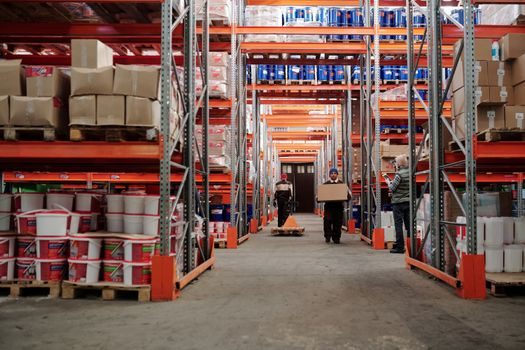
Aerosol cans, 200 L drums, 20 L pails and 1 L bottles do not cost the same per litre of active lubricant, and the Made-in-China MOQ thresholds illustrate the volume effect: 6,000-piece MOQ on the US$0.87–1.74 spray versus 3,000-piece MOQ on the US$1.16–1.32 spray [S1] shows suppliers quoting lower headline unit prices only at the higher commitment.
A procurement reference price for linear guide lubrication oils (way-lubricator ISO VG 32–68) at 20 L pail typically lands at US$4–9/L in 2024–2025 surveys, against US$2–4/L for the same fluid in 200 L drum; crossed-roller guide way-lube pricing tracks the same band, with synthetics at the top end.
Category Price Bands Buyers Should Anchor To
Reading the Made-in-China spray-lubricant numbers against typical industrial categories, four rough bands cover most 2025–2026 procurement scenarios: [S2]
1) Commodity chain & penetrating sprays: US$0.85–1.80 per 400–500 mL aerosol (6,000+ MOQ), as confirmed by the US$0.87–1.74 chain-lube listing [S1]. 2) General-purpose industrial greases (lithium/calcium 12-hydroxystearate, NLGI 2): roughly US$2.50–6.00/kg in 180 kg drums, with synthetic PAO versions reaching US$8–14/kg. 3) Hydraulic fluids (ISO VG 32–46, anti-wear HLP): US$1.80–3.50/L in 200 L drums for mineral HLP, US$3.50–7.00/L for synthetic PAO HVLP. 4) High-performance synthetics for gearboxes and compressors: US$5–12/L in drum, with food-grade NSF H1 fluids topping US$10–18/L because of the registration overhead.
Standards and Specifications That Constrain Choice
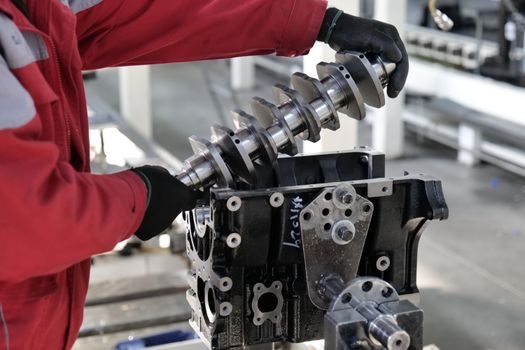
Category pricing is meaningless unless the fluid meets the equipment maker's spec, and the standards stack behind industrial lubricant selection is dense: ISO 6743/99 for category classification, ISO VG grades 2–1500 for kinematic viscosity bands, DIN 51524 Part 2 (HLP) and Part 3 (HVLP) for hydraulic anti-wear fluids, NLGI consistency numbers 000–6 for greases, and machine-maker approvals such as Flender, Siemens Flender, David Brown, SEW-Eurodrive, Cincinnati Milacron P-68/P-70 for hydraulic fluids, and NSF H1 / FDA 21 CFR 178.3570 for incidental-food-contact lubricants. [S3]
Buyers should treat the absence of a cited standard on a supplier's data sheet as a hard reject, not a soft warning. For context on how other industrial consumables (resins, alloys, ceramics) are quoted against standards, see the cast iron price-band breakdown and the engineering plastic resin bands, where spec-grade and not generic grade is the basis for the comparison.
What Pricing Tells You About Sourcing Risk
When a supplier quotes a lubricant at the very bottom of a category band (e.g. US$0.87 on a 6,000-piece chain-lube MOQ [S1]), the practical risks are predictable: lower treat-rate additives, generic Group I base oil, thinner can wall, hydrocarbon propellant that may fail flammability tests in some jurisdictions, and no traceability of the base-oil lot.
For OEM buyers running equipment under warranty, the correct play is to specify a minimum additive chemistry (e.g. minimum 1.0 % ZDDP, minimum 4-ball weld load 200 kg) and accept a 15–30 % price premium for confirmation on the TDS. For MRO and aftermarket buyers outside warranty, the bottom-band product is usually adequate provided the fluid is used in non-critical applications and reapplication intervals are shortened. A second cross-check is the supplier's stated after-sales service and warranty terms: the Made-in-China listings explicitly disclose "After-sales Service: Yes" on the US$1.16–1.32 spray [S1] — a small signal, but useful when triangulating supplier seriousness against cast iron selection criteria where the same due-diligence logic applies.
Levers Buyers Can Pull in 2026 Negotiations
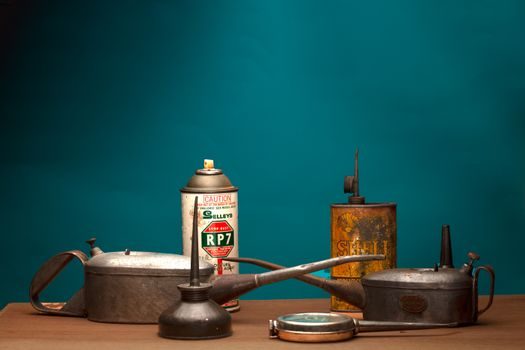
[S1]
For a wider view of how spec-grade selection compounds across categories, the silicon steel buying-guide breakdown and the contactor certification/frame-size bands use the same cost-vs-spec discipline.
Trackable signal to watch next: published Group II/III base-oil posting in Asia (Singapore and FOB China) and the EU CLP reclassification of any residual additive component, both of which historically move the bottom of these bands by 5–10 % within a quarter.