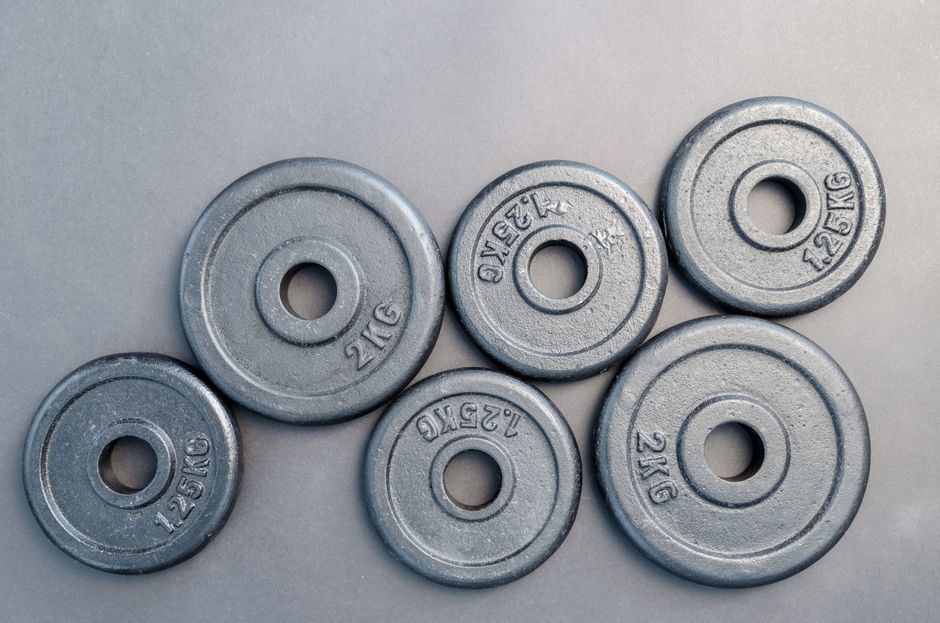
Specifying cast iron starts with four binding constraints: required tensile strength (ksi or MPa), minimum elongation, maximum section thickness, and the service environment — because no single grade covers both a 25 mm thin-wall pump housing and a 150 mm thick wind-turbine hub [S1][S2].
Across municipal, mining, fluid-handling and machinery buyers, gray iron still anchors the low-cost/high-damping end, ductile iron carries the pressure-rated structural load, and high-alloy (Ni-Cr, high-Si, high-Cr) variants handle corrosive, abrasive, or high-temperature duty — and mixing the families without checking the spec is the most common procurement error [S2].
ASTM A48 Gray Iron: Class Index, Tensile Bands and Typical Wall Thickness
ASTM A48 gray iron is specified by Class, where the class number equals the minimum tensile strength in ksi (e.g. Class 30 = 30 ksi / 207 MPa min tensile) and is the most cost-effective choice for vibration damping and compressive-loaded housings [S2]. Common engineering classes sit between 20 and 60 ksi (138–414 MPa), with Class 20–25 used for thin-wall pump bodies, Class 30 the default for general machinery, Class 40 for moderate-pressure gearboxes, and Class 50–60 reserved for high-modulus dies or thicker hydraulic sections [S2]. Casting section thickness drives the as-cast tensile — a 25 mm section in Class 30 typically delivers 200–250 MPa, while a 75 mm section can drop to 150–180 MPa, so a single class number does not guarantee uniform strength across a complex casting. The tradeoff is real: higher class requires more carbon equivalent and tighter cooling control, raising hard-spot risk during machining and pushing lead time 1–2 weeks for large castings [S1].
ASTM A536 Ductile Iron: Grade Selection by Elongation and Yield
ASTM A536 ductile iron is selected by a triple of tensile–yield–elongation (e.g. 65-45-12 = 65 ksi tensile, 45 ksi yield, 12% elongation) and is the right call wherever the design needs both strength and ductility, especially for pressure-bearing components such as valve bodies, pipe fittings, and structural hubs. The five standard grades — 60-40-18, 65-45-12, 80-55-06, 100-70-03, and 120-90-02 — span roughly 414 MPa tensile with 18% elongation on the tough end, up to 827 MPa tensile with 2% elongation on the high-strength end. Most water/wastewater valves and fittings sit in 65-45-12 or 80-55-06; high-pressure oilfield and mining liners move to 100-70-03 or 120-90-02. A frequent spec trap: specifying ductile iron where the as-cast section is below roughly 6 mm — the magnesium treatment that produces the spheroidal graphite needs a minimum wall to avoid carbide formation and brittle failure, so thin-wall parts almost always revert to gray iron or ferritic ductile (60-40-18) [S2]. Buyers who need comparable 316L pressure-rating behavior but at one-third the density cost often end up in ductile iron spec territory where pressure-class data lines up cleanly.
High-Alloy Cast Irons: Ni-Cr, High-Si and High-Cr for Corrosion and Heat
High-alloy cast irons extend the material into corrosive, oxidizing, and elevated-temperature service that plain gray or ductile iron cannot survive. Ni-Resist (ASTM A436) and high-Ni ductile (ASTM A439) cover 20–30% Ni content, used for non-magnetic, mildly corrosive pump and impeller service. High-silicon iron (Duriron / Durichlor, ~14–16% Si, ASTM A518) handles hot sulfuric, nitric, and mixed acid service but is brittle and essentially unmachinable — only grinding. High-chromium white iron (ASTM A532) covers 24–28% Cr abrasion-resistant liners in mining and slurry service, with hardness from 500 to 700+ HB depending on the Cr/C balance. ductile, lead times stretch 4–8 weeks on small heats, and weld repair becomes specialist work [S2]. For instrumentation-side fluid handling where pressure transmitters and flow meters see the same fluid stream, pressure transmitter material selection often mirrors the cast-iron choice for the upstream wetted body.
Section Thickness, Cooling Rate and Graphite Morphology Tradeoff
Section thickness is the silent variable in nearly every cast-iron mis-specification. Gray iron forms Type A flake graphite in 5–30 mm sections but shifts to Type D undercooled graphite below 5 mm (reducing tensile and raising hardness) and to Type B rosette graphite in very thick sections (lower strength, higher porosity risk). Ductile iron tolerates a wider range but suffers chunky graphite and lower elongation beyond roughly 100 mm wall without inoculant and pour-rate controls. The engineering rule of thumb: keep section transitions to a ratio under 2:1, and add fillets of at least 3–5 mm at junctions to avoid chill zones and stress risers. Cooling rate is set by section and the casting process — green-sand molding is fine for general machinery, resin-shell or lost-foam for thinner-walled or tighter-tolerance ductile parts, and lost-wax (investment) only when geometry or surface finish demands it, at 3–5× the unit cost [S2].
Comparison: Gray vs Ductile vs High-Alloy on Four Decision Criteria
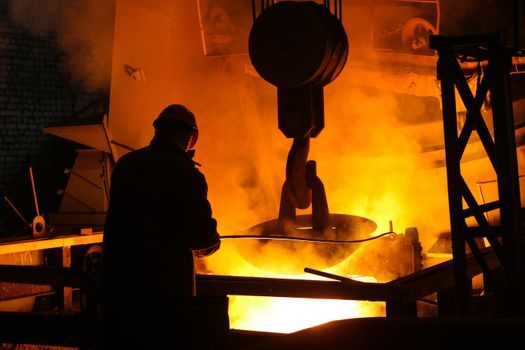
On cost per kg, gray iron is the baseline (index 1.0), ductile iron runs 1.2–1.5× and high-alloy 2.0–3.5×. On tensile strength, gray (ASTM A48) tops out around 414 MPa (Class 60), ductile (ASTM A536) reaches 827 MPa (120-90-02), and high-alloy Ni-Cr or high-Cr grades are spec-driven but typically 200–550 MPa with hardness or corrosion properties added. On elongation/ductility, gray is effectively 0–1%, ductile spans 2–18% by grade, and high-alloy is generally 0–5% (high-Si near zero). On corrosion/heat resistance, gray and ductile are baseline, while Ni-Resist handles mild corrosion, high-Si handles hot acids, and high-Cr handles abrasion + oxidation — and on machinability, gray is the easiest, ductile is moderate, and high-Si is essentially unmachinable. A practical heuristic from the spec desk: pick the lowest-cost family that meets the elongation AND the corrosion/heat limit, then size the section to the class index. For buyers cross-checking ductile-iron pump casings against alternatives, the industrial pump spec coverage is a useful adjacent reference for cost-band sanity checks. [S1]
Machinability, Hardness and Post-Cast Heat Treatment
Machinability index for gray iron runs 80–95, ductile 60–80, high-Cr white iron below 20, and high-Si iron below 10 — a spread that determines whether a job shop quotes you one week or six. As-cast hardness for Class 30 gray is typically 170–230 HB, ductile 65-45-12 lands 140–180 HB, and 120-90-02 runs 240–300 HB; this controls tool life directly. Stress-relief anneal at 540–595 °C is standard for both gray and ductile to cut residual stress from cooling, while ferritic anneal of ductile (705–730 °C, slow cool) restores 60-40-18 properties from a higher-grade pour and is sometimes used to convert 80-55-06 to a tougher 60-40-18 in the field. Normalizing and quench-and-temper (austempering to produce ADI) are used where ductile needs to reach 100-70-03 or 120-90-02 with high wear resistance, at the cost of an extra heat-treat step and 2–3 weeks of lead time. Buyers who need to cross-check cast-iron valve trim against stainless alternatives will find the stainless steel grade/cost grid useful for material tradeoffs on the same fluid service. [S2]
Standards Map, Sourcing Reality and Common Failure Modes
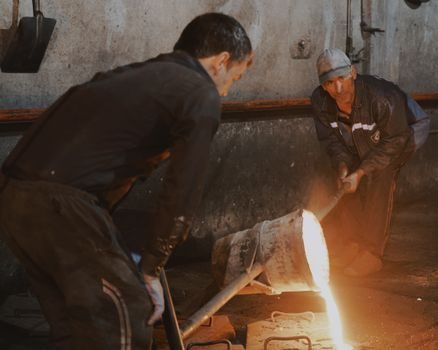
The governing standards for North American procurement are ASTM A48 (gray), A536 (ductile), A436 (Ni-Resist gray), A439 (Ni-Resist ductile), A518 (high-silicon), A532 (high-chromium white), with ISO 185 (gray) and ISO 1083 (ductile) as the European equivalents and JIS G5501/G5502 covering Japanese sourcing. Most service failures trace to one of three spec gaps: (1) calling out Class 30 without naming the section thickness, so the foundry pours a 75 mm wall that delivers only 150 MPa; (2) specifying ductile iron in a 4 mm section and getting carbides and crack-on-machining; (3) choosing high-Si for an alkali or hydrofluoric service where the silicon matrix actually dissolves faster than plain carbon steel. A practical sourcing move is to require the foundry to certify both the poured heat and a separately cast keel block on the MTC, so the buyer can audit tensile from the same heat against the as-cast location. For procurement teams already auditing ductile-iron valve and fitting suppliers, the industrial valve production overview lines up the process and sourcing levers on the same component class. [S3]
Two trackable signals for the next procurement cycle: ASTM Committee A04 is reviewing A48/A536 wording on section-thickness reporting (no confirmed revision date at the time of this snapshot), and several North American foundries are publishing tighter per-class hardness windows in 2026 mill certs to reduce machinability disputes — both are worth flagging on the next RFQ.