An industrial modem, often sold as a DTU (Data Transfer Unit), is a hardened cellular terminal that connects field equipment to a remote server over a public mobile network. In its most common form it converts serial data (RS232, RS485, or RS422) into IP packets and tunnels them over NB-IoT, Cat M1, Cat 1, Cat 4, or 5G RedCap to a SCADA system or cloud platform. Unlike a consumer modem, an industrial unit is built for wide-temperature cabinet service, unattended remote sites, and years of continuous machine-to-machine (M2M) operation.
The category sits between two neighbours: it is simpler than a full industrial router (which builds a routed LAN for many clients) and more capable than a bare cellular module (which is just a radio). Engineers choose a DTU when they need to bring one legacy serial device, a PLC, a flow meter, or an RTU, online reliably and inexpensively, and a router when several Ethernet hosts must share one cellular link.
Photo: Teltonika, CC BY-SA 4.0, via Wikimedia Commons
This guide is written for industrial purchasing engineers and design engineers. It covers 6 chapters spanning what a DTU is, device classification, cellular categories from NB-IoT to 5G RedCap, serial interfaces and northbound protocols, key spec parameters, and the selection decision sequence, plus 7 selection FAQs and manufacturer comparisons. Cellular categories reference the 3GPP LTE specifications and 3GPP Release 17 RedCap; serial and protocol references include EIA/TIA-232, EIA/TIA-485, the Modbus application protocol, and MQTT as standardized in ISO/IEC 20922.
Chapter 1 / 06
What is an Industrial Modem / DTU
An industrial modem is a device that modulates digital data onto a carrier for transmission over a wireless or wired channel and demodulates it at the far end, packaged for harsh industrial environments. In modern industrial communication the dominant form is the cellular DTU, a Data Transfer Unit that takes serial data from one field device and transports it transparently over a public mobile network to a data center. The DTU is, in effect, a combination of a small embedded controller and a cellular radio module, adding data protocol conversion and transparent transmission on top of the raw modem function.
The working principle is straightforward. A SIM card is fitted, and on power-up the unit registers on the carrier network (NB-IoT, LTE-M, LTE, or 5G), establishes a data session, and opens a TCP or UDP socket to a preconfigured server IP and port. Serial bytes arriving on the RS485 or RS232 port are wrapped into IP packets and pushed to the server; commands from the server are unwrapped and written back out the serial port. To the connected PLC or meter, the result is a virtual serial cable that happens to span hundreds of kilometers. The DTU manages registration, reconnection, and heartbeat keep-alive so the link survives the inevitable cellular drops at remote sites.
The historical arc tracks cellular generations. Early industrial telemetry used dial-up PSTN modems and leased lines. In the 2000s, GSM and GPRS DTUs brought wireless M2M to water utilities and oil fields. The 3G era raised throughput, but the decisive shift came with LTE and the purpose-built IoT categories. In 3GPP Release 13 (frozen 2016), the industry standardized two low-power wide-area technologies, NB-IoT and LTE-M (Cat M1), specifically for sensors and meters. As carriers worldwide retire 2G and 3G networks, those LTE IoT categories plus Cat 1 now carry the bulk of new low-to-mid-rate deployments, and 3GPP Release 17 RedCap is extending the same idea into 5G.
The application scale is broad because the underlying need, getting a remote machine online cheaply and reliably, recurs across industries. Smart grids and substation monitoring, water conservancy and municipal pump stations, environmental and meteorological sensing, district heating, smart agriculture, vending and POS terminals, asset tracking, and remote SCADA data acquisition all run on DTUs. A single low-power Cat M1 or NB-IoT unit at a wellhead may send a few kilobytes an hour for a decade; a Cat 4 gateway at a substation may carry continuous telemetry plus occasional firmware images. There is no single universal modem, and selection is the act of mapping the data profile, latency tolerance, environment, and protocol onto a specific category and chassis.
Four engineering attributes ultimately determine whether a deployment succeeds: link reliability (auto-reconnect, dual-SIM failover, signal margin), environmental hardening (temperature, surge, isolation), protocol fit (transparent versus gateway conversion), and total lifecycle cost including SIM data plans and field maintenance. A cheap consumer modem may pass a bench test and then fail in the first cold winter or the first carrier outage, so the discipline of industrial selection is to weight reliability and serviceability above headline data rate.
Chapter 2 / 06
Device Types and Classification
The phrase "industrial modem" covers several distinct device classes that are frequently confused on purchase orders. Choosing the wrong class is the most common early mistake: buying a transparent DTU when the project actually needs a routed LAN, or buying a full router when a single serial endpoint would do. The table below separates the five mainstream classes by what they connect and what intelligence they add.
Class
What it connects
Routing / intelligence
Typical use
Cellular module
Embedded into a host PCB
Radio only, host runs the stack
OEM product design
DTU (serial modem)
One serial device (RS232/485/422)
Transparent serial-to-IP tunnel
PLC, meter, RTU telemetry
IoT gateway
Serial + Ethernet field devices
Protocol conversion (Modbus to MQTT)
Multi-device data aggregation
Cellular router
LAN of Ethernet / Wi-Fi clients
NAT, firewall, VPN, routing
Remote site internet, machine LAN
Wireless RTU
Direct I/O and serial sensors
Logic, alarms, data logging
Unmanned station control
Cellular module: a bare radio (often LGA or M.2 form factor) that an OEM solders onto its own board, providing the modem and the SIM interface while the host processor runs the TCP/IP stack and application. Modules are the building block inside every higher class. They suit product designers who want to embed connectivity directly, but they require RF design, certification, and firmware work that finished products avoid.
DTU (serial modem): the classic Data Transfer Unit, optimized for transparent transmission of a single serial stream. It is the lowest-cost way to put one legacy RS485 device online, with minimal configuration: set the SIM APN, the destination server, and the heartbeat interval, and it runs. Because it does not route IP or build a LAN, it stays simple, cheap, and robust, which is exactly why utilities deploy them by the thousand.
IoT gateway: adds active protocol conversion. Where a DTU is protocol-agnostic, a gateway understands the field protocol: it polls Modbus RTU registers, maps them to tags, and republishes them northbound as Modbus TCP, MQTT, or OPC UA, often with TLS and local data buffering. Gateways suit sites with several heterogeneous devices that must be normalized before reaching a cloud platform.
Cellular router: builds a full IP network. It provides a cellular WAN to multiple downstream Ethernet and Wi-Fi clients with NAT, firewall, and VPN, and increasingly includes a serial port and digital I/O so it can also act as a DTU or gateway. Dual-SIM and dual-power variants add carrier and supply redundancy. Wireless RTU: a remote terminal unit with onboard logic, direct analog and digital I/O, and cellular backhaul, used where a station must take local action (alarm, pump control) even if the link drops, blurring the line between modem and controller.
Chapter 3 / 06
Cellular Categories Decoded
The single most consequential specification on an industrial modem is its cellular category, because it sets the throughput, latency, power draw, coverage depth, and module cost all at once. The 3GPP standard defines a family of LTE and 5G device categories; the ones relevant to industrial DTUs are NB-IoT, LTE-M (Cat M1), Cat 1, Cat 4, and the newer 5G RedCap. The table below compares peak data rates and the duty for which each category was designed.
NB-IoT (Narrowband IoT) trades throughput and latency for coverage and battery life. With Release 14 uplink reaching roughly 159 kbps and downlink near 127 kbps in half-duplex operation, and seconds of latency, it is the right tool for water and gas meters, parking sensors, and any node buried deep inside a building or underground where signal penetration matters more than speed. It is not suitable for anything that must respond quickly or move between cells frequently.
LTE-M / Cat M1 raises peak throughput to about 1 Mbps with typical real-world rates in the hundreds of kbps, cuts latency to roughly 10 to 15 ms, and supports mobility and full cell handover. That makes it the choice for moving assets, fleet telematics, wearables, and alarm panels where NB-IoT latency would be unacceptable. Many modules support both NB-IoT and Cat M1, letting one SKU cover both profiles.
LTE Cat 1 is the pragmatic middle ground, balancing performance, cost, and power for the majority of mid-rate IoT. At roughly 10 Mbps down and 5 Mbps up on existing LTE bands, it comfortably carries SCADA polling, remote HMI sessions, and over-the-air firmware updates, and it does not depend on carriers having deployed dedicated LPWA features. Cat 1bis, a single-antenna variant, simplifies hardware further and is increasingly common in new DTUs.
LTE Cat 4 delivers up to 150 Mbps down and 50 Mbps up, which is the band needed for video surveillance backhaul, image upload, and gateways aggregating many devices. 5G RedCap (Reduced Capability, defined in 3GPP Release 17) is the planned successor to Cat 4: it offers up to roughly 100 Mbps down and 50 Mbps up with much lower cost and power than full 5G NR, while retaining 5G features such as network slicing and improved positioning. Through 2025 and 2026 RedCap moved from specification to real products on live networks, and it is the forward-looking choice as LTE eventually winds down.
Chapter 4 / 06
Serial Interfaces and Northbound Protocols
On the field side, industrial modems speak serial; on the network side, they speak IP and one or more application protocols. Getting both sides right is what makes a DTU actually integrate with an existing plant. The three serial standards in routine use are EIA/TIA-232 (RS232), EIA/TIA-485 (RS485), and EIA/TIA-422 (RS422), each with very different reach and topology, summarized below.
Interface
Signaling
Typical max distance
Devices per bus
Common use
RS232
Single-ended
~15 m
1
Point-to-point, console, legacy PLC
RS422
Differential, full-duplex
~1,200 m
1 driver, up to 10 receivers
Long point-to-point links
RS485
Differential, half-duplex (2-wire)
~1,200 m
up to 32 standard loads
Multidrop Modbus RTU networks
RS485 dominates industrial field wiring because its differential, two-wire bus rejects common-mode noise, runs up to about 1,200 m, and supports a multidrop network of devices on one pair, which is exactly what Modbus RTU was built for. RS232 is single-ended, limited to roughly 15 m and one device, and survives mainly on consoles and older instruments. RS422 is differential and full-duplex over long point-to-point runs. A DTU's serial port should match the device: baud rates commonly run from 300 bps to 115,200 bps, with configurable data bits, parity, and stop bits, and the unit must support the same framing the connected device uses.
On the network side, the choice is between two operating modes. In transparent transmission mode the modem forwards serial bytes unchanged, so any byte-stream protocol (Modbus RTU, DNP3, IEC 60870-5-101, or a vendor frame) rides through untouched. This is the simplest and most universal mode, but it requires a matching endpoint at the server that understands the same protocol. In protocol conversion (gateway) mode the modem actively decodes the field protocol and translates it, the most common pairing being Modbus RTU to Modbus TCP or to MQTT.
Modbus, introduced by Modicon in 1979, remains the lingua franca of industrial serial communication. It is a master-slave (client-server) protocol: Modbus RTU runs over RS232/RS485 serial, while Modbus TCP wraps the identical register model inside a TCP/IP packet for Ethernet. A DTU operating as a Modbus gateway polls slave registers on RS485 and exposes them as Modbus TCP servers or as tags for a higher protocol, letting cloud software read field data without speaking serial.
MQTT (Message Queuing Telemetry Transport), standardized as ISO/IEC 20922 and deployed mainly in versions 3.1.1 and 5.0, is the dominant northbound protocol for cloud-connected modems. It is a lightweight publish-subscribe protocol designed for constrained devices and unreliable, low-bandwidth links, which fits cellular telemetry far better than continuously tunneling raw Modbus. A gateway-class modem maps Modbus registers to JSON payloads and publishes them to an MQTT broker, typically over a TLS-secured session. Other northbound options include DNP3 for utilities, OPC UA for plant integration, and SNMP for device management; the right one depends on what the receiving platform expects.
Chapter 5 / 06
Key Specification Parameters
Reading a modem datasheet means separating the few parameters that drive selection from the many that are marketing. Beyond the cellular category covered in Chapter 3, the parameters that actually decide a deployment are: serial and Ethernet interfaces, supported protocols, input voltage, power consumption, operating temperature, SIM and antenna configuration, ingress and isolation protection, and certifications. The values below reference real hardened industrial modems such as the Teltonika TRB256 (LTE Cat M1 / NB-IoT) and the Moxa OnCell cellular gateway family.
Interfaces. A typical hardened modem provides an RS232/RS485 serial terminal block, one 10/100 Mbps RJ45 Ethernet port (gateways and routers add a 4-port switch), several configurable digital inputs and open-collector outputs, and often an analog input. The Teltonika TRB256, for example, exposes RS232/RS485, one 10/100 Mbps Ethernet port, three configurable digital inputs, three open-collector outputs rated to 30 V and 300 mA, and one 0 to 30 V analog input. Confirm the serial mode (RS232 vs RS485), the I/O count, and whether the Ethernet port is a single uplink or a switch.
Power and consumption. Wide-range DC input is the hallmark of industrial design. Units commonly accept 9 to 30 V DC (some 9 to 36 V DC), tolerating 12 V and 24 V cabinet buses and vehicle supplies. A single-radio modem idles below about 2 W and peaks under roughly 3.5 W. Reverse-polarity and surge protection on the power input are essential for field survival.
Operating temperature is the clearest industrial-versus-commercial divider. Hardened modems are rated -40 to +75 degrees C (some to +70 degrees C) with 5 to 95 percent non-condensing humidity, against roughly 0 to +40 degrees C for consumer routers. For DIN-rail cabinet mounting, check that the device meets the EN 60715 rail standard and tolerates the cabinet's worst-case internal temperature, which can run well above ambient.
SIM, antenna, and redundancy. Single-SIM units are fine for fixed sites with stable coverage; dual-SIM units add carrier failover, automatically switching to a backup network when the primary is unavailable, the standard approach for unattended remote stations. Antennas connect via SMA or RP-SMA, and main-plus-diversity (MIMO) plus a separate GNSS antenna are common. Isolated power and antenna inputs improve reliability against ground loops and surges.
The parameters that most often get overlooked are the radio band plan and certifications. Two key signal metrics, summarized below, also belong on any commissioning checklist, because a modem with adequate specs but poor signal margin will drop links no matter how good the datasheet looks.
Cellular bands: the module must support the LTE/5G bands your local carriers actually operate; a global-band SKU avoids re-stocking per region.
RSRP (Reference Signal Received Power): absolute signal strength in dBm; the more negative, the weaker. Plan antennas to keep a usable margin.
RSRQ (Reference Signal Received Quality): signal quality including interference; low RSRQ in good RSRP usually means congestion or interference.
Certifications: CE and FCC for market access, plus carrier and industry approvals (for example PTCRB) where required for network attach.
VPN and security: OpenVPN, IPsec, or WireGuard tunnels and TLS on MQTT protect telemetry over the public network.
Chapter 6 / 06
Selection Decision Factors
To turn the preceding five chapters into a concrete model choice, work through the ordered sequence below. Most selection errors come not from a single wrong answer but from deciding details (chassis, brand) before the upstream choices (device class, cellular category) are settled. These eight steps double as a reusable RFQ template.
Device class first: decide whether you need a transparent DTU (one serial device), an IoT gateway (protocol conversion for several devices), a router (a routed LAN), or a wireless RTU (local logic and I/O). This single choice eliminates most of the catalog.
Cellular category: map your data profile and latency tolerance to NB-IoT, Cat M1, Cat 1, Cat 4, or 5G RedCap per Chapter 3. Undersizing strands you without bandwidth; oversizing wastes module cost and power.
Carrier and band plan: confirm the supported LTE/5G bands against the carriers available at every deployment site, and verify 2G/3G fallback is not relied upon where those networks are being shut down.
Field interface: match the serial port (RS232 / RS485 / RS422), baud rate, framing, and I/O count to the connected device; specify Ethernet port count if downstream hosts must share the link.
Northbound protocol: choose transparent transmission if the server speaks the field protocol, or gateway conversion (Modbus RTU to Modbus TCP / MQTT / OPC UA) if a cloud platform expects normalized tags. Confirm TLS support.
Environment and power: select wide-temperature rating (-40 to +75 degrees C), the correct DC input range (9 to 30 V DC or 9 to 36 V DC), surge and ESD immunity, ingress protection, and DIN-rail or panel mounting to match the cabinet.
Redundancy and security: add dual-SIM failover and dual-power input for unattended sites, and the VPN type (OpenVPN / IPsec / WireGuard) your network mandates.
Total cost of ownership (TCO): sum hardware, SIM data plans (often the largest recurring cost), installation, antennas, and field maintenance. A unit that saves money upfront but lacks remote management or auto-reconnect can cost far more in truck rolls over a multi-year deployment.
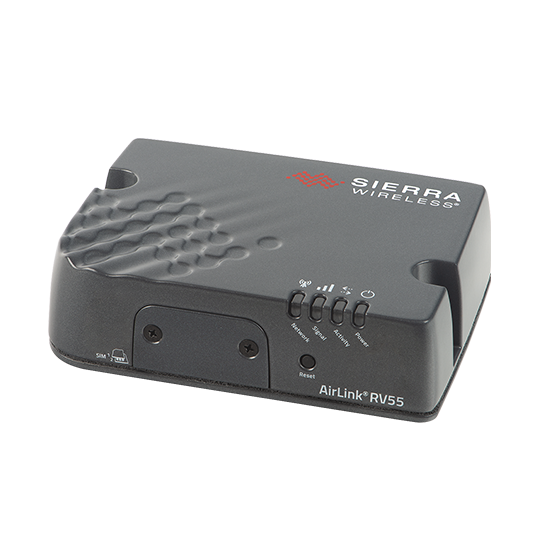
One last dimension that is easy to ignore at purchase time is serviceability and remote management: cloud device-management platforms for over-the-air firmware and configuration, mass provisioning, remote diagnostics, and local spare-part availability. For unattended remote assets these determine repair response far more than any datasheet number. Established suppliers including Teltonika Networks (TRB and RUT series), Moxa (OnCell series, with the G3470A-LTE phased out for the G4302-LTE4), Robustel (M1200/M1201 and IoT gateways), InHand Networks (InDTU / InRouter), and Sierra Wireless / Semtech (AirLink) pair their hardware with management platforms, which is why they are favored for large fleets, while lower-cost serial DTUs from USR IOT (PUSR), Four-Faith, and Alotcer suit simpler, price-sensitive single-device telemetry.
FAQ
What is the difference between a DTU and an industrial router?
A DTU (Data Transfer Unit) is a serial-to-IP terminal: it takes RS232, RS485, or RS422 serial data from a single device and tunnels it transparently over a cellular network to a server, with no local routing, no LAN switch, and no firewall. An industrial cellular router builds a full IP subnet, gives several downstream Ethernet and Wi-Fi clients internet access through one cellular WAN, and adds NAT, firewall, VPN, and routing tables. Put simply: a DTU connects one serial endpoint, while a router connects a network. Many modern products blur the line by adding both a serial port and an Ethernet switch, but the core distinction is whether the device routes IP traffic for multiple hosts or just transports one serial stream.
What does transparent transmission mean on a DTU?
Transparent transmission means the DTU forwards serial bytes to the destination server exactly as received, without parsing, reformatting, or understanding the application protocol. The PLC or meter behaves as if it were wired directly to the remote host over a virtual serial cable. The DTU handles cellular registration, TCP or UDP socket setup, automatic reconnection, and heartbeat keep-alive packets, but it is protocol-agnostic about the payload, so the same unit can carry Modbus RTU, DNP3, or a proprietary frame unchanged. The alternative mode is protocol conversion, where the DTU actively decodes Modbus RTU on the serial side and republishes it as Modbus TCP or MQTT on the network side.
Which cellular category should I choose: NB-IoT, Cat M1, Cat 1, or Cat 4?
Match the category to the payload and latency need. NB-IoT (uplink to roughly 159 kbps in Release 14, latency 1.6 to 10 seconds) suits low-frequency metering and deep-indoor sensors where battery life dominates. Cat M1 / LTE-M (peak about 1 Mbps, latency 10 to 15 ms) adds mobility and lower latency for moving assets and voice-capable alarms. Cat 1 (about 10 Mbps down, 5 Mbps up) is the practical workhorse for SCADA telemetry, remote HMI, and firmware updates on legacy LTE bands. Cat 4 (up to 150 Mbps down, 50 Mbps up) handles video, image upload, and high-channel-count gateways. As 2G and 3G are shut down, NB-IoT, Cat M1, and Cat 1 carry the bulk of new low-to-mid-rate industrial deployments.
How does a DTU keep the cellular connection alive?
DTUs use three mechanisms. First, the unit auto-registers on the network and dials a PPP or internal data session on power-up, retrying with backoff if the carrier rejects it. Second, it opens a persistent TCP or UDP socket to the configured server and sends periodic heartbeat packets, typically every 30 to 120 seconds, so both ends detect a dropped link quickly rather than waiting for a TCP timeout. Third, watchdog logic monitors signal strength (RSRP and RSRQ), and on repeated heartbeat loss it tears down and re-establishes the session, power-cycles the radio, or fails over to a second SIM. Dual-SIM units switch carriers automatically when the primary network is unavailable, which is the standard redundancy approach for unattended remote sites.
Can a DTU convert Modbus RTU to MQTT for cloud platforms?
Yes, when the unit runs in protocol-conversion (gateway) mode rather than pure transparent mode. The DTU polls Modbus RTU registers on its RS485 port as a master, maps each register to a JSON tag, and publishes those tags via MQTT to a broker over the cellular link. MQTT (standardized as ISO/IEC 20922, commonly version 3.1.1 or 5.0) is publish-subscribe and lightweight, which suits constrained cellular bandwidth and intermittent links far better than continuously tunneling raw Modbus. Many industrial modems and IoT gateways also support Modbus TCP, DNP3, and OPC UA northbound, and add TLS on the MQTT session. If your platform expects MQTT or REST, choose a gateway-class unit; a transparent DTU alone cannot perform this translation.
What input voltage and operating temperature should an industrial modem support?
Industrial-grade units accept a wide DC input, commonly 9 to 30 V DC or 9 to 36 V DC, so they tolerate the 12 V and 24 V buses found in control cabinets and the voltage sag during engine start on vehicles. Idle power is typically under 2 W and peak under 3.5 W for a single-radio modem. Operating temperature is the clearest industrial-versus-commercial dividing line: hardened products are rated -40 to +75 degrees C (some to +70 degrees C), with 5 to 95 percent non-condensing humidity, whereas consumer routers stop near 0 to 40 degrees C. For DIN-rail cabinet installation, also confirm reverse-polarity protection, surge and ESD immunity, and isolated power and antenna inputs, since unprotected I/O is a frequent field failure mode.
Which manufacturers make reliable industrial modems and DTUs?
For hardened cellular modems and DTUs, established suppliers include Teltonika Networks (TRB2 and TRB1 modem series, RUT router series), Moxa (OnCell cellular gateway series, with the G3470A-LTE phased out in favor of the G4302-LTE4), Robustel (M1200/M1201 serial modems and IoT gateways), InHand Networks (InDTU and InRouter series), and Sierra Wireless / Semtech (AirLink). For lower-cost serial-to-cellular DTUs widely used in China, USR IOT (PUSR), Four-Faith, and Alotcer are common. Verify the cellular category and band plan against your local carrier, confirm the wide-temperature and certification options you need (CE, FCC, PTCRB, carrier approvals), and check that the firmware supports the northbound protocol your platform expects.
Industrial Modem / DTU Manufacturers
Source-backed product routes. Open a company dossier for procurement scope and cited evidence.
Westermo Network Technologies AB documents Westermo MCW-211-MM-SC2 industrial Ethernet media converter as an industrial fiber media converter offering.
Published product fact
Westermo MCW-211-MM-SC2 industrial Ethernet media converter

/EKI-1642I_Front_Banner20210822232017.jpg)

.jpg)