
An industrial oven is a forced or natural convection, radiant, or vacuum chamber that holds a work-load at a controlled temperature for drying, curing, baking, stress-relieving, or aging — and the 2026 specification envelope still centers on 260–350 °C (500–662 °F) for general-purpose electric benchtop and cabinet units [S1].
Selection is a four-gate decision: maximum operating temperature, internal chamber volume, heat source (electric, gas, steam, indirect oil), and atmosphere (ambient air, inert N₂, vacuum, cleanroom). The same Despatch LCC/LCD Clean Process Benchtop platform that defines the small-chamber tier spans 260 °C and 350 °C maximums with stainless interior and exterior, programmable controls, and a configurable option set [S1].
Temperature Class and the 260–760 °C Stack
Industrial ovens split cleanly into four temperature bands that map to insulation material, heater alloy, and chamber design — below 200 °C (low-temp drying, paint flash-off), 200–350 °C (general curing, electronics, coatings), 350–600 °C (composites, powder-coat cure, stress-relieve), and 600–760 °C+ (heat-treat adjacent, ceramic, fuel-cell sintering). The Despatch LCC/LCD Clean Process Benchtop family sits in the 260 °C and 350 °C tiers and is targeted at clean production environments [S1].
Ceramic fiber paper for industrial-oven lining is manufactured from high-purity alumina powder and silica sand, with zircon sand added for the high-temperature grades; the molten stream is drawn into fiber by spun or blown processes and sold as gasket, liner, and module stock [S4].
Volume Class: Benchtop, Cabinet, Walk-In, Truck-In, Conveyor
Chamber volume is the second gate and drives cost, footprint, and airflow design. The five standard tiers — benchtop (under ~0.3 m³), cabinet (0.3–3 m³), walk-in (3–30 m³), truck-in (above 30 m³), and conveyor (continuous throughput, no fixed volume) — each have distinct heater placement, door-seal, and circulation-fan practice [S1][S7].
Despatch structures its catalog around exactly these five classes — benchtop, lab, industrial cabinet, walk-in / truck-in, and conveyor for continuous processing — and presents them as five distinct product groups rather than a continuum [S7]. Walk-in and truck-in ovens are the right answer when the workload is too large to roll on a cart through a cabinet door; conveyor ovens are the right answer when lot size is small and throughput is the constraint [S7].
Heat Source: Electric, Gas-Fired, Steam, Indirect Oil
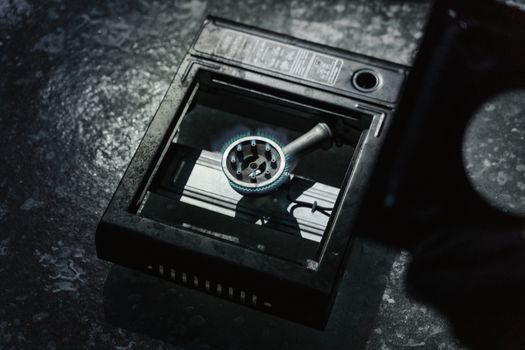
Heat source is the third gate. Electric resistance heating dominates the 200–500 °C range and pairs well with cleanroom / laboratory duty because there is no combustion by-product; the Despatch LCC/LCD line is electric and explicitly listed as a clean-process product [S1]. Below 200 °C, electric flanged immersion heaters, screw-plug heaters, circulation heaters, finned tubular, duct, and over-the-side heaters cover indirect liquid heating and process-air trim — National Plastic Heater's product set is a representative catalog across all six form factors [S5].
Gas-fired and indirect-oil systems take over from 500 °C upward and wherever the available electrical infrastructure is too small for the kW load. A useful rule of thumb: one cubic meter of air heated from 20 °C to 350 °C needs roughly 0.4 kWh — at 10 m³/min this is 4 kWh per minute of energy, the kind of number that pushes a process engineer toward gas long before 600 °C. Heat-recovery from exhaust through plate, brazed-plate, or shell-and-coil exchangers (the standard product set at Hexonic) cuts gas-oven energy cost materially when the exhaust stream is high enough in mass flow to make a recuperator pay back [S3].
Atmosphere and Process Air
Atmosphere is the fourth gate and the most expensive to change after commissioning. Ambient-air ovens are the cheapest and dominate drying and paint-cure; recirculated-air ovens with HEPA filtration handle electronics and medical-device work; inert-nitrogen or vacuum ovens are mandatory for any chemistry that oxidizes or out-gasses precious alloys. Clean Process Benchtop Ovens (Despatch LCC/LCD) target this third class with stainless interior, stainless exterior, and a controls package designed to live next to production lines [S1].
For conveyor ovens, atmosphere is set by the tunnel shell and the inlet/outlet curtains, not by a sealed door — making them a poor choice for high-purity inert work but a good choice for continuous paint and powder coat cure [S7].
Comparison: Five Volume Classes on Four Decision Criteria
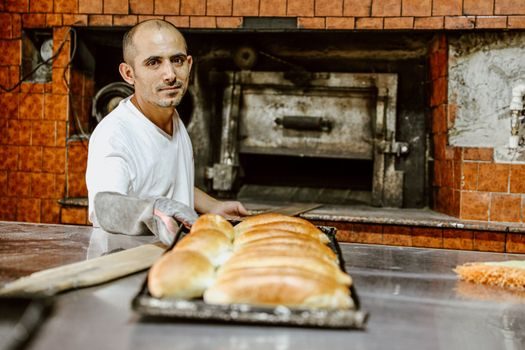
Setting the five standard volume classes against cost, footprint, max temperature, and atmosphere flexibility gives a quick selection map. Benchtop ovens score low on cost, footprint, and max temperature (typically 260–350 °C), but can be supplied in clean-process or inert variants [S1]. Cabinet ovens extend to 500 °C and gain door-sealed atmosphere control, but cost and footprint scale linearly with internal volume [S7]. Walk-in and truck-in ovens cover 200–500 °C in volumes above 30 m³ and are the standard choice for stress-relieving large fabrications, but they require reinforced floors and external air-supply planning. Conveyor ovens sit outside the temperature-volume matrix and compete on throughput per square-meter of floor, not on peak temperature [S7].
Selection Workflow: From Process Spec to Vendor RFQ
The cleanest selection sequence is process spec → four gates → vendor shortlist. Step 1 fixes the max process temperature from the thermal-mass budget of the workload (rule of thumb: workload + 20 % margin to soak time). Step 2 fixes the volume class from the largest single part or lot. Step 3 fixes the heat source from the available electrical kW and the cost of gas at the site. Step 4 fixes the atmosphere from the chemistry — if the part oxidizes, you are buying an inert or vacuum oven whether you want to or not [S1].
For buyers in India and South Asia, the supplier base is broad: Despatch (US, 1902, premium tier), Hexonic-adjacent heat-recovery equipment for gas-oven exhaust, and Indian tier-1 builders like NSW (over six decades, with dedicated painting-plant, batch, conveyor, and clean-room divisions) cover most spec ranges [S7][S3][S8]. Selection for an Indian powder-coat or painting line typically lands on a gas or electric batch oven in the 200–250 °C range, while an electronics line lands on a 260–350 °C clean-process cabinet or conveyor [S1][S8]. For buyers sourcing broadly, an industrial gear selection walk-through and a bucket elevator selection guide both share the same four-gate logic — process spec first, hardware class second, certification third, vendor fourth.
Limitations, Failure Modes, and What This Guide Does Not Cover
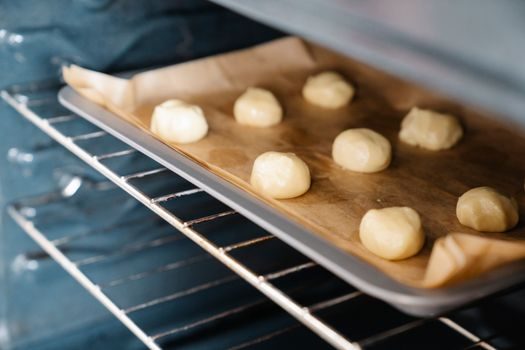
Three classes of equipment are deliberately out of scope of this bench/cabinet/walk-in framework. First, continuous belt and pusher furnaces above 1000 °C are metallurgical furnaces, not ovens, and are typically quoted against AMS 2750 or equivalent aerospace heat-treat specs. Second, vacuum brazing and sintering furnaces above 1200 °C use graphite or molybdenum hot zones with very different atmosphere-control practice. Third, RF and microwave curing ovens are a separate technology class and are matched to dielectric-loss heating of the workload, not to the airflow-driven temperature class discussed here [S1][S4].
Ceramic fiber paper from a high-purity alumina-silica-zircon base stock is the standard repair material and is sold in roll, sheet, and module form for direct field replacement [S4].
For buyers who have already settled on the four gates and need a vendor shortlist, two trackable signals: (1) Despatch's 2026 catalog still lists LCC/LCD Clean Process Benchtop Ovens as the entry point for cleanroom-class electric ovens, with 260 °C and 350 °C as the two temperature options [S1]; (2) Indian tier-1 oven builders continue to publish batch, conveyor, painting-plant, and clean-room product pages dated within the last 6 months, which is the practical signal that the bench/cabinet/walk-in/conveyor five-class structure has not been replaced by any disruptive new format in 2026 [S7][S8].
For component-level specifications, see linear guide, crossed roller guide, and industrial adhesive.