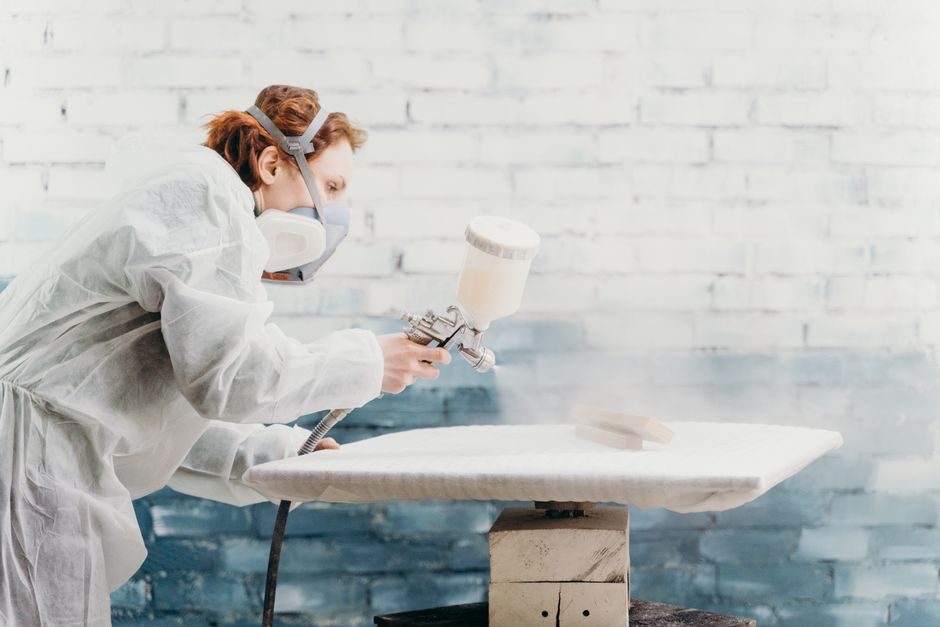
Sandblasting service rates in the U.S. sit at $40-$65/hr for general work, $75/hr for specialty jobs, and $2-$16 per square foot by depth, per the costowl.com reference data [S1]. Equipment pricing diverges sharply from labor rates: entry-level cabinet shot-blasting machines from Chinese manufacturers list at US$800-1,050 with a 50-piece MOQ from Ningbo [S2], while industrial sandblasting rooms and booths run US$20,000-99,800 per set depending on configuration [S3].
The spread — a roughly 100x gap between a benchtop cabinet and a full room — is the single most important number for any buyer setting a budget before sending an RFQ. Used/refurbished portable and dustless units also circulate on Alibaba at discount pricing for plants that can absorb a worn pot or older gun [S5], and dedicated parts-cleaning ultrasonic systems adjacent to blasting lines cluster around US$2,760-3,900 per unit [S4].
Service Rates vs. Equipment CAPEX: The 2026 Cost Stack
Service billing falls into two clear buckets: hourly and per-square-foot. Costowl's published ranges put general sandblasting at $40-$65/hr, with wet sandblasting at $45-$75/hr, soda blasting at $60-$100/hr, and glass-bead blasting at $70-$120/hr [S1]. The premium for glass beads reflects the smoother finish and lower media cost per pound on stainless and aluminum substrates. Robotic sandblasting is billed by area at $3-$7/sq ft for large flat surfaces like ship hulls and railcar sides [S1].
Per-square-foot pricing scales with profile depth: very light 1/32-inch blasting is $1-$3/sq ft, light 1/16-inch is $2-$5/sq ft, medium 1/4-inch is $4-$8/sq ft, and heavy 3/8-inch runs $7-$16/sq ft [S1]. Real invoices in the dataset ranged from a $140 two-door wood-stripping job to a $1,560 three-day, 4,000-sq-ft metal shop building done at $65/hr [S1]. For shops weighing insourcing, the breakeven calculation comes down to hours of annual usage: a $20,000-99,800 booth is paid back by displacing roughly 250-1,250 service hours at the median rate [S1][S3].
Equipment Tiers and China-Side Price Bands
Sandblasting equipment is sold in four practical tiers. Tier 1 is the benchtop/portable cabinet, the cheapest entry point — Made-in-China lists Cabinet Shot Blasting Machines at US$800-1,050 per piece, MOQ 50 pieces, shipped from Ningbo with a 10,000-piece/month capacity [S2]. Tier 2 covers open-top pressure-blast pots and dedicated wet/dustless skids, with used units appearing on Alibaba's portable & dustless category at sub-new pricing [S5].
Tier 3 is the walk-in sandblasting room/booth, where published FOB bands cluster tightly: New Design Q26-series rooms at US$35,000-88,000 per set, generic industrial shot-blast rooms at US$20,000-90,000/set, and the broadest listed spread — Sand Blasting Booth enclosures — at US$29,800-99,800 per set [S3]. Tier 4, automated/robotic rooms with recovery floors and turntables, is normally quoted RFQ-only and not publicly listed. Adjacent equipment costs matter too: complementary ultrasonic parts-cleaning equipment, the typical post-blast wash, lists at US$2,760-3,900 per unit on Made-in-China [S4]. For a procurement team sourcing abrasive-blast nozzles, hoses, and guns, the OEM Shanghai Yuchang Sandblast Equipment catalog covers the consumable side — boron-carbide and tungsten nozzles, sandblast suits, helmets, gloves, foot pedals and valves — sold in mixed MOQs through guidechem.com [S7].
Selection Criteria: Match Method, Substrate, and Duty Cycle
Dry sandblasting at $35-$65/hr is the default and most versatile, but it generates the most dust and the highest PPE load [S1]. Wet sandblasting at $45-$75/hr is specified wherever OSHA silica-dust rules or NESHAP combustion-dust concerns dominate — adding water suppression trades media cost for slurry handling and pump maintenance. Soda blasting at $60-$100/hr is the right pick for soft substrates (fiberglass, thin-gauge aluminum, masonry) where the abrasive must not profile the base metal. Glass-bead blasting at $70-$120/hr is reserved for corrosion removal and satin finishing on stainless, where iron-free media is required to avoid contamination.
For insourcing decisions, three criteria drive the choice between cabinet, room, and robotic: footprint (cabinets under 2 m², rooms 20-200 m²), production rate (cabinets 5-15 parts/hr, rooms 20-80 m²/hr, robotic 80-200 m²/hr), and OSHA/ventilation compliance. A cabinet keeps abrasive inside a sealed enclosure — no permit; a walk-in room needs negative-pressure ventilation and dust collection per local air-quality rules. Compared side-by-side on cost/sq ft of throughput, a $800-1,050 cabinet only wins below roughly 1,000 parts/yr [S2], a $20,000-99,800 room wins between 1,000-50,000 sq ft/yr [S3], and a robotic cell wins above that envelope, where labor displaces $40-$75/hr [S1].
Consumables and Operating Cost per Hour
Abrasive media is the line item most first-time buyers underestimate. The CDC flags steel grit, aluminum oxide, and crushed walnut/coconut shell as the common substitutes for silica sand — and notes that none of them are hazard-free, requiring sealed cabinets, dust collection, and operator respirators [S1]. Glass bead runs roughly $1.50-$3.00/lb, aluminum oxide $1.20-$2.50/lb, garnet $1.00-$2.00/lb, and steel grit $0.80-$1.50/lb; consumption at a 1/4-inch profile typically runs 3-8 lb per square foot depending on substrate hardness and pressure (commonly 80-100 psi at the nozzle).
Nozzle and hose life is the second hidden cost. Boron-carbide nozzles last 200-300 hours, tungsten-carbide 500-1,000 hours, and silicon-carbide 50-100 hours under typical 80-100 psi garnet service. Sandblast suits, helmets, and gloves — the consumable PPE listed by Shanghai Yuchang [S7] — should be replaced every 200-500 hours of active blasting. On the equipment side, pot valves, deadman handles, and hoses are the wear parts most often quoted as spares when negotiating with any Made-in-China supplier [S6][S7]. Used cabinets from Alibaba [S5] can be 30-50% cheaper than new, but plan for a $200-500 pot-valve and hose refresh before commissioning.
Limitations, Failure Modes, and Sourcing Risk
The biggest financial risk in this category is mis-scoping the abrasive-media system: a $20,000-90,000 room will not deliver its rated m²/hr if the dust collector is undersized, the lighting is wrong, or the recovery floor is wrong for the abrasive. Second, a Cabinet Shot Blasting Machine at US$800-1,050 is built for light intermittent duty [S2]; running it for a full shift will burn the gun and the seal in weeks. Third, on the services side, the costowl.com spread ($1-$16/sq ft) is real but uneven: lead-paint jobs add 30-100% to base price for containment and disposal [S1], and the $1-3/sq ft very-light tier is rarely available outside contractors who are already mobilized on a larger site.
For sourcing risk, Chinese-side listings dominate the price floor — Made-in-China publishes 100+ verified sandblasting-equipment suppliers under its sand-blasting-booth and parts-cleaning categories, most with Diamond/Audited status and T/T payment terms [S3][S4][S6]. That density is what pulls cabinet pricing down to the US$800-1,050 level [S2]. The flip side is lead time: FOB Ningbo shipment to a U.S. inland port is typically 30-45 days, plus 2-4 weeks of commissioning on arrival, so a buyer who needs a turnkey room in under 60 days should source domestically or stock used [S5].
Use-Case Fit: Who Buys What
Auto-restoration and small fab shops under 1,000 parts/yr should stay on the service side or buy a sub-$1,500 cabinet [S2]; the math on a $20,000+ room doesn't close at that volume. Mid-volume job shops stripping 5,000-50,000 sq ft/yr — think powder-coating lines, agricultural-equipment rebuilds, and structural-steel fab — are the sweet spot for a $35,000-88,000 Q26-series room [S3]. High-volume shipyards, rail-car shops, and wind-tower painters above 50,000 sq ft/yr are the only buyers for whom $100,000+ rooms with turntables and abrasive recovery make sense, and they typically run their own glass-bead or steel-grit reclaim loops to keep operating cost near the $40-$65/hr baseline [S1][S3].
Procurement teams comparing this to other capital lines should note the cost stack is dominated by the enclosure and the dust collector, not the blast pot — so a buyer evaluating a new booth against, say, a hydraulic press capacity upgrade or a belt conveyor line extension is really comparing site-prep and ventilation cost, since the pot itself is a small share of the total. For shops already running an abrasive-blast line, the next adjacency is usually portable gas detection for the operator breathing zone — silica and metal-dust exposure are the recurring compliance trigger.
The two trackable signals to watch over the next two quarters: a refresh of the Made-in-China Q26-series price band [S3], and any new CDC/NIOSH silica standard revision that would push wet-blast and cabinet adoption over open-room dry-blast in U.S. shops [S1].
For component-level specifications, see anti static equipment, linear guide, and crossed roller guide.