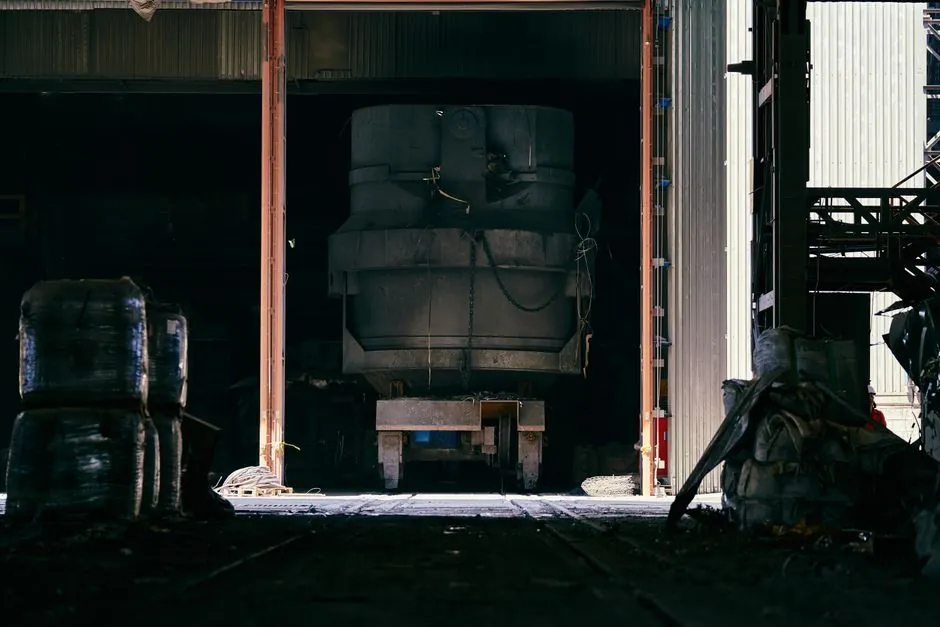
An OEM arrangement puts the pump design and IP in the buyer's hands, while an ODM arrangement lets the factory supply both the design and the production line; the buyer's role collapses to branding and limited modification, per Importivity's 2026-03 sourcing breakdown [S1]. The same source notes that ODM is typically the faster path because the platform, mold or pattern already exists, and OEM carries higher upfront tooling but yields a uniquely owned product [S1].
For industrial pump buyers, that framing is the right starting point: hydraulic duty, ATEX/IECEx zone, materials of construction, and required certifications drive which route actually pays off, and the cost differentials change materially once a project crosses into custom impeller geometry, special alloys, or API 610 skids. The comparison that follows uses the OEM vs ODM axes from IBM Think (2026-07) and Importivity, and overlays them on pump-specific deliverables documented by HCEM and AMITIME in 2026 [S1][S2][S3].
What OEM and ODM Actually Mean on a Pump Project
IBM's 2026-07 definition is the cleanest one for engineers: in the OEM model the customer owns the product design and intellectual property and hires a manufacturer to build to those specifications; in the ODM model the manufacturer designs and builds the product and the customer rebrands and sells it as its own [S3]. Importivity adds the operational texture: OEM projects typically involve tooling, multiple sampling rounds, and longer lead times, while ODM reuses an existing mold or platform and limits the buyer's changes to color, logo, material swap, or packaging [S1].
HCEM's pump-specific OEM offering is a textbook example: the buyer builds on HCEM's industrial-grade air compressor and DC pump platforms and customizes logos, labels, brand-exclusive colors, packaging, and product model variations, with quantity flexibility for initial orders [S2]. The same vendor's ODM track is the opposite: full custom engineering from scratch, covering appearance, size, flow, pressure, voltage, and air inlet/outlet direction, plus proprietary mold and housing development, FEA, and integrated system engineering [S2]. That split is typical of mature Chinese pump ODM/OEM shops serving global brands.
Selection Criteria: Where the OEM/ODM Line Sits for Pumps
Five criteria do most of the work in practice. First, design ownership: the buyer's drawing package and material spec point to OEM; reuse of a factory's tested hydraulic platform points to ODM [S1][S3]. Second, customization depth: hydraulic re-rating, exotic alloys (duplex, super-duplex, titanium), or non-standard flange drillings push a project toward OEM; cosmetic and packaging changes stay inside ODM [S1][S2]. Third, certification scope: projects that must carry a specific CE/ATEX/IECEx dossier under the buyer's name usually need OEM paperwork control, while an ODM's pre-existing CE/UKCA/EHPA Q-Label/MCS/ETL/AHRI portfolio can be transferred under white-label agreements [S5].
Fourth, IP and exclusivity: IBM's framing makes clear that OEMs give the buyer higher control because the design belongs to them, while ODM relationships carry a higher risk that the supplier may sell the same or a very similar pump to other brands [S1][S3]. Fifth, speed and cost: Importivity's matrix is explicit that ODM has lower tooling/development cost, often lower MOQ, and faster time-to-market, while OEM has higher upfront cost and longer sampling cycles [S1]. The HCEM process map matches this on the engineering side: 3D model and technical drawing, CNC mold production to a 0.003 mm tolerance standard, physical prototype evaluation, and FEA before mass production [S2].
Option Comparison: OEM Route vs ODM Route on Eight Criteria
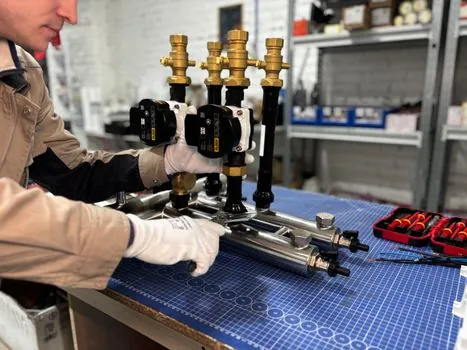
Reading the sources side by side yields a usable comparison matrix. (1) Design owner: OEM = buyer, ODM = supplier [S1][S3]. (2) Customization level: OEM = high, ODM = limited to moderate [S1]. (3) Speed to market: OEM = slower, ODM = faster [S1]. (4) Tooling and development cost: OEM = higher, ODM = lower [S1]. (5) MOQ tendency: OEM = often higher, ODM = often lower [S1]. (6) IP risk: OEM = lower for the buyer, ODM = higher because the supplier can sell the same platform to other brands [S1][S3]. (7) Typical pump deliverables: OEM delivers impeller geometry, hydraulic performance curve, and material certificates under the buyer's name; ODM delivers a platform unit with cosmetic and minor parameter changes [S2]. (8) Validation depth on the supplier side: HCEM runs 24-hour endurance runs plus noise and leakage tests on every design and stamps core components to a 0.003 mm tolerance, with a 2-year warranty on the production line [S2].
One useful benchmark on the ODM side: AMITIME's 215+ authorized patents (41 of them invention patents), 200+ R&D engineers, CNAS-accredited labs, 15 national-level testing labs, 12 all-climate long-term performance labs, and 2 acoustic labs let the company simulate pump and heat-pump operation from -45°C to +90°C, which is the kind of pre-existing test infrastructure an ODM buyer is effectively buying into [S5]. For OEM buyers, that same lab base is irrelevant unless the contract gives them control of the test plan and the resulting data.
Who Each Route Is For, and Who It Is Not
OEM is the right call when the spec cannot be met by anything on a factory's shelf: custom hydraulic curves, special alloys for NACE MR0175 sour service, API 610 vertical turbine geometries, or pumps that must integrate into a patented skid [S1][S3]. ODM is the right call when an off-the-shelf hydraulic platform will do the duty, the brand cares more about cosmetics and lead time than unique performance, and the buyer accepts that the same pump may ship under other logos [S1][S5].
OEM is the wrong call for short-run private-label programs where tooling amortization would blow up unit cost, and for buyers who cannot fund the multi-round sampling loop typical of OEM projects [S1]. ODM is the wrong call for safety-integrity work where the buyer must sign the design dossier itself (for example, PED Category III assemblies or ATEX 2014/34/EU equipment where the notified body dossier lists the brand as the responsible party), and for any project that needs truly exclusive performance [S1][S3].
Limits, Failure Modes, and What to Verify on Either Path
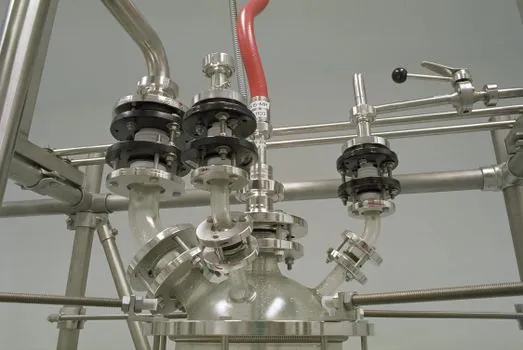
The well-known failure mode on the ODM side is silent commoditization: a buyer rebrands a stock platform, grows volume, then discovers the same unit on a competitor's catalog six months later, and has no contractual exclusivity on the performance curve or the tooling [S1][S3]. HCEM's published OEM case set (Hyundai DC pump, RPS Solar pumps, dental air compressor) and ODM case set (Suhang medical vacuum) show the typical segmentation: ODM is used where the application is technically demanding but commercially low-volume enough to justify a clean-sheet mold, OEM is used where a brand wants its own face on a proven platform [S2].
The well-known failure mode on the OEM side is hidden cost: tooling amortization, drawing revisions, sample freight, and validation testing can each look small on a quote but compound into a 30-50% effective unit-cost premium over an equivalent ODM unit before the first production batch ships [S1]. HCEM counters this with a four-step process (consultation and R&D, precision prototyping on CNC tooling, rigorous 24-hour validation, digitized automated production) that compresses the sampling loop, and offers a 2-year warranty on the resulting OEM/ODM units [S2]. For pump specifiers reading these claims, the practical verification steps are: ask for the OEM's tolerance standard in writing (HCEM publishes 0.003 mm), ask for the ODM's full certification list (AMITIME publishes A+++, EHPA Q-Label, KEYMARK, CE, ERP, BAFA, MCS, ETL, AHRI, WaterMark, SAA), and confirm who owns the test reports under the buyer's brand [S2][S5].
Sourcing Logic: Where Chinese ODM/OEM Capacity Sits in 2026
Importivity's overview states that most of the world's largest ODMs by revenue are based in Taiwan and China, reflecting the depth of Asia's manufacturing ecosystem [S1]. AMITIME's footprint is a representative 2026 data point: founded in 2003, exporting to 80+ countries including Germany, the UK, France, Sweden, Norway, and Finland, with Nordic sub-zero installations running continuously for over 20 years, and a multi-base production layout (Zhongshan headquarters, Shunde smart factory) designed for OEM/ODM scalability [S5]. For pump buyers specifically, HCEM's published metrics (500+ custom projects, 100+ countries served, 30+ years of engineering experience, 80+ patents) and its 0.003 mm tolerance standard are a useful benchmark when scoring a shortlist [S2].
The practical sourcing logic is therefore: for high-volume, certification-heavy programs where an existing ODM hydraulic platform can carry the duty, an Asian ODM with a strong international certification portfolio is the lowest-risk route; for low-volume, performance-critical or IP-sensitive programs, an OEM route with a tighter design-control contract is the safer choice, even at higher upfront cost [S1][S3][S5]. For a deeper look at how smart-pump monitoring is changing OEM pump specs, see this Industrial Pump Industry 4.0 adoption spec map; for upstream filtration choices that often decide pump warranty exposure, see this basket strainer selection guide; and for context on how OEM/ODM pump choices interact with field maintenance tooling, see this tank cleaning machine spec map.
For the relevant spec sheets and selection criteria, see additive manufacturing material, industrial pump, and industrial adhesive.