
Industry 4.0 adoption has pushed intelligent pump control system penetration past 60% among Fortune 500 manufacturers, with the global intelligent pump segment sized at $28.5B in 2025 and tracked to $47.3B by 2033 at a 6.8% CAGR [S1].
Centrifugal pumps hold 62.4% of that intelligent-pump market, Asia Pacific accounts for 38.2% of global revenue, and real-world deployments in Singapore, Denmark, and California water utilities report AI-enabled predictive maintenance cutting unplanned downtime by 45% and extending pump lifespan by 15 years [S1]. Process engineers specifying new builds in 2026 need to understand which industrial pump architectures actually carry the digital layer, and which are still sold as dumb iron.
What "Intelligent Pump" Actually Means in 2026 Procurement
An "intelligent pump" bundle in 2026 is a centrifugal or positive-displacement unit with onboard IIoT sensors, a variable frequency drive (VFD) or electronic motor adapter, and a controller that streams vibration, thermal, flow, and power data to either an on-prem SCADA stack or a cloud analytics platform [S2][S3].
The IIoT layer reports vibration spectra, thermal imaging, flow rate, and energy use in real time, with cloud or edge analytics layered on top, and adoption is being driven hard by the EU Ecodesign Directive and parallel U.S. and China efficiency mandates that effectively force smart controls on new motor-driven pump skids [S1]. Equipment selection for an industrial pump in 2026 is therefore less about hydraulic curves alone and more about whether the controller exposes the right data to the plant historian.
Selection Criteria: Where Smart Features Pay Back
VFD pairing on centrifugal pumps cuts energy consumption by up to 30% at partial load, which is the single largest ROI lever for any Industry 4.0 retrofit [S1][S2]. Predictive maintenance on critical service pumps reduces unplanned downtime by 45% in the published water-utility case studies, and digital twin simulation before purchase cuts both capex and project schedule by letting engineers validate hydraulic selection before fabrication [S1].
The decision logic on the spec bench is straightforward: if the pump runs more than 4000 hours/year, handles a critical service, or sits on a service where unplanned shutdown costs more than $50k/hour, the smart-control layer is typically justified inside 24 months on energy plus avoided downtime. North American BAS-integrated HVAC pump packages have already crossed 52% adoption in commercial real estate, so the spec is no longer exotic on the HVAC side either [S1]. Buyers comparing industrial pump options should score each candidate against four criteria: onboard sensor count, open protocol support (Ethernet/IP, PROFINET, Modbus TCP, OPC UA), edge versus cloud analytics, and the OEM's published MTBF on the VFD stack.
Who the Smart Pump Stack Is For, and Who Should Skip It
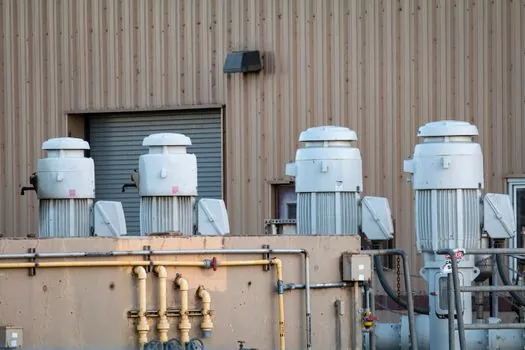
Smart pump packages are a clear fit for Fortune 500 process plants, municipal water utilities larger than 50,000 population equivalent, oil and gas operations with shale or oil sands duty, and pharmaceutical or food plants with validated-cleaning CIP cycles that need traceable flow data [S1][S2][S4].
They are a poor fit for small irrigation sets, residential booster skids, fire pump jockey units in simple NFPA 20 service, and any duty where the pump runs less than 1000 hours per year; the digital layer adds $8,000–$25,000 to the skid price that never pays back at low duty cycle. In Canada specifically, Industry 4.0 adoption is accelerating in mining and oil and gas, so those two sectors are the early-mover spec reference points for North American projects [S4]. Process engineers specifying control valves or analyzers in the same skid should treat the smart pump as a peer instrument, not a black box.
Technology Comparison: Smart Pump Architecture Options
Three architectural patterns dominate 2026 deployments: the VFD-integrated smart centrifugal, the sensor-retrofitted legacy centrifugal with external IIoT gateway, and the positive-displacement smart pump with embedded flow and pressure telemetry [S2][S3].
The VFD-integrated centrifugal leads on energy, typically 20–30% kWh reduction at variable load, but carries the highest controller cost. The sensor-retrofitted legacy path is the cheapest way to get Industry 4.0 data off an existing asset, useful for brownfield plants where replacement capex is blocked, but it leaves the motor and hydraulics at original efficiency. The positive-displacement smart pump is the right call for chemical, pharmaceutical, and food duty where metering accuracy and clean-in-place traceability matter more than energy; typical dosing accuracy lands inside ±1% with smart controllers, versus ±3–5% on a non-instrumented PD unit [S2][S3].
For the supply chain side, China alone is investing more than $4.2B annually in pump automation under the Made in China 2025 umbrella, so the Asian supplier base for VFD-integrated smart pumps has expanded sharply in 2025–2026 and lead times on standard SKUs have compressed to 6–10 weeks [S1]. India is a parallel growth track, with the Jal Jeevan Mission driving intelligent water management demand and the IPEC 2026 show (30 July to 1 August 2026, HITEX Hyderabad) functioning as the regional spec-benchmarking venue [S1][S2].
Use Cases and Regional Adoption Map

Asia Pacific leads with 38.2% of global intelligent pump revenue, valued at $10.9B in 2025, driven by Chinese smart-factory capex, Indian water infrastructure, and Japanese retrofits of an aging industrial base [S1].
North America sits at $17.54B for the broader pumps market in 2024 with a 3.74% CAGR to $24.41B by 2033, and the smart-pump sub-segment is the part of that mix growing at roughly double the market rate [S4]. The U.S. consumes more than 12 billion gallons of water daily through public supply systems, almost all of it moved by pumping infrastructure, which is the installed base the smart retrofit wave is now targeting [S4]. The global mechanical pump market sits at $74.8B in 2025 with a 5.06% CAGR to $122.6B by 2035, and the IoT-enabled sub-share is the fastest slice of that pool [S3]. Engineers planning a North American plant expansion can reference an Industrial Pump Manufacturing Equipment Guide 2026 for the supplier shortlist and a SCADA software suppliers and manufacturers: 2026 platform map to confirm the controller end of the data path actually integrates cleanly.
Limitations, Failure Modes, and Spec Pitfalls
The smart-pump stack introduces three failure modes that do not exist on a dumb centrifugal: sensor drift on vibration and flow transmitters, VFD harmonic distortion that can corrupt analog 4–20 mA loops, and cybersecurity exposure on any IIoT gateway that talks to the plant network [S1][S2].
Specifiers should require the OEM to publish MTBF on the VFD power section (target 100,000 hours or more for industrial-grade units), confirm the controller supports signed firmware updates, and mandate that the gateway sit behind a plant firewall with no inbound internet routing. Plants running HART-only legacy DCS systems should verify the smart pump exposes a HART tag for each sensor, since some 2025-vintage Chinese smart pumps ship with PROFINET or Modbus TCP only and need a protocol converter to drop into a HART-centric control room [S2]. High maintenance and operational costs on legacy installations remain the single biggest restraint on the North American pump market, and the smart retrofit is the workaround only when the underlying hydraulic asset still has 10+ years of mechanical life left [S4].
Standards and Sourcing Discipline

Buyers should anchor 2026 smart-pump procurements to the hydraulic performance standards ISO 5167 (flow measurement) and API 610 (process centrifugal pumps), with efficiency claims verified against the EU Ecodesign Directive hydraulic pump regulations for the European scope and against the U.S. Department of Energy pump efficiency rules for the North American scope [S1][S4].
For hazardous-area duty, ATEX 2014/34/EU and IECEx certification on the VFD and sensor housing are non-negotiable, and any wireless gateway should carry a country-specific radio approval (FCC Part 15 in the U.S., RED in the EU). Vibration monitoring on critical service pumps should follow ISO 10816 / ISO 13373 for condition monitoring, with alert and trip bands set per the pump OEM's own severity chart rather than a generic threshold. Sourcing teams can cross-check vendor claims against the published market shares (Grundfos leading competitive landscape on variable drive innovation, centrifugal pumps at 62.4% of the intelligent sub-segment, Asia Pacific at 38.2% of revenue) before shortlisting [S1].
Track three signals into late 2026: the EU Ecodesign hydraulic pump regulation enforcement timeline and any expansion of scope to smaller kW classes, the first wave of IPEC 2026 (30 July to 1 August 2026, Hyderabad) field reports on which smart-pump SKUs Indian process plants are ordering at scale, and any Q4 2026 capacity announcements from the Asian VFD-integrated smart pump suppliers that would compress the current 6–10 week lead time further. Engineers building a related spec set for strainers and pre-filtration should review a Y-Strainer vs Precision Filter: Spec-by-Spec Selection Map so the smart flow sensor upstream of the pump sees clean, repeatable data.
Component reference pages worth checking: industrial adhesive, and industrial borescope.