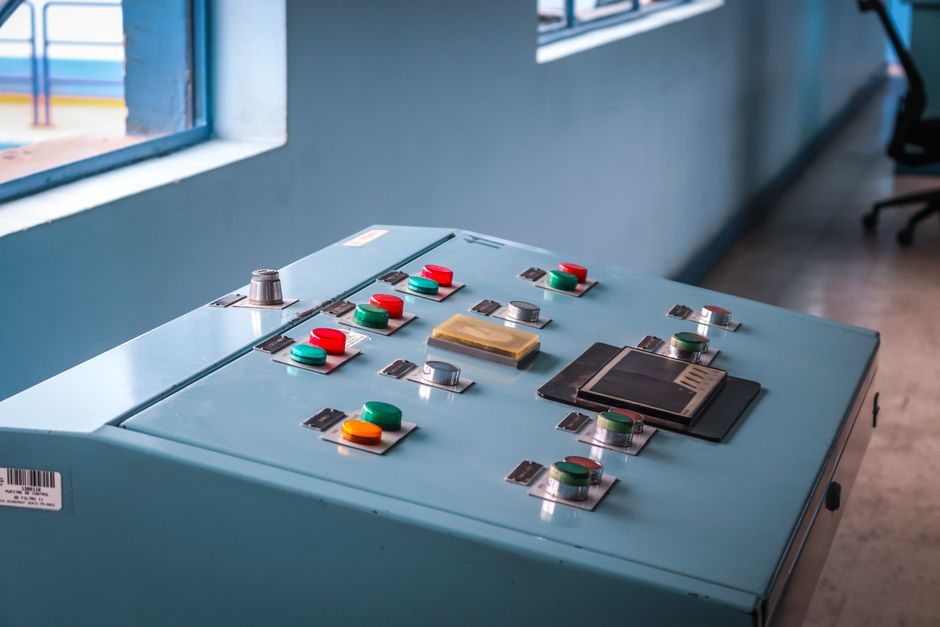
Open Automation Software (OAS) now markets a 30-year HMI/SCADA/IoT/MES platform that bundles a no-code Open UI Builder, native .NET and REST API integration, and device drivers covering PLCs, CSV files and external databases for data historian and recipe management [S1].
Rockwell Automation's automation-fair portal groups its software portfolio under Studio 5000, FactoryTalk (View, Optix, Historian, Analytics, Linx, Batch, Energy Manager, Vault, Design Studio) and Plex MES / Plex Quality / Plex ERP, with the 11th Annual State of Smart Manufacturing report framing the 2026 shift "from automation to autonomy" [S2].
Inductive Automation positions Ignition as a server-based unlimited-tag SCADA/IIoT/MES platform paired with the Inductive University free online credentialing program; LEAD Intelligent sells turnkey Li-ion and solid-state battery lines with embedded Formation & Aging software; B&R focuses on adaptive manufacturing hardware plus smart pallet transport for narrow-aisle cells [S3][S4][S5].
Scope and definition of the modern industrial automation software stack
As of July 2026, an industrial automation software stack typically bundles five functional layers: device connectivity / drivers, a real-time SCADA engine, a time-series data historian, an MES / OEE layer, and an edge or cloud IIoT gateway. OAS explicitly covers all five under one server install and advertises 24/7/365 phone/chat/email support, 30+ years of deployment history, and a 100% data-integrity claim tied to direct hardware connectivity [S1].
Rockwell's equivalent footprint is split between FactoryTalk Linx (device comms), FactoryTalk Historian, FactoryTalk View / Optix (HMI), FactoryTalk Analytics, FactoryTalk Batch and the Plex MES family, with PlantPAx serving process industries and ThinManager handling thin-client delivery [S2]. Inductive Automation's Ignition collapses the same five layers into one server, unlimited clients, and unlimited tags with a free Ignition Designer download; the company's Inductive University lets users earn the Ignition Core Certification online at no cost [S4].
B&R (ABB) complements its controller and drive hardware with software for adaptive manufacturing, including a smart pallet transport module for confined narrow-aisle production cells where space-optimized routing is mandatory [S5]. LEAD Intelligent occupies a narrower vertical: full turnkey lines for prismatic, cylindrical (18650/21700) and pouch Li-ion cells, plus all-solid-state battery lines, with dedicated Formation & Aging software and an energy-feedback power module platform [S3].
Selection criteria engineers should weigh before signing the PO
For a controls engineer comparing these stacks in July 2026, four decision criteria dominate the spec: licensing model, openness vs. lock-in, vertical fit, and where the historian and analytics actually run. OAS sells perpetual licensing with a no-code web UI builder, native .NET integration, and pre-built drivers that remove the need for third-party OPC tunnels in many water/wastewater and discrete applications [S1].
Rockwell's portfolio is subscription- and seat-based (FactoryTalk, Plex) with tight coupling to Allen-Bradley ControlLogix/CompactLogix controllers, PlantPAx for process, and an explicit "automation-to-autonomy" roadmap published in the 11th State of Smart Manufacturing report [S2]. Ignition by Inductive Automation uses a single-server, unlimited-client licensing model with tag-based pricing, free Inductive University credentialing, and a SCADA/IIoT/MES coverage profile that competes head-on with both OAS and the lower FactoryTalk tiers [S4].
B&R's adaptive manufacturing software is strongest when paired with its own ACOPOStrak and PC-based control hardware, especially for narrow-aisle pallet transport where a conventional conveyor would not fit [S5]. LEAD Intelligent only makes sense for battery cell and module manufacturers, because its Formation & Aging software is hard-wired to the company's prismatic/cylindrical/pouch/solid-state cell-assembly lines [S3].
Side-by-side comparison of the five platforms
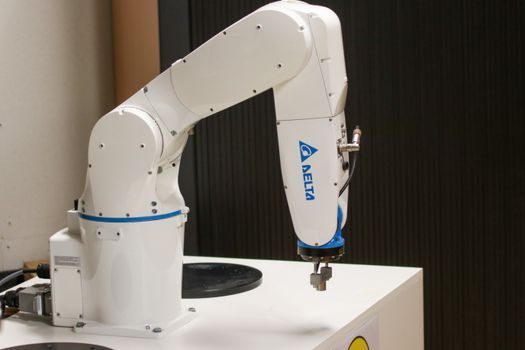
The five stacks can be lined up against four decision criteria — licensing, vertical scope, UI/IDE strategy, and primary differentiator — to make a sourcing shortlist readable: OAS offers perpetual licensing with a no-code browser UI and 30+ years of HMI/SCADA pedigree for plants that want to avoid seat-based fees [S1]. Rockwell Automation delivers a subscription-based, full-lifecycle suite from Studio 5000 design to Plex ERP, optimized for Allen-Bradley and PlantPAx users chasing the automation-to-autonomy roadmap [S2].
Inductive Automation's Ignition runs on a single unlimited-client server with free Inductive University training, giving integrators a flat-cost way to scale SCADA/IIoT/MES deployments [S4]. B&R's stack is adaptive-manufacturing centric, with smart pallet transport software that maximizes throughput in narrow-aisle cells when paired with ABB motion hardware [S5]. LEAD Intelligent only competes in Li-ion and solid-state battery lines, where its dedicated Formation & Aging software and energy-feedback power module platform differentiate it from generic SCADA vendors [S3].
Where each stack fits and where it does not
For a discrete manufacturer running mixed-vendor PLCs, OAS and Ignition are the most neutral choices because both ship with broad driver libraries and zero-code UI builders that do not lock the plant into one controller family [S1][S4]. For an existing Allen-Bradley brownfield, Rockwell's FactoryTalk + PlantPAx + Plex MES path is the lowest-risk upgrade because Logix tag integration, batch, and historian are all native [S2].
For a battery cell manufacturer building a new prismatic or solid-state line, LEAD Intelligent is the only one of the five that delivers formation, aging and energy feedback as a turnkey package with embedded software [S3]. For a high-mix, low-volume cell running in narrow aisles, B&R's adaptive pallet-transport software is the clear match because the conveyor replacement is the bottleneck, not the SCADA layer [S5].
Ignition and OAS are not interchangeable with PlantPAx for ISA-95 batch, pharma validation or regulated MES deployments where Plex MES, FactoryTalk Batch or FactoryTalk PharmaSuite already hold the installed base; conversely, PlantPAx is overkill for a water utility SCADA upgrade that OAS or Ignition can cover in a single server install [S1][S2][S4]. For controls engineers writing logic, see the smart camera selection reference for the vision-side equivalent, and the smart meter reference for the field-instrument side of the same IIoT stack.
Standards, integration protocols and ecosystem caveats
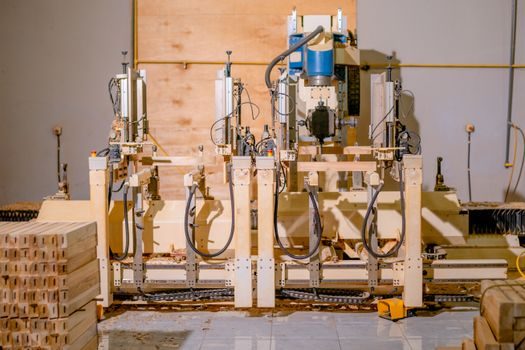
All five vendors speak OPC UA and MQTT at the IT/OT boundary, but the controls-layer protocols differ: Rockwell's FactoryTalk Linx is the native comms path for Allen-Bradley controllers, while OAS and Ignition lean on third-party device drivers plus REST and .NET for PLC-agnostic deployments [S1][S2][S4]. B&R's software assumes PC-based control and ABB motion hardware, and LEAD Intelligent's Formation & Aging software assumes the company's own cell-assembly lines [S3][S5].
None of the five vendors publish a single ISA-95 level-by-level compliance matrix on the public web pages captured for July 2026, so any MES or batch-validation claim should be verified against the vendor's specific certification pack — for example, FactoryTalk PharmaSuite and Plex Quality Management System for regulated life-sciences lines, versus Ignition's MES modules for general manufacturing [S2][S4]. Engineers selecting HMI/SCADA front-ends in regulated cells should also check the smart valve positioner reference for the field-device side of the same HART/IO-Link wiring.
Limitations and failure modes to plan around
OAS customers cite a 30-year continuous product line as a stability plus, but the platform's no-code UI builder still expects a developer fluent in .NET and REST for anything beyond drag-and-drop gauges [S1]. Rockwell's subscription-only model can drive total cost of ownership above perpetual licensing over a 10-year horizon, and the Plex MES modules have a separate roadmap from the FactoryTalk historian layer [S2].
Ignition is cost-effective at scale because of its unlimited-client licensing, but each project still needs a certified integrator for advanced MES work, and the free Inductive University credential does not replace a system integrator's redline review [S4]. B&R's smart pallet transport is mechanically impressive, but a mis-sized cell layout negates the throughput gain and forces a return to conventional conveyors [S5]. LEAD Intelligent's lines are turnkey only for the supported cell formats; a 4680 tabless cell outside the listed 18650/21700 cylindrical scope would require a custom engineering change order [S3].
Sourcing signals worth tracking in the second half of 2026
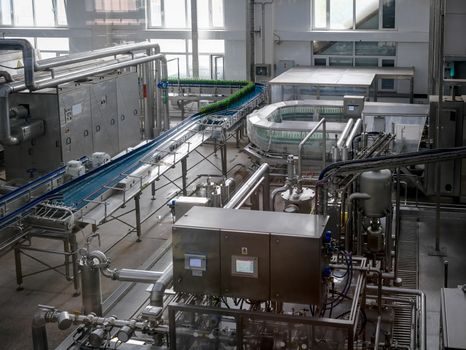
Two signals are worth watching between now and the end of 2026: the release cadence of FactoryTalk Optix (Rockwell's new HMI platform replacing some View SE/CE roles) and any Ignition version updates that bundle native AI/ML modules directly into the SCADA server [S2][S4]. LEAD Intelligent's announced global-headquarters groundbreaking, and any 2026 additions to its solid-state-battery equipment line, will also indicate whether its MES-adjacent Formation & Aging software expands beyond the Li-ion vertical [S3].
Engineers building new digital-transformation roadmaps should map their PLC, MES and ERP layers first, then evaluate the platform — and for adjacent decisions, the industrial adhesive selection guide and the measuring instruments in smart manufacturing reference cover the field-instrument and metrology side of the same automation stack.