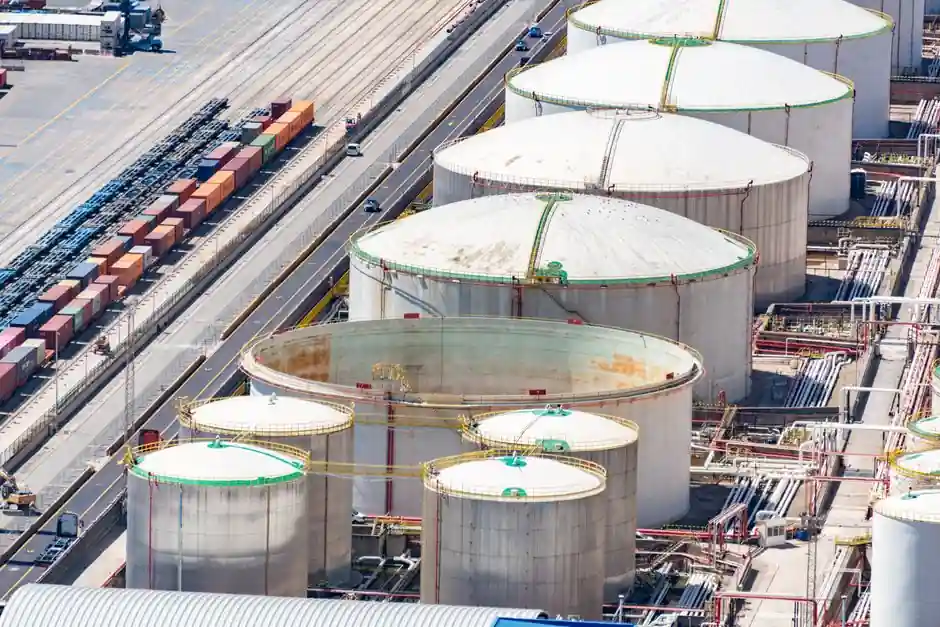
The global thermal energy storage market was estimated at USD 8.04 billion in 2026, with a forecast of USD 11.87 billion by 2031 and an 8.10% compound annual growth rate [S4].
Industrial process heat is becoming a central application, with ETES systems offering lower heat costs, higher electrification and grid-balancing value across paper, food, steel, chemicals and titanium dioxide production [S2][S5].
What thermal energy storage solves at industrial scale
Thermal energy storage separates electricity use from heat delivery, allowing industrial operators to charge a storage system when power prices are low and discharge stored heat when production requires it [S2]. ETES allows companies to draw electricity when prices are low and use stored heat when prices are high, helping lower costs, decrease dependence on imported gas and balance the wider electricity grid [S2].
Hard-to-abate plants provide the clearest demand case because mineral processing, food manufacturing and chemical production require continuous high-temperature steam [S5]. The relevant comparison is between gas-fired equipment that buys energy continuously, electric boilers that follow electricity prices, and ETES systems that decouple charging from heat demand [S2].
ETES economics vary sharply by power market
A study covering Germany, France and Spain found that hybrid ETES combined with existing heating systems delivered the most economical results across three use cases: paper-industry steam, low-temperature food-industry steam and high-temperature steel heat treatment [S2].
The study reported that industrial companies can cut heating costs by up to 70% and accelerate electrification rates in process heat to 75% by pairing existing systems with ETES [S2]. The study reported that ETES can help accelerate electrification rates in process heat to 75% [S2].
The study described ETES as a complement to low-cost clean power that gives companies flexibility to consume electricity when prices are low and use stored heat when prices are high [S2]. ETES provides flexibility by allowing companies to draw electricity when prices are low and use the stored heat when prices are high, helping lower costs, decrease dependence on imported gas and balance the wider electricity grid [S2].
Technology selection by temperature and duty cycle
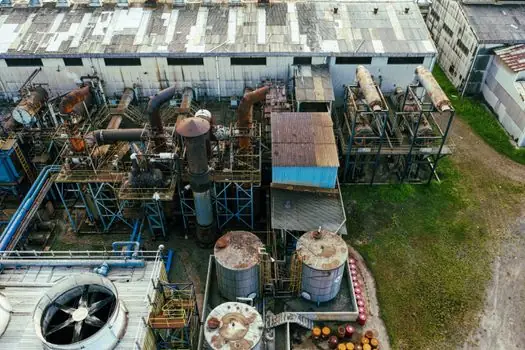
Electro-thermal storage using cheap bulk media such as rock or sand is intended for industrial heat rather than electricity-only storage [S2]. These systems can be paired with existing boilers, while high-temperature systems require materials, heat exchangers and controls designed for the specified operating band.
One demonstrated metal-block design uses aluminium and graphite blocks, reaches core temperatures around 550°C or higher, and discharges stored energy as industrial-grade steam or electricity [S5].
For a plant engineer, the selection criteria are temperature, delivered medium, cycle frequency, storage duration, power tariff structure and available grid connection. Solid media and ETES fit direct heat or steam duties, while molten salt is established for concentrated solar power systems and phase-change materials address modular or compact applications [S4][S9]. Equipment heat rejection and recovery may involve an industrial heat pump, while process exhaust treatment remains a separate design issue addressed by a thermal oxidizer.
Molten salt, PCM, solid media and thermochemical systems
Molten salt has a strong track record in concentrating solar power, but heat exchangers, corrosion control, freezing protection and operating temperature determine its industrial applicability [S4]. Phase-change materials offer compact storage and modular deployment, although capacity cost, cycling stability and matching to the process temperature remain decisive [S4][S9]. Solid-media ETES uses rock, sand or metal blocks, which can simplify material supply and suit bulk heat storage [S2][S5].
Thermochemical storage is the least mature branch in this comparison, but its forecast growth is higher than that of the established sensible-heat segment [S4]. It belongs on a longer-term technology watchlist rather than a default 2026 process-heating specification.
Industrial heat is outgrowing the utility-led market
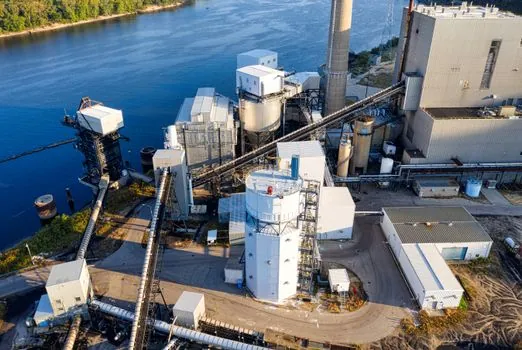
Asia Pacific was identified as the fastest-growing market and Europe as the largest market for thermal energy storage [S4]. This mix explains why grid-oriented molten-salt deployments dominate reported market values while direct industrial applications are becoming a larger incremental opportunity.
Market sizing itself remains inconsistent across research houses. Estimates for 2026 range from USD 2.61 billion to USD 8.04 billion, with other publications placing thermal energy storage systems at USD 1.51 billion [S1][S3][S4][S6].
Carbon performance depends on the charging mix
The study reported that ETES can significantly reduce carbon emissions while accelerating electrification rates in process heat to 75% [S2]. The operating result cannot be separated from grid carbon intensity.
A September 2026 IEA report proposed a 35% global electrification target by 2035 but excluded hard-to-abate heat-dependent industry from that target [S5]. Thermal storage can therefore support both plant electrification and wider grid operation, including the absorption of curtailed renewable generation, but emissions claims should be calculated against site-specific electricity rather than inferred from the technology alone [S2][S5].
Failure modes to resolve before procurement
The dominant project risk is not the storage vessel itself but the mismatch between the heat-delivery target and the electricity tariff assumed in the business case [S2]. A system optimized for 550°C industrial steam cannot be judged on the same basis as a low-temperature food process, and a tariff with limited intraday flexibility removes much of the modeled arbitrage value [S2][S5].
Engineers must also resolve grid-connection queues, heat-exchanger sizing, auxiliary parasitics, storage-media replacement, cycling strategy and backup-fuel redundancy. ETES is designed to complement existing heating equipment in the modeled cases, not to remove every conventional boiler without a service-continuity assessment [S2].
Material selection for the recovery side can affect operating limits and corrosion exposure. For gas streams, a properly selected industrial filter addresses particulate loading, while high-temperature air or process applications may require dedicated industrial hose and heat-transfer equipment rather than generic utility components.
Signals for a bankable industrial project
A credible ETES proposal should expose the assumed electricity price by charging period, the resulting heat cost in EUR/MWh, the electrification rate, payback period and emission calculation for the specific grid mix [S2]. It should also provide storage duration, delivered temperature, thermal capacity, cycling frequency and the fallback arrangement for boiler outages.
Two trackable signals will strengthen the industrial case: reference projects reaching stable operation at scale, and rules that allow storage to participate in day-ahead, intraday and balancing markets while preserving fast, simple grid connections [S2]. The 200 MW Kwinana project and the 5 MW Newcastle demonstration provide measurable reference points for future procurement decisions [S5].