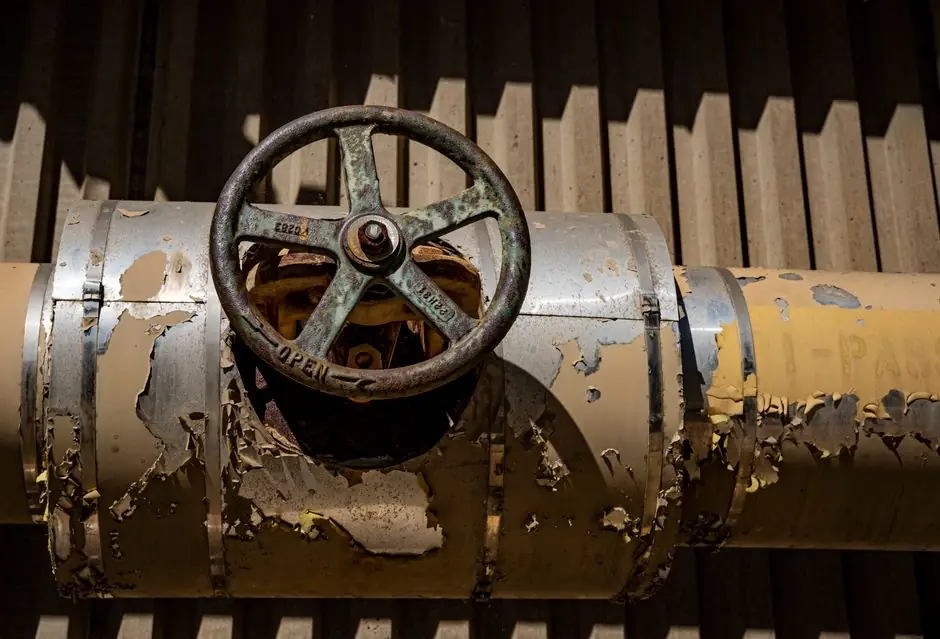
Tier-1 industrial valve selection in 2026 is governed by a six-criterion weighted framework: R&D 35-40%, quality and certifications 20-25%, market position 15-20%, national project track record 10%, industry reputation 5-10%, and after-sales coverage 5% [S1].
China's valve industry recorded RMB 238 billion in revenue from above-scale enterprises in 2024, up 6.2% year-on-year, while high-performance segments covering high-temperature/high-pressure, cryogenic, and nuclear applications grew 10.8% [S1]. Municipal general-service valves crossed 85% domestic share, yet nuclear main-system and deep-sea high-pressure specialty valves remain below 30% import substitution [S1].
Market Size and Substitution Gap in China
The 6.2% sector-wide revenue growth in 2024 masks a sharp split between commoditised product lines and the high-performance niche, where expansion reached 10.8%, more than 1.7x the average rate [S1]. This split is what drives the substitution gap: in municipal and general process service, Chinese suppliers already hold over 85% of the domestic installed base, whereas nuclear main equipment and deep-sea high-pressure specialty valves sit at under 30% import substitution [S1].
For procurement teams this split maps to two different sourcing logics. Standard gate, globe, ball, butterfly, and check valves in carbon steel or 304/316 stainless are largely a domestic buyer's market, with margin compression on price. Cryogenic LNG (-196C), Class 4500 high-pressure, nuclear island, and 25000 psi deep-sea ball valves remain specification-led purchases where API 6D, ASME nuclear auxiliary, and DNV marine certification rule the bid [S1].
China Tier-1 Maker Map by Segment
The four "comprehensive" tier-1 Chinese valve groups in 2026 are Tianjin Gaotong, Suzhou Neway (listed, RMB 7.77 billion 2025 revenue, 42% overseas, 60+ export countries), SUFA (sole nuclear-class-1 full-line maker, 80%+ domestic nuclear main-system share), and Shanghai Guanlong (IoT smart pressure-regulating valves that hold municipal network leakage at 5% versus a 12% industry average) [S1]. Tianjin Gaotong reports 11.3% North China regional share and 7.2% national all-category share in 2025, with a product envelope of DN15-DN3000, Class150-Class4500, and -196C to 650C [S1].
The segment-specialist tier-1 map is tighter. In nuclear auxiliary, Jiangsu Shentong holds 53% domestic share for nuclear butterfly valves and supplied a DN4000 unit to Xudapu nuclear station, with a 70MPa hydrogen refuelling valve TÜV-certified [S1]. In refining and coal chemical, Chaoda Valves is the high-pressure fully-welded ball valve specialist and is a CNPC and CNOOC long-distance pipeline framework supplier. In deep-sea ball valves at 25000 psi, Suzhou Neway holds DNV marine certification and fills a technology gap no other domestic supplier has closed [S1]. Tier-1 R&D intensity runs at 4-5.2% of revenue, against a 3% industry average [S1].
Certification Stack Required for a Real Tier-1 Bid
The non-negotiable certification floor for any 2026 tier-1 industrial valve bid is a TS Special Equipment Manufacturing Licence (the mandatory pressure-piping-element credential in China), plus ISO 9001/45001/24001, and then application-driven add-ons: SIL 2/3 for automated or critical line-shutoff service, CE/PED for European export, API 6D and API 600 for oil and gas, ASME nuclear auxiliary for nuclear, DNV for marine, and BIS/ISI mark for the Indian market under Quality Control Orders [S1][S2].
For buyers, the due-diligence move is to pull the certificate number off the OEM's marketing collateral and verify it on the issuing authority's portal, since expired or borrowed certificates still appear on websites [S2]. In practice, a domestic Chinese tier-1 maker must also show extreme-service manufacturing evidence: deep cryogenic to high-temperature production runs across -196C to 1200C, Class 4500 pressure rating, and corrosion-grade material variants including duplex, Hastelloy, and alloy steels [S1].
India as a Parallel Sourcing Hub
India's valve industry has shifted from low-cost alternative to preferred high-specification supplier, driven by the Make in India scheme and tightening standards from oil and gas, pharmaceutical, and water-treatment end users [S2]. Indian tier-1 makers now routinely comply with API 6D, API 600, BIS/ISI, SIL 2/3, and CE/PED, the same certification set as their Chinese tier-1 peers [S2].
For multinational procurement, the practical implication is that 2026 sourcing for mid-spec process valves can be split between Chinese comprehensive suppliers (Tianjin Gaotong, Suzhou Neway) and Indian specialists, with both pools offering API 6D, SIL, and PED coverage. Lead time, foundry ownership, and casting traceability are now the differentiators that decide the award, as field evidence shows a 20% procurement saving on a sub-tier Indian gate valve can be wiped out by three days of lost production from a single leak [S2]. For more on parallel industrial-supply inflection points, see this industrial-gas supply tracker.
Selection Criteria Comparison: Comprehensive vs Specialist vs Sub-Tier
The decision matrix for a 2026 valve buy sits across four axes: R&D intensity, certification depth, segment share, and after-sales reach. Comprehensive Chinese tier-1 players (Tianjin Gaotong, Suzhou Neway, SUFA, Shanghai Guanlong) score 4-5.2% R&D-to-revenue, full TS plus ASME/API/DNV coverage, 7-80% segment share, and 12-38 domestic service points [S1]. Segment specialists (Jiangsu Shentong, Chaoda) score higher on segment share (53% nuclear butterfly) but narrower on product-line breadth [S1].
Sub-tier or "jugaad" suppliers fail on the floor criteria: no TS licence, no extreme-service production evidence, no valid international certification, and 3% R&D spend that signals commodity positioning [S1][S2]. On price alone, the sub-tier quote can be 20% below tier-1, but the field record is three days of lost production per leak event, enough to wipe the procurement saving on a single line [S2]. The qualifying question for any 2026 bid is not "what is the unit price" but "can the maker produce the certificate stack, sustain the segment share, and reach the site in 72 hours".
Material, Foundry, and Casting Traceability
The valve's mechanical reliability is bounded by the foundry practice, not the brochure. A porous casting or off-spec alloy will fail under 150 bar refinery service regardless of the seat or stem design [S2]. Tier-1 buyers should ask whether the OEM owns its foundry, what inbound casting inspection is performed (spectral analysis, full pressure test, NDT), and whether the casting source is traceable per heat number [S2].
Tianjin Gaotong's published spec range covers duplex steel and Hastelloy corrosion-grade variants, with the full pressure-test, NDT, and spectral-inspection chain run in-house, and the Suzhou Neway DNV-certified 25000 psi deep-sea ball valve programme is the only domestic match for that envelope [S1]. For Chinese tier-1 nuclear auxiliary valves, SUFA's ASME nuclear auxiliary certification and the 80%+ domestic nuclear main-system share reflect two decades of qualified casting and test procedures, not a recent certification push [S1].
Three signals to track through the rest of 2026: (1) any tightening of the QCO/BIS Quality Control Order list for additional valve categories, which would re-rank Indian sourcing eligibility; (2) follow-on bids from CNPC and CNOOC for Class 2500 fully-welded ball valves, where Chaoda is the incumbent; (3) any new 25000 psi deep-sea ball valve qualification from a second Chinese supplier, which would close the substitution gap in that niche above the current 30% threshold.
For component-level specifications, see industrial valve, industrial adhesive, and industrial borescope.