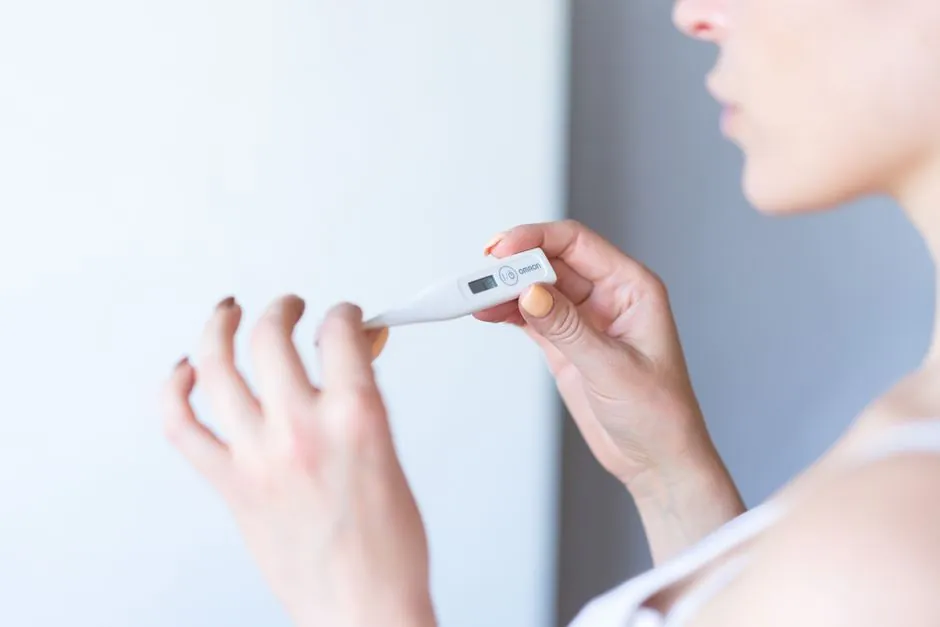
Industrial buyers should size an IR thermometer on four primary numbers: target temperature span, distance-to-spot (D:S) ratio, emissivity adjustability, and accuracy class; gun-type units typically span -50 C to 650 C with 12:1 optics, high-temperature guns reach 1100 C at 20:1, while fixed-emissivity (0.95) pocket models target HVAC and food-safety work [S2][S4][S7].
The category spans pocket IR thermometers at 80 g and 138 x 95 x 40 mm running on two AAA cells, through to hazardous-area-rated units in plastic housings carrying NEC Class I Divisions 1, 2 Groups A-D and IEC Zone 1 Groups IIC, IIB, IIA markings for use around flammable vapors [S1][S3].
Temperature Span, Resolution and Accuracy
Specifying the correct span prevents the two most common IR thermometer failures: under-range lockout on hot process lines and excessive error on cold surfaces. Industrial units in the 2026 catalog window typically publish spans from -50 C to 650 C (resolution 0.1 C, accuracy +/-1%) for general-purpose work, -32 C to 1100 C (resolution 0.1 C, accuracy +/-1.8% or +1.8 C) for higher-temperature guns, and 0 C to 100 C surface / 34.0 C to 42.9 C body modes for medical-grade pocket units [S2][S3][S7].
Resolution of 0.1 C is standard on gun-type instruments from 0.1 to 1.1 emissivity, with high-temperature guns specifying +/-1.8% of reading or +/-1.8 C, whichever is greater; medical-grade units tighten this to +/-0.2 C in the 35.0 to 42.0 C window and loosen to +/-0.3 C at the band edges 34.0 to 34.9 C and 42.1 to 42.9 C [S2][S3][S7]. For buyers pairing an IR gun with a contact probe on a thermowell line, the comparison on temperature and accuracy bands is laid out in the thermocouple supplier spec map.
Distance-to-Spot (D:S) Ratio and Spot Size
D:S ratio is the single number that decides whether the gun reads the busbar or the wall behind it; it expresses the spot diameter at a given distance. Common catalog values sit at 6:1 to 8:1 for general-purpose pocket IR thermometers, 10:1 to 12:1 for HVAC and electrical work, and 20:1 for high-temperature industrial guns, with maximum working distance specified as the farthest point a 1 inch (25.4 mm) target can be reliably measured [S1][S2][S5][S7].
As an example, a 12:1 instrument reads a 1 inch target from 12 inches away, a 20:1 instrument reads the same 1 inch target at 20 inches, and 30:1 / 50:1 variants are listed for hot process work where the operator must stand clear of radiant heat [S2]. When the measurement geometry involves tight ducts or long throws, an infrared line level uses comparable D:S-style ranging principles for alignment, not for thermal readings.
Emissivity: Fixed vs Adjustable

Emissivity is the ratio of radiation emitted by a surface to that of a perfect blackbody at the same temperature, and it is the variable that most often destroys IR thermometer accuracy in the field. Most organic and painted surfaces sit near 0.95, while polished metals drop to 0.05 to 0.2, so a fixed 0.95 setting is acceptable for HVAC, food, and electrical cabinets but produces large errors on bare aluminum, copper, or stainless [S1][S2][S4].
Adjustable-emissivity instruments cover 0.1 to 1.0 or 0.1 to 1.1 for general industrial work, 0.3 to 0.95 for mid-range HVAC/electrical units, and 0.05 to 1 or 0.01 to 1 for laboratory-grade work, while fixed 0.95 is reserved for the lowest-cost pocket units where the target is known to be matte [S1][S2]. Buyers who must read shiny busbars, polished rolls, or molten metal should lock in adjustable emissivity with at least 0.1 resolution, since the alternative is hand-applied masking tape (emissivity ~0.95) plus re-calculation.
Response Time, Optics and Laser Sighting
Response time governs how fast the detector settles on a final reading; gun-type industrial units publish 1 second as typical, 250 ms on faster high-temperature units, and under 1 second on medical-grade units, with auto power-off at 18 s on consumer-grade medical units to preserve battery life [S2][S3][S7]. Laser sighting is a near-universal feature on industrial guns, supplied as single-point, dual rotating, or multi-point static laser patterns; dual rotating lasers bracket the focus and average the two readings, which is closer to a true spot measurement than a single-point laser on shiny surfaces [S1][S2][S4].
For working at a distance, higher D:S ratios (30:1, 50:1) combined with adjustable emissivity and 1 s response are the dominant spec set in the 2026 industrial catalog window; if the duty is a moving conveyor or rotating kiln surface, response time under 500 ms is the deciding spec over absolute accuracy [S2][S4].
Hazardous Area Ratings, Materials and Certifications

IR thermometers used in chemical plants, refineries, and grain elevators must carry an explicit hazardous-location rating, not just a generic IP code. Current catalog units are available in plastic housings rated NEC Class I Divisions 1, 2 Groups A, B, C, D, plus IEC Zone 1 Groups IIC, IIB, IIA, with 303 stainless steel or brass housings available for washdown and hygienic areas, and rubber over-molds for drop protection [S1].
Certifications divide into industrial and medical lines: industrial guns carry CE Marking and a calibration certificate traceable to NIST, while medical-grade pocket units carry CE, FDA, ROHS, EMC, ISO 13485:2016, and conform to GB 9706.1-2007, GB/T 14710-2009, EN 60601-1:2006+A1:2003+A11:2011+A12:2014, and EN 60601-1-2:2015; buyers should never substitute a medical unit for an industrial duty because the medical unit is sealed against body contact, not against solvent washdown [S1][S3].
Selection Criteria and Variant Comparison
The four dominant industrial variants in 2026 catalogs are: pocket IR, general-purpose gun, high-temperature gun, and hazardous-area gun; the comparison below uses the four most common decision criteria (span, D:S, emissivity, accuracy) to line them up [S1][S2][S7].
Pocket IR: -50 to 650 C, 6:1 to 8:1, fixed 0.95, +/-1% to +/-2%; suitable for HVAC and food-safety screening where the target is matte and within arm's length. General-purpose gun: -50 to 650 C, 12:1, 0.1 to 1 adjustable, +/-1%; the default for electrical cabinets, bearings, and process lines at safe distance. High-temperature gun: -32 to 1100 C, 20:1, adjustable, +/-1.8%; required for furnaces, kilns, and molten-metal work. Hazardous-area gun: spans matched to the duty, optics matched to the standoff, 0.1 to 1 adjustable, with NEC Class I Div 1 / IEC Zone 1 housing; required for flammable-vapor atmospheres. A buyer who only needs point screening on a 400 C oven should not pay for a hazardous-area or 1100 C unit, and a buyer reading polished stainless at 1 m should not accept a fixed 0.95 pocket unit [S1][S2][S4][S7].
Who Should NOT Use a Fixed-Emissivity IR Gun
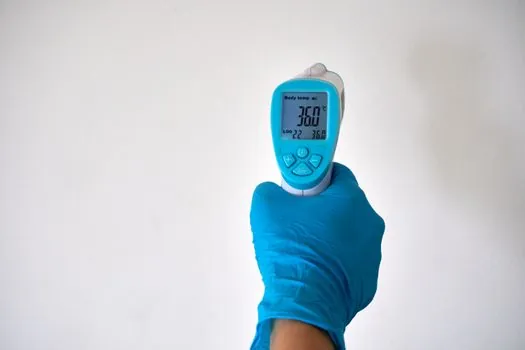
Fixed-emissivity IR guns (0.95 only) are not appropriate for shiny metals (aluminum, copper, polished stainless), low-emissivity coated glass, or any reflective surface where the operator cannot apply emissivity tape, because the indicated temperature will read low by tens of degrees C and the error grows with target temperature [S1][S2][S4].
They are also a poor fit for cryogenic or sub-zero measurements where the target emissivity drops further, and for any medical screening duty the fixed-0.95 industrial unit is the wrong category; only medical-grade units tested to ISO 13485 and the EN 60601-1 series with body-mode calibration should be used on humans [S3][S4].
Sources, Standards, and Trackable Signals
Primary references for the 2026 selection logic are McMaster-Carr, Fisher Scientific, FLIR, Tecpel, and Sensor360 catalog and technical pages, which together publish span, D:S, emissivity, accuracy, response, and certification data on current production units [S1][S2][S5][S6][S7][S8]. Medical-grade IR thermometers cite ISO 13485:2016, GB 9706.1-2007, GB/T 14710-2009, EN 60601-1:2006+A1:2003+A11:2011+A12:2014, and EN 60601-1-2:2015 as the governing standards for body-mode operation [S3]. Industrial units cite CE Marking, NIST-traceable calibration, and where applicable NEC Class I Div 1, 2 / IEC Zone 1 markings for hazardous locations [S1][S5].
Trackable signals for the next 6 to 12 months: catalog additions of 30:1 and 50:1 D:S optics for standoff process work, expansion of Bluetooth and microSD data logging on mid-range guns, and wider availability of 303 stainless steel housings for washdown and hygienic duties; a parallel RTD Pt100 spec gate for oil and gas covers the contact-temperature comparison case.
For component-level specifications, see infrared thermometer, bimetal thermometer, and infrared level.