
A Pt100 with 100 Ω at 0°C, a 38.5 Ω fundamental interval per IEC 60751, and a 316 stainless steel sheath from 3.0 to 8.0 mm is the dominant RTD configuration specified for upstream, midstream and downstream hydrocarbon service [S3][S4].
Mineral-insulated construction, ATEX or IECEx Zone 1 approval, and Class A or 1/3 DIN tolerance are the three filters that separate general-industrial Pt100s from units qualified for refinery, gas-plant and offshore installations [S3][S6].
Why Pt100, not a thermocouple, in oil and gas
A Pt100 element delivers ±(0.15 + 0.002·t)°C under IEC 60751 Class A, against the ±1°C to ±2°C typical drift of a Type K or Type J thermocouple, and that accuracy advantage is what pushes refineries and gas plants toward RTDs for custody-transfer, reactor-bed and compressor-discharge temperature loops [S2][S3].
Standard Pt100 sensors cover -200°C to +650°C in the laboratory, and the hydrocarbon-proven sub-range most vendors stock for oil and gas is -100°C to +600°C, which overlaps LNG vaporizers, hydrocracker beds, amine regenerators and sour-service separators without forcing a high-temperature thermocouple into the loop [S2][S3].
Construction: mineral-insulated sheath, 316 SS, 3-8 mm OD
Mineral-insulated (MgO-packed) Pt100 probes with 316 stainless steel sheaths are the default for hydrocarbon service because the compressed-metal-oxide packing gives vibration tolerance, fast response, and a hermetic seal against hydrogen and H2S permeation [S3][S4].
Probe OD options from 3.0 mm up to 8.0 mm let the specifier trade response time against mechanical strength: 3.0 mm for thermowell pockets in control loops, 6.0 mm for direct immersion in low-velocity lines, and 8.0 mm for high-pressure or abrasive service where a thicker wall extends fatigue life [S3][S5].
Wiring: 3-wire is the oil and gas default, 4-wire for custody
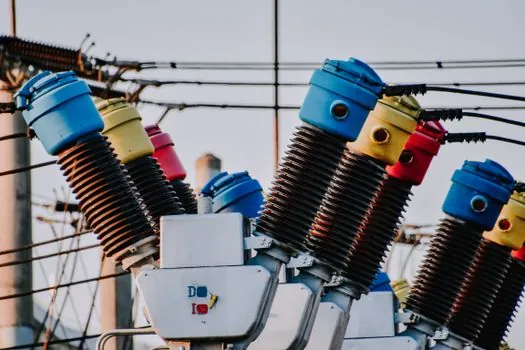
Three-wire Pt100 is the oil-and-gas workhorse because it cancels lead resistance using one extra conductor, and the per-leg lead-resistance error becomes negligible on the 20-50 m runs typical between a thermowell and a field-mounted transmitter [S2].
Four-wire Pt100 is reserved for custody-transfer skids, fiscal metering, and calibration lab references where the extra pair eliminates lead-resistance error entirely and the system accuracy stays inside ±0.1°C across long cable routes [S2]. Two-wire Pt100 is generally avoided in hydrocarbon service because uncompensated lead resistance can add 0.5-2°C error on long conduit pulls [S2].
Zone classification: matching ATEX/IECEx concepts to the location
For Zone 1 gas atmospheres, Ex db IIC Gb (flameproof, per EN IEC 60079-1) or Ex eb IIC Gb (increased safety, per EN IEC 60079-7) head assemblies with 316 SS enclosures are the standard pick, while Zone 0 service drops to Ex ia IIC Ga intrinsically-safe designs wired through a certified barrier, per EN IEC 60079-11 [S3][S4].
Dust hazard areas (Zones 21 and 22) call for Ex tb IIIC Db or Ex tc IIIC Dc enclosures per EN IEC 60079-31 and EN IEC 61241, and most vendors issue the same probe body with a parallel gas and dust marking so the same SKU can be specified on a process unit with both hydrocarbon and catalyst-dust exposure [S3][S4].
Accuracy and calibration: Class A, 1/3 DIN, UKAS
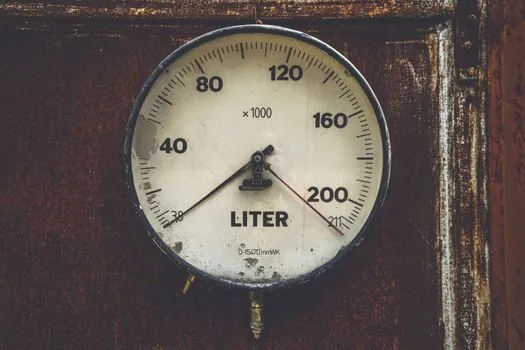
Pt100 elements in IEC 60751 grades B, A, 1/3, 1/5 and 1/10 DIN are routinely offered, and hydrocarbon projects typically pin Class A for reactor beds and 1/3 DIN for compressor and pump bearing temperature monitoring where the tighter tolerance pays for itself in alarm reliability [S3][S4].
UKAS-accredited calibration with traceable resistance data at 0°C, 100°C and optionally 200°C or 400°C is available on the same probe body, and that calibration certificate is what most EPCs require to release a Pt100 into a SIS or fiscal loop [S3][S4].
Transmitter pairing: 4-20 mA, HART, or FOUNDATION Fieldbus
Pairing the probe with a head-mounted 4-20 mA or HART temperature transmitter is the standard oil-and-gas pattern, with the SlimLine and field-mounted HART units handling space-restricted local enclosures and the explosion-proof Z-Temp-class units covering remote cabinets [S1].
Where the DCS supports it, the same Pt100 element can be wired to a FOUNDATION Fieldbus or PROFIBUS PA transmitter, because IEC 60751 defines only the resistive element, and the network protocol lives in the transmitter, not the sensor, so a single qualified probe can be redeployed across control systems [S1][S2].
Selection checklist before issuing a purchase order

Confirm five items before sign-off: sheath material (316 SS standard, Inconel 600 for sour service above 200°C), sheath OD (3.0-8.0 mm), element grade (Class A or 1/3 DIN per IEC 60751), protection concept (Ex db, Ex eb, Ex ia, or Ex tb matched to the area classification), and termination (spring-loaded block, terminal-head, or pot seal with Kapton leads) [S3][S4][S5].
Add the thermowell specification on the same drawing: flanged or threaded process connection, stem length matched to the pipe ID, and a wake-frequency calculation per ASME PTC 19.3 TW to keep the combined probe-thermowell natural frequency above the process-induced vibration band [S3].
Common failure modes and what to inspect
The three repeat failure modes on Pt100s in oil and gas are moisture ingress through compromised pot seals, element drift from hydrogen attack at high-temperature sulfiding service, and mechanical fatigue at the sheath-to-head transition in vibrating compressor piping, all of which are detectable with annual insulation resistance testing at 100 V DC and a 0°C ice-bath check [S3][S5].
Where vibration is unavoidable, the dual-entry die-cast alloy head and the spring-loaded terminal block both let the element move inside the thermowell without transmitting bending stress into the MgO pack, which extends mean-time-between-failure by roughly 2-3x compared with a rigid compression-fitting terminations on the same loop [S4][S5].
Vendor landscape and supply notes
UK-based TC Ltd publishes ATEX and IECEx Pt100 part numbers with single and duplex elements, simplex or duplex Pt100 in 2-, 3-, or 4-wire formats, and a published -100°C to +600°C operating envelope that covers the bulk of hydrocarbon service [S3][S4][S5][S6][S7][S8][S9].
Reotemp's catalogue complements that with explosion-proof head assemblies, HART and 4-20 mA field-mounted transmitters, the SlimLine compact transmitter, and railcar Pt100 probes for crude-oil and condensate terminal measurement, useful where the same vendor needs to cover both fixed assets and mobile tank-farm hardware [S1].
Spec frame engineers can copy
Pt100, mineral-insulated, 316 SS sheath, 6.0 mm OD, Class A IEC 60751, 4-wire, ATEX Ex db IIC Gb for Zone 1, dual-entry flameproof head, with HART head-mounted transmitter, UKAS calibration certificate at 0/100/200°C, supplied with flanged thermowell per ASME PTC 19.3 TW, all mounted on a vibration-isolated thermowell per API 660 where applicable [S3][S4].
For sour service above 200°C, swap 316 SS for Inconel 600 sheath, require NACE MR0175 compliance on wetted parts, and derate the upper operating limit to +550°C to stay inside the sulphide-stress-cracking window that NACE MR0175 governs.
Track two signals over the next 6-12 months: migration of IEC 60751 sensors into FOUNDATION Fieldbus transmitters on greenfield refinery builds, and any update to EN IEC 60079-0 affecting the Zone marking format that several vendors already print on the same probe body, both of which will tighten what counts as a compliant oil-and-gas Pt100 [S3][S4]. For a cross-vendor view of how these probes slot into the wider temperature-transmitter market, the temperature transmitter sizing and selection map and the 2026 supplier spec map lay out the pairing logic, while the thermocouple supplier 2026 spec map is the natural reference for the high-temperature legs above 600°C where Pt100 hands off to Type K or Type N. For the sensing element itself, the RTD Pt100 reference page documents the resistance-temperature curve and class tolerances behind every spec quoted above.
Component reference pages worth checking: oil seal, and construction machinery and equipment.