
Inline pipeline pumps are centrifugal machines with suction and discharge flanges aligned on a common centerline, allowing the casing to mount directly in line with the piping [S3]. UK distributor North Ridge Pumps lists 14 stocked brands for this category, including Allweiler, Azcue, Bombas PSH, Bombas Trief, Boyser, Calpeda, Caprari, Cat Pumps, Debem, Imo, Liverani, Nova Rotors, Pedrollo, and PG Flow S, with vane, vertical immersion, and vertical inline centrifugal variants on the same line card [S1].
Chinese manufacturers such as Purity (PT series) supply electric vertical inline units with reinforced end-cover lifting geometry, marketed for water transfer, HVAC circulation, and pressure boosting across industrial and commercial duty [S2]. For a broader mechanism primer, see the pipeline pump encyclopedia entry, which covers the inline versus end-suction structural split that defines this buying decision [S3].
Inline vs end-suction: the structural trade-off that drives supplier choice
Inline pumps deliver 40–60% less floor space than equivalent end-suction units, mount directly into the piping run, and are supported by pipe hangers or floor brackets rather than a grouted baseplate [S3]. In contrast, end-suction pumps carry 80–88% single-stage efficiency at best efficiency point (BEP) versus 75–82% for inline, but they require a 90° elbow at discharge and a concrete foundation, raising civil cost [S3].
Pressure class is the other split: inline units are typically rated PN16 (16 bar) or PN25 (25 bar), while end-suction builds extend to PN40+ for high-pressure transfer [S3]. For variable-demand HVAC and pressure-boosting duties, the inline geometry maintains part-load efficiency better because the straight flow path avoids volute mismatch, a benefit that aligns with VFD-friendly compact impeller design [S3]. See the centrifugal pump reference for the underlying hydraulic model.
Brand tier and supply map across Europe and Asia
The North Ridge Pumps catalogue splits the European inline pipeline pump market into legacy process-pump brands (Allweiler, Imo) and a long tail of regional specialists (Azcue, Bombas PSH, Bombas Trief, Calpeda, Caprari, Liverani, Nova Rotors, Pedrollo) plus high-pressure plunger specialists such as Cat Pumps and niche solvent/ATEX suppliers like Debem, Boyser, and PG Flow S [S1]. Spare-parts coverage runs across the same line card, with 1,440 spares SKU depth signalling that retrofit and replacement drives much of the UK channel volume [S1].
Chinese OEM supply is dominated by compact vertical inline units such as the Purity PT series, built with a reinforced connection and end-cover lifting structure for concentricity under thermal cycling, and offered in a full model spread sized for HVAC, water transfer, and pressure boosting [S2]. The vertical inline format is widely deployed in building services where mechanical-room space is the binding constraint and direct pipeline integration removes the need for a separate pump skid [S4].
Selection criteria engineers should lock down before RFQ
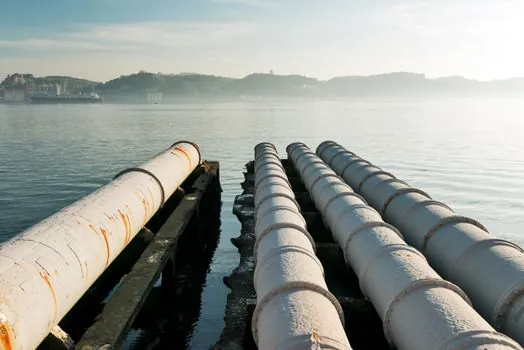
Four decision axes separate a clean inline pump specification from a costly rework: duty (flow, head, NPSH available), pressure class (PN16 vs PN25 vs PN40), fluid class (clean water, glycol, light hydrocarbons, solvents), and installation envelope (vertical versus horizontal, ceiling-suspended versus floor-bracketed) [S3][S4]. Horizontal inline pumps, with the motor mounted alongside the casing and coupled through a flexible coupling, dominate commercial building services and water distribution because they drop directly into a straight horizontal pipe run without offset fittings [S4].
Vertical inline units are favoured where the mechanical-room footprint is tight or where fire-protection and water-distribution risers demand direct pipeline integration at higher working pressures [S5]. For high-pressure or viscous service, specifiers should pivot to a gear pump or a diaphragm pump rather than push a centrifugal inline beyond its hydraulic envelope. Material options, mechanical seal selection (single versus double, with or without flush plan), and motor IE3/IE4 efficiency class are downstream choices that hinge on the first four axes [S3].
Comparison of the three main inline configurations
Across published supplier data, the three live configurations are horizontal inline, vertical inline, and vertical inline close-coupled. Horizontal inline wins on ease of maintenance because the rotating assembly can often be back-pulled without disturbing the casing, and it suits long straight pipe runs in plant rooms [S4]. Vertical inline cuts the floor footprint and integrates directly into risers, at the cost of lifting the entire motor for impeller access [S5].
Vertical inline close-coupled (motor mounted on the pump shaft without a coupling) further trims envelope but limits seal and bearing serviceability, making it a fit for clean-water HVAC duty rather than abrasive or hot-oil service [S3]. Selection for high-pressure or metering accuracy should be deferred to the hydraulic pump or metering pump categories where positive-displacement behaviour is required.
Use cases, limitations, and failure modes
Inline pumps are specified for HVAC circulation, building pressure boosting, fire-protection risers, and clean-water transfer, where their straight-through hydraulics cut directional losses and reduce fitting count [S3][S5]. The geometry breaks down at very high flow rates, where the volute and structural mass of an end-suction or split-case pump become the more efficient answer [S3].
Documented failure modes include NPSH shortfall at elevated temperature, seal dry-run on dead-headed systems, and bearing wear when the pipe-support scheme fails to brace the higher overturning moment created by the elevated motor [S3][S5]. For pump casings that must integrate into skidded process modules, casting selection and machining tolerance carry the build, a point covered in detail in the pump and valve gravity die casting machine selection spec map.
Standards, ratings, and verification signals
European chemical and refinery sites typically require inline pumps on hazardous-area skids to carry ATEX 2014/34/EU category marking for the motor and a matched IECEx certificate for the pump assembly, with the rating plate cross-referenced to the installed zone [S3]. Flange and pressure-class ratings follow PN16/PN25/PN40 conventions as set out in the relevant ISO flange standards referenced by the inline pump suppliers in their datasheets [S3].
For solenoid- or PLC-controlled skids that pair an inline centrifugal with a positive-displacement feeder, the metering circuit must be specced against a separate metering pump data sheet rather than retrofitted to the inline unit. Verification signals a buyer can track across 2026 are: published PN class on the model nameplate, ATEX/IECEx certificate numbers on the datasheet, ISO 5199 or ISO 9905 conformance for industrial process inline pumps, and the seal-chamber flush plan (API 682 Plan 11/52/53A) explicitly called out in the IO&M manual [S3].
Trackable next nodes for the 2026 sourcing cycle: monitor Chinese OEM model-line extensions into PN25 vertical inline builds, and watch whether European legacy brands (Allweiler, Imo) push compact close-coupled variants to defend the building-services segment. Related coverage on the casting supply chain that feeds these pumps sits in the pump and valve casting spec map.