
Self-priming pump suppliers in 2026 cluster into two sourcing tiers based on application: heavy-duty solids-handling centrifugal builders (Gorman-Rupp, Cornell Pump, RC Beach) and chemical/light-process centrifugal or magnetic-drive makers (Sethco, WDM Pumps, AMT) [S1][S3][S4][S6][S8].
Across publicly listed 2026 catalog data, the heavy-duty tier covers flows up to 4,200 GPM (954 m³/h), TDH up to 253 ft (77 m), and solids handling up to 3 in. diameter, while the light-process tier tops out near 660 GPM and 114 ft head on cast-iron builds and 132 GPM / 63 ft on chemical-resistant builds [S4][S6][S7][S8].
What a Self-Priming Pump Is, and Why Above-Floor Mounting Matters
A self-priming pump can be installed high and dry above the fluid level while automatically removing air from the suction line and filling it with liquid without manual priming, and continues operating even if the liquid supply is interrupted [S3]. This eliminates below-grade pump pits and confined-space entry for maintenance, a core reason the configuration dominates waste-handling and sewage bypass duty [S2][S3].
For comparison against conventional centrifugal pumps, the defining spec is reprime capability after an air-bound or dry suction event; the standard end-suction centrifugal will lose prime and require manual refill. Reprime in trash-handling units is documented to work with a partially filled casing and a completely dry suction line, a load case the conventional wet-pit arrangement cannot survive [S3].
Supplier Tiers: Heavy-Duty Solids vs. Chemical and Light-Process
Heavy-duty solids-handling suppliers center on ductile-iron ASTM A536 construction, semi-open impellers, and Type II mechanical seals. RC Beach's STX/STH/STL line lists 2-10 in. discharge, flow up to 4,200 GPM / 954 m³/h, TDH up to 253 ft / 77 m, and solids up to 3 in., with options for CD4MCu pump end, self-cleaning wear plate, and complete replacement rotating assembly [S4]. Cornell Pump's STH Series shares the ductile-iron build with heavy-duty bearings, a separate oil reserve, back-pull-out maintenance access, and a patented Cycloseal sealing system [S6].
Chemical and light-process suppliers pivot on materials and dry-run protection. Sethco specifies one-piece polypropylene casings with Kynar (PVDF) seals, magnetic-drive configuration, and a two-piece impeller architecture rated for corrosive chemicals, acids, and solvents (non-flammable fluids) [S1]. WDM Pumps publishes a frame-mounted AU / close-coupled AE line with cast-iron impeller, flow up to 3,600 GPM, 10 in. discharge, motors up to 75 HP, temperatures up to 158 °F (70 °C), and solids handling up to 2.5 in. diameter [S8]. AMT's chemical 3890 Series caps at 132 GPM and 63 ft head, while the cast-iron 487 Series reaches 660 GPM and 114 ft head [S7].
Among widely distributed brands documented in 2026 distributor catalogs, the named set includes Gorman-Rupp, Sethco, Cornell, RC Beach, WDM, AMT, Varisco, Wilden, Seim, ABS Sulzer, Azcue, Boyser, Calpeda, CAT, Flux, HCP, JS, Nocchi, North Ridge Pumps, Nova Rotors, RAASM, Sanso, and Tsurumi [S5][S3][S6][S7].
Selection Criteria: Material, Solids, Head, and Dry-Run
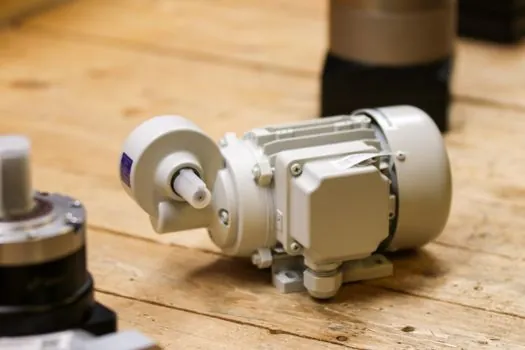
Four criteria separate the tiers cleanly. First, material: ductile iron ASTM A536 (heavy-duty) vs. polypropylene/PVDF (chemical). Second, solids-handling diameter: 2.5-3 in. on waste-handling builds vs. clean or limited-solids service on chemical builds [S1][S4][S6][S8]. Third, head and flow envelope: 4,200 GPM at 253 ft TDH (heavy) vs. 132-660 GPM at 63-114 ft (light/chemical) [S4][S7]. Fourth, dry-run protection: magnetic-drive sealless designs on the chemical side (Sethco) and automatic reprime plus run-dry capable mechanical seal arrangements on the heavy-duty side [S1][S2][S3].
Specifiers buying on lead time and stock should note that as of 2026-08, AMT distributor inventory is partially in stock for both 3890 and 487 Series at $1,161.44 and $2,383.40 entry points respectively, an indicator that light/medium tiers are the faster ship path [S7]. Heavy-duty solids-handling units from Gorman-Rupp and Cornell are typically build-to-order with configured options including engine-driven packages for the Ultra V, Super T, 10, and 80 Series [S3].
Real Use Cases and Industry Fit
Waste handling is the headline duty: Gorman-Rupp self-priming pumps are documented as a leading choice for steel and paper mills, mining operations, food processing plants, power plants, automotive factories, tanneries, and wineries, plus municipal sewage bypass [S3]. Cornell Pump positions STH Series for high-head applications where competitive units run out of envelope, which is a typical mine dewatering and quarry duty [S6].
Chemical and light-process fits include plating lines, acid transfer, and solvent circulation where Sethco's polypropylene / PVDF build and magnetic-drive sealless architecture address both corrosion and leak-tightness, and where AMT chemical models serve lower-flow dosing or transfer [S1][S7]. For engine-driven portable dewatering, Gorman-Rupp offers Ultra V, Super T, 10, and 80 Series engine-mounted variants on top of the basic, flex-coupled, and v-belt drive options [S3].
Limitations, Failure Modes, and What Self-Priming Does Not Solve

Self-priming does not mean indefinite dry run. The pump still requires initial priming fluid to establish the reprime cycle, and the suction check valve is a wear part that is replaceable but must be inspected at the duty interval (Cornell publishes an easily-replaceable suction check valve as a maintenance feature for this reason) [S3][S6]. Solids-handling units in trash duty will still bind if spherical solids exceed the published 3 in. (heavy) or 2.5 in. (WDM) clearances [S4][S8].
Temperature is a hard gate on commodity builds: WDM's standard cast-iron line is published at 158 °F (70 °C) max, which rules out hot-oil or boiler-feed duty without a metallurgy upgrade [S8]. Chemical builds with polypropylene casings cap lower on temperature and pressure; these are not drop-in replacements for alloy centrifugal or gear pump service in high-temperature hydrocarbon streams [S1]. Suction lift is also limited by the reprime physics; deeper suction lifts require larger pump casings to hold prime fluid and are a known constraint of the architecture [S2][S3].
Sourcing and Standards Reference
Material traceability on heavy-duty builds is anchored to ASTM A536 for ductile iron, with shaft options in 17-4 PH stainless steel and wear-plate upgrades in CD4MCu for abrasive slurry duty [S4][S6]. For chemical builds, the polypropylene / Kynar PVDF pairing is the published standard, and magnetic-drive sealless architecture removes the dynamic seal as a leak path on corrosive acids and solvents [S1].
For buyers cross-shopping a self-priming pump against wet-pit or submersible alternatives, the dry-run tolerance and above-floor service access are the structural reasons the configuration retains share in mining, sewage bypass, and food-plant waste lines; for chemical dosing, the diaphragm pump and magnetic-drive centrifugal are the adjacent options to evaluate against the same flow / head / corrosion envelope [S2][S3]. Also relevant when specifying is self-cleaning filter integration on the suction side to keep the reprime cycle from binding on debris.
Trackable signals for the next sourcing cycle: new 2026 distributor stocking depth on the AMT 3890 / 487 lines, lead-time drift on Gorman-Rupp build-to-order units, and any engine-driven certification updates (Tier 4 final / Stage V) on the Ultra V and Super T portable packages. For related bearing and coupling spec work on the drive end, the self-aligning bearing reference is the adjacent catalog node to lock in before issuing a PO.
Background reading: Dust Detector Selection for Food Processing: Spec Map and Decision Gates.