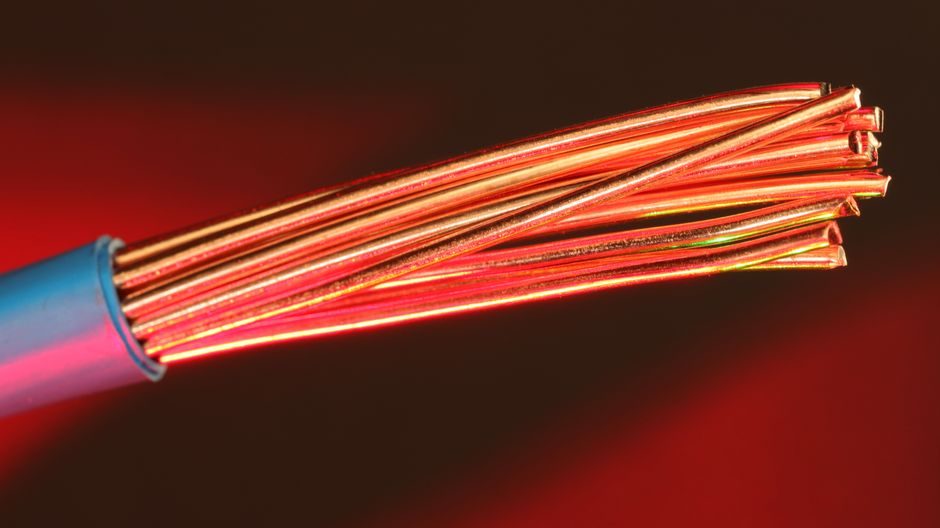
VDE/IEC 60900 insulated hand tools from Chinese OEMs such as TOLSEN VDELINE, manufactured to the IEC 60900 and ASTM F1505 dual standard, are listed at roughly 30–60% below equivalently rated American-made lines from Salisberg, GB (Greenlee) and Klein Tools, with single-piece 1000 V screwdrivers and pliers commonly retailing in the USD 25–80 band [S4].
Single-piece pricing on Chinese B2B portals for VDE-rated 1000 V pliers, screwdrivers, cable cutters and torque wrenches spans USD 8–25 at FOB/ex-works, USD 25–80 at wholesale, and USD 80–250 at trade/retail; full IEC 60900 / ASTM F1505 live-line kits typically run USD 600–2,500 depending on piece count and whether the case is hard-shell ATA 300 or soft-shell [S1][S4]. American-made equivalents (Salisberg, GB) cluster roughly 2–3× higher at retail for the same voltage class [S2].
IEC 60900 vs ASTM F1505 — The Two Standard Families That Set The Price Tier
IEC 60900 (the international standard governing insulated hand tools for live working up to 1000 V AC / 1500 V DC) and ASTM F1505 (the US standard covering insulated hand tools, with identical 1000 V dielectric rating) are the two baseline certifications buyers see on the label, and they largely determine the price tier a tool lands in [S4]. TOLSEN's VDELINE product line is explicitly advertised as "Manufactured according to IEC 60900 standard and ASTM F1505 standard" — a dual marking that lets the same SKU ship into both EU and North American utility / MRO channels [S4].
The two standards converge on dielectric-withstand test voltages (10 kV dielectric for the typical 1000 V-rated tool) and on the 1000 V / 1500 V use-class boundary, which is why Chinese OEMs can dual-mark with a single test regime. Tools that additionally carry the VDE (Verband der Elektrotechnik) mark — issued by the German testing body — command a 15–30% premium over unmarked but identically rated pieces, because the VDE mark is what European utilities and refinery turnarounds actually look for on the receiving dock [S1]. For buyers who need a primer on how insulated tools differ from anti-static / ESD-safe tools, the Anti-Static Equipment vs Insulated Tools: Hazard Domain, Spec Bands and Selection Logic companion piece covers the boundary clearly.
Spec Tier vs Price Band — Where The Cost Actually Lives
Insulated-tool cost is driven by four spec axes, in order: (1) the voltage class (1000 V vs the rarer 10 kV live-line class), (2) the standard family marked on the shank (IEC 60900 / ASTM F1505 / VDE), (3) the underlying core steel (Cr-V hot-forged vs cold-stamped), and (4) the insulation system (single-layer PVC dip vs dual-layer orange-over-yellow injection vs fully-encapsulated ratchet head). On Chinese OEM catalogs, a 1000 V VDE-marked screwdriver starts near USD 8 FOB and runs to about USD 25 FOB for a 1000 V insulated torque wrench; a 10 kV class tool roughly doubles those figures [S1][S4].
The most common piece-by-piece FOB / wholesale price bands for IEC 60900 / ASTM F1505 tools, drawn from current Chinese OEM catalogs and American retail listings:
1000 V VDE screwdrivers (Phillips / slotted, 4–10 mm tip): USD 4–12 FOB / USD 25–80 wholesale; 1000 V VDE pliers (combination, side-cutter, long-nose, cable cutter, 6"–10"): USD 10–25 FOB / USD 40–120 wholesale; 1000 V VDE ratchets and socket sets (3/8" or 1/2" drive, 24–40 pc): USD 80–220 wholesale; 1000 V VDE torque wrenches (5–100 Nm, click-type): USD 120–400 wholesale; 10 kV live-line tools (shotgun sticks, hot-sticks, clamp sticks, 1.2–3 m): USD 600–2,500 per stick [S1][S2][S4].
American-made equivalents (Salisberg "Insulated" line, GB/Greenlee, Klein Tools) cluster at roughly 2–3× the Chinese OEM wholesale price for the same voltage class and standard marking, with American-made positioning leaning heavily on NFPA 70E arc-rating compliance and Made-in-USA procurement preferences [S2]. For buyers who already understand the linear guide / crossed-roller guide class of precision-component sourcing logic, the takeaway is identical: brand, country of origin, and the third-party test mark on the shank are the price discriminators, not the underlying steel.
Who Should Buy Chinese OEM vs American-Made
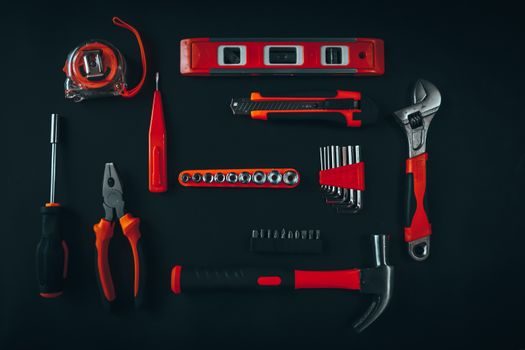
Chinese OEM IEC 60900 / ASTM F1505 tools (SFREYA, TOLSEN VDELINE and similar) make sense for high-volume MRO stocking, contractor tool rooms serving 480 V industrial distribution, and any application where the tool is rated to 1000 V and the buyer is willing to validate the test certificate batch by batch [S1][S4].
American-made (Salisberg, GB, Klein) is the right call when the contract specification literally names a US brand, when the buyer is on a US federal / utility procurement vehicle that requires Berry Amendment or TAA compliance, or when the field kit must carry NFPA 70E arc-rated PPE labelling and the user is doing live-line work above 1000 V [S2]. The 2–3× cost premium is real but buys shorter US-domestic lead time (typically 5–10 days), simpler customs paperwork, and a US-side warranty trail. The industrial valve and pressure transmitter sourcing guides apply the same brand-vs-spec economics — the cheapest compliant tool is rarely the cheapest piece.
How To Read An Insulated Tool Quote Without Getting Burned
A 1000 V marking printed on the shank is not the same as a 1000 V rating certified to IEC 60900 — the difference is the third-party test report, the batch traceability, and the dielectric test date stamp on the certificate. SFREYA explicitly markets "VDE insulated tools" as a product family, meaning the German VDE test mark is on the shank and the certificate can be downloaded against the serial number [S1]. TOLSEN VDELINE goes further and dual-marks to both IEC 60900 and ASTM F1505, so the same SKU can be issued against either European or North American receiving inspection [S4].
The minimum four checks on any insulated-tool quote: (1) which standard is actually marked on the shank (IEC 60900, ASTM F1505, EN 60900, VDE), (2) whether the dielectric test voltage is 10 kV for 1 minute (the IEC 60900 baseline) or merely 5 kV (a sub-tier), (3) whether the insulation is single-piece injection-moulded over the steel core (preferred) or a post-applied PVC dip (easier to peel, lower cost), and (4) whether the manufacturer will issue a lot-traceable test certificate with the shipment. If a quote cannot answer all four in writing, the tool belongs on the spares shelf, not the live-work kit.
Real Use Cases, Real Numbers
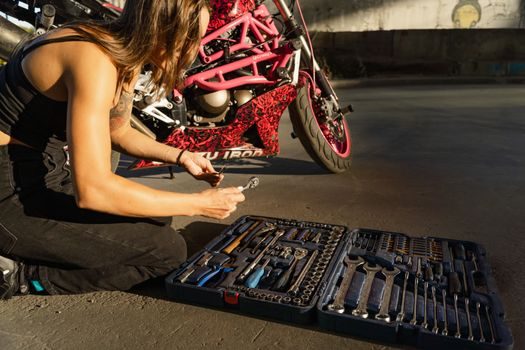
A 24-piece 1000 V VDE socket-and-ratchet kit in a hard-shell case is a common baseline for one utility-line truck and lists at USD 180–260 wholesale from Chinese OEM, USD 450–700 from US-made equivalents; 100-piece substation kits with torque wrenches, pliers, screwdrivers, cable cutters and a 10 kV hot-stick run USD 1,200–2,500 from Chinese OEM and roughly USD 3,000–6,000 from American-made [S1][S2][S4].
For EV-maintenance shops the use case is single-piece: 1000 V VDE screwdrivers, T-handles and torque wrenches in the USD 25–120 per-piece band; the TOLSEN VDELINE catalogue markets this segment directly as "INSULATED TOOLS DESIGNED FOR MAINTENANCE OF ELECTRIC VEHICLES" [S4]. For process-plant turnarounds the use case is kit: 24–100 pieces per crew, dual-marked IEC 60900 / ASTM F1505, lot-certified, USD 600–2,500 per kit. Comparing the insulated-tool cost stack to flow meter or insulated tools sourcing at the same MRO site, the per-piece economics are simpler but the certification overhead is heavier — insulated tools fail audit on a missing test certificate, not on a tight tolerance.
Limitations, Failure Modes, And What The Standards Don't Cover
IEC 60900 and ASTM F1505 certify the dielectric boundary — they do not certify mechanical endurance, drop resistance, or chemical compatibility. The 10 kV dielectric test is performed on a new tool; insulation that has been gouged, dipped in solvent, or stored in UV is no longer a 1000 V tool regardless of what is stamped on the shank, and most OEM warranties explicitly exclude dielectric failure after mechanical damage [S4].
Failure modes seen in field use: (1) insulation peel at the ferrule where the dip-coat ends — a single-layer dip is more vulnerable than a fully injection-moulded shank, which is the single biggest mechanical argument for the 15–30% VDE premium; (2) torque-wrench calibration drift caused by the thicker insulation changing the effective lever arm — VDE torque wrenches are typically re-spec'd at 5,000 cycles, half the standard cycle life of a non-insulated click-type wrench; (3) chemical attack on PVC insulation by brake cleaner, MEK and some hydraulic fluids, which the standards do not test for. The standards govern the dielectric boundary, not the lifecycle — buyers who run insulated tools in refinery or marine service should spec a chemical-resistant insulation sleeve on top.
Sourcing Signals Worth Tracking
On the buyer side, the Clutch & Brake Price Bands 2026: Friction, Piston and OEM Cost Map reference covers the same OEM-vs-OEM cost-stack logic for a different commodity class, and the Wheel Loader Suppliers 2026: China Cluster Map, Price Bands and Sourcing Logic piece maps the Tianjin / Yangzhou cluster geography where most Chinese insulated-tool OEMs sit. Track the IEC 60900 amendment and the reciprocal-tariff list — those are the two signals that will move the 30–60% China-vs-US price gap in the next two quarters.