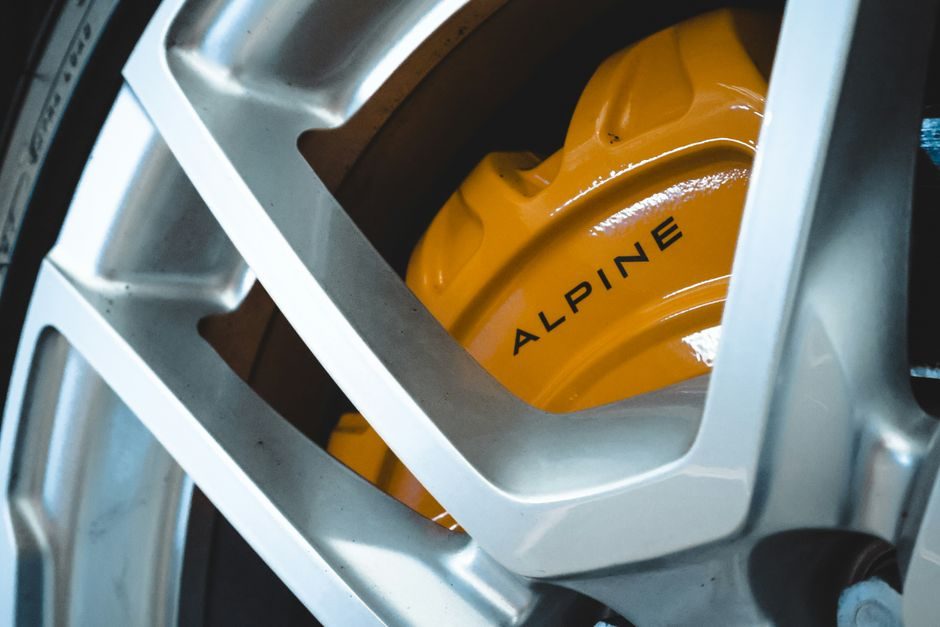
Aftermarket ceramic brake-pad sets for passenger vehicles sit in a US$8-15 per-set band on Made-in-China wholesale listings updated 13 June 2026, with Honda D2037 rear pads at US$8.5-10.8 and Buick GL8 D2159-9402 front pads at US$12.5-15 [S2].
OEM-equivalent pedal assemblies run 10-20x higher: a tested 1998-2004 Ford Ranger 3.0 clutch & brake pedal assembly listed at US$168.75 (25% off US$225.00) on eBay as of 14 May 2025, reflecting the integrated machined-housing value versus bare friction stock [S3]. For a working spec frame, the clutch-brake encyclopedia entry defines the assembly as a clutch-and-brake combined unit (离合器闸) used for torque transmission plus stopping in one housing [S1].
Friction-material price bands: ceramic pads US$8-15, kits scale by friction count
Made-in-China wholesale friction SKUs cluster in three tiers: economy ceramic (Toyota Yaris D1184 / SGM D1940) at US$8-10/set, mid-tier (Honda D2037 rear) at US$8.5-10.8/set, and professional ceramic (Buick GL8-III D2159-9402) at US$12.5-15/set — a 50-90% spread driven by friction area, ceramic content, and shim count, not brand premium [S2].
Clutch kits bundle friction disc, pressure plate, release bearing and throw-out fork; per the same wholesale index, kits are quoted as a single line item alongside clutch facing and clutch cover, indicating buyers typically order the full quartet rather than a single plate [S2]. Cross-referenced Mustang brake & clutch bushings (1965-2004, set of 2) ship from Ashland, Virginia under eBay's international customs-declaration policy, where buyers absorb duties and clearance fees — a hidden 5-15% landed-cost adder that does not appear in the listed unit price [S4].
Piston-type hydraulic clutch-brake units: inquiry-only pricing, MOQ not stated
Hawers Co., Ltd. (South Korea) lists a HACKB-type piston clutch-and-brake with MOQ "Not Specified" and pricing on inquiry, dated 14 March 2026 — typical of OEM hydraulic-actuation packages where the body, bore, spring set, and seal kit are configured per machine tool or press [S5].
The spec sheet describes a hydraulically-actuated clutch with a spring-set, hydraulically-released brake — meaning engagement is spring-fail-safe (brake defaults to ON when pressure drops) and the clutch defaults to disengaged. Engineers specifying these for metal-forming presses should map bore size, torque capacity (Nm), and hydraulic pressure (bar) before requesting quotation, because piston-unit pricing is highly sensitive to those three parameters [S5]. For comparison with non-friction power-transmission alternatives, the clutch-brake vs fluid-coupling 2026 selection map lines clutch-brake assemblies against fluid couplings on torque, slip behaviour, and overload response.
OEM pedal assemblies vs aftermarket friction: 10-20x value gap explained
The Ford Ranger 3.0 OEM-tested pedal assembly at US$168.75 (used, eBay 14 May 2025) contains the pedal arm, mounting bracket, pivot bushings, and in some configurations the master-cylinder interface — a structural assembly, not a consumable [S3]. The Mustang bushing set of 2 (eBay 23 February 2025) represents the small-end of the bushing consumable market, typically US$15-40 per pair for poly or rubber replacements [S4].
Specifying engineers should treat the price gap as a function of metallurgy and integration: US$8-15 buys you a wear-part engineered to be replaced every 25,000-50,000 km; US$168 buys a structural assembly rated for the vehicle's full service life. Mixing the two in a maintenance budget misframes the spend — friction is opex, pedal/yoke assemblies are capex [S3][S4]. The related bearing price trend 2026 piece tracks the same raw-material drag (steel, copper, friction-bonded additives) that drives clutch-bearing and pilot-bearing sub-components in these kits.
Selection criteria: load profile, actuation type, duty cycle
Three decision vectors drive clutch-brake selection in 2026: (1) actuation — mechanical linkage, hydraulic piston, or electromagnetic; (2) duty cycle — cyclic per minute (CPM) for press applications versus intermittent for machine-tool spindles; (3) thermal capacity — friction area and disc mass dictate heat dissipation before fade. [S1]
For press-metal-forming lines, spring-set / hydraulically-released brakes are the de-facto safe standard because loss of hydraulic pressure fails the brake to ON, stopping the press ram. For conveyor or packaging machinery, electromagnetic units (covered in the electromagnetic-brake encyclopedia page) trade holding torque for faster response, often below 50 ms engage time. The HACKB-type piston unit from Hawers targets machine-tool and stamping-press duty, where bore-and-stroke selection follows press tonnage charts [S5].
Hidden cost layers: customs, MOQ tiers, and freight on heavy assemblies

eBay's international shipping notice on the Mustang bushing listing flags that buyers may be required to pay customs processing fees based on the declared customs value, import duties and other taxes, and that delays may occur due to customs inspection, with such fees to be paid upon delivery [S4].
For B2B procurement, the equivalent risk sits in MOQ enforcement: the Hawers piston unit is listed "Not Specified" but Korean OEM hydraulic units typically gate at 5-20 unit MOQ for non-stock bore sizes, with per-unit price dropping 15-25% at 50+ unit volumes. Heavy assemblies (full pedal boxes, complete clutch kits) also incur palletised freight class 70-85 on US/Europe lanes, a fixed US$150-400 adder per shipment that compresses the unit-economics gap on small orders [S5].
Standards, ratings and what to verify on the datasheet
Industrial clutch-brake datasheets should carry: static torque (Nm), dynamic torque (Nm), max RPM, bore diameter (mm), hydraulic pressure range (bar) for piston types, voltage (VDC) for electromagnetic types, and thermal capacity (J/disc or continuous W). Hawers' HACKB-type lists hydraulic actuation but does not publish torque or pressure figures on the public product card — engineers must request the full datasheet before comparison [S5].
Aftermarket friction SKUs on Made-in-China carry model-coded fitment (D1184, D2159-9402, D2037) tied to specific vehicle platforms, plus friction-material grade (ceramic, semi-metallic, organic). For industrial assemblies, the equivalent is the duty-cycle rating (CPM) and the certification mark — CE Machinery Directive 2006/42/EC for EU installations, UKCA for GB, with ATEX 2014/34/EU required for any unit in a Zone 1 or Zone 2 dust/gas environment [S2][S5]. The electromagnetic-brake encyclopedia page covers the voltage and duty-cycle envelope that complements hydraulic piston units in dual-circuit machine guarding.
Trackable next signals: (1) the Made-in-China friction index updated 13 June 2026 shows no upward revision versus Q1 listings, suggesting stable copper-and-steel input costs through Q3; (2) Hawers' inquiry-only piston pricing on go4worldbusiness indicates OEM hydraulic-unit quotes are still project-based, not catalog — RFQ turnaround remains 2-4 weeks. Buyers benchmarking 2026 budgets should lock ceramic-pad volumes on existing pricing and request Hawers-type hydraulic quotes 60-90 days before press-installation commissioning dates.
For component-level specifications, see linear guide.