
Insulated hand-tool fleets are specified to IEC 60900 for live-line work up to 1000 V AC / 1500 V DC, and the certification regime — not the unit price — drives the lifecycle bill [S2].
For a typical utility or heavy-industrial maintenance team of 20-40 technicians, the total spend over a 5-year horizon lands in the 2.0-2.5x range relative to initial acquisition, once recertification, impact damage, and PPE-audit overhead are folded in [S1][S2].
What "TCO" Means for an Insulated Tool
TCO captures every dollar from requisition to disposal: purchase, in-service inspection, recertification, training, and write-off — the same four-bucket frame USPS uses for supply-chain assets: purchase, use, maintenance/support, disposal [S2]. Endjin's asset-lifecycle walkthrough (feasibility → design → build → operate → maintain → retiral) maps directly onto a tool fleet: spec-in, commission, daily issue, periodic re-test, and finally scrap after impact damage [S1]. Hidden items that almost always get missed in budget planning are: dielectric retest fees, torque-wrench calibration cross-charges, and the productivity loss when a kit is held in quarantine [S2].
The Five Cost Drivers, Ranked
1) Initial purchase (30-40% of 5-year spend for a 1000 V kit). 2) Periodic dielectric recertification — IEC 60900 calls for visual inspection plus a dielectric test at routine intervals, commonly annually for field-deployed tools, and that line item is where procurement shocks usually surface. 3) Impact damage and loss — a dropped socket or hammer often means full write-off because the insulation cannot be field-repaired. 4) Storage, tracking, and audit labour (QR/RFID tagging, kit-checkout logs, calibration software seats). 5) Training and supervisor sign-off, which NI flags as a "people cost" line in any TCO model [S3]. Operators who skip the visual-inspection step before each shift are the single largest cause of premature scrap, per the same lifecycle cost logic applied to power-station maintenance crews [S1].
Material and Spec Choices That Move the Price
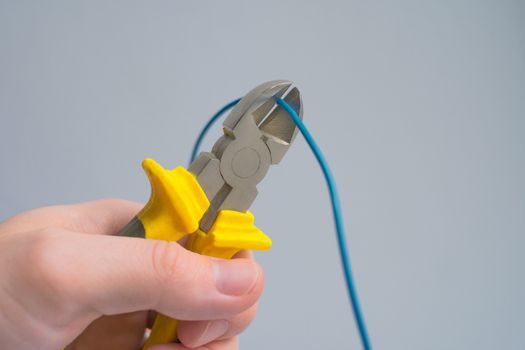
Chrome-vanadium (Cr-V) steel with dual-layer injection-moulded insulation sits at the entry tier; these kits typically meet IEC 60900 but are not VDE-certified for repeat recertification at the OEM. VDE-GS-marked tools (e.g. from Knipex, Wera, Stahlwille) carry a recertification path and a documented batch trace, which lowers the 5-year failure-rate line and raises the unit price 20-60%. For hybrid/EV work, 1000 V AC tools also need to be rated for the DC side; a kit specced only to the AC column of IEC 60900 is the wrong kit for a 1500 V DC battery pack [S2]. insulated tool selection is therefore a certification-first decision, not a steel-grade decision. Stainless or non-sparking (Cu-Be, Al-Bronze) heads add another 2-3x multiplier and are mandatory in some Ex zones — that requirement usually comes from the site IECEx/ATEX category, not from the tool catalogue.
Comparison: Cheap IEC 60900 vs VDE-GS vs Ex-Rated Kits
On four decision criteria — unit price, recertification cost, in-service lifespan, and audit-trail acceptability — the three tiers line up as follows. Entry IEC 60900 (no third-party mark): lowest unit price, but no OEM recertification path, so most owners send them to an external lab each year; 3-5 year service life is typical. VDE-GS or equivalent: mid-tier price, OEM-supported recertification at 12-month intervals, 5-8 year life. Ex / non-sparking rated: highest price, mandatory for hazardous-area work, longest life if impact damage is controlled, and often accepted by auditors without supplementary dielectric paperwork. For mixed-fleet sites — common in switchgear rooms adjacent to Zone 1 areas — the most economical spec is a VDE-GS 1000 V core kit plus a small, separately stored Cu-Be or Al-Bronze subset, rather than buying Ex-rated equivalents of every common driver and wrench. [S2]
Who This Is For, and Who Should Not Buy
Insulated hand tools are for: live-line work on LV switchgear, O&M on battery energy storage systems, EV high-voltage service, and any task where the IEC 60900 dielectric rating is written into the site's lock-out/tag-out or work-permit procedure [S1][S2]. They are NOT for: arc-flash protection (that is a PPE/clothing problem, Class 1-4 per IEC 61482), routine mechanical assembly where no voltage is present, or as a substitute for proper isolation. A common audit finding is crews buying 1000 V drivers "just in case" and never recertifying them — a 5-year write-off that started at three times the price of a standard driver.
Recertification Cadence and Failure Modes
IEC 60900 specifies routine visual inspection plus a dielectric test; many owner programmes default to a 12-month retest cycle for frequently issued tools and 24 months for low-use kits, with a documented visual check before each shift [S2]. The dominant failure modes are: impact damage to the insulation sleeve (write-off, not repair), water ingress in stored tools, and chemical attack from hydraulic fluid or solvents that degrade the outer jacket. pressure transmitter calibration is a useful parallel here — the inspection cost is small per event but non-negotiable per cycle, and skipping it converts a small annual line into a five-figure write-off when an incident occurs [S3].
Total-Cost-of-Ownership Stack — Worked Example

Cheaper unmarked IEC 60900 kits drop acquisition but raise per-event lab fees and shorten service life, so the TCO ratio typically worsens to 2.5-3.0x. The single largest controllable saving is reducing impact damage through foam-cut shadow-boards in the van and a "no-tools-on-the-floor" rule; the single largest uncontrolled cost is a site that mandates an unnecessary spec upgrade mid-life [S1][S2].
Sourcing, Standards, and Audit Trail
Insist on a batch certificate and a VDE-GS or equivalent third-party mark for any 1000 V tool entering service; without it, recertification has to be done with full traceability burden on the owner, which is exactly the kind of hidden line item TCO analysis is meant to surface [S2]. Cross-check the rating against the actual work: a tool marked 1000 V AC is not automatically approved for 1500 V DC battery work, even though some catalogues conflate the two. For sites with both insulated and Ex requirements, the cheapest compliant answer is a core VDE-GS kit plus a separately purchased non-sparking subset, not a full Ex-rated fleet. flow meter instrumentation lives under similar rules — third-party certification is the difference between a calibration log and an audit finding [S1][S3].
Trackable signals to watch: any IEC 60900 amendment changing the dielectric-test interval or the DC rating, and any tightening of site-level LV switching rules that would re-classify a 1000 V tool as personal protective equipment rather than a hand tool — either move would shift the recertification line materially. See how a similar lifecycle-cost lens plays out on a different asset class in Stretch Film TCO: 6 Cost Drivers, 3-5 Year Spend Stack, Hand vs Machine Wrap and Suspended Ceiling TCO: 6 Cost Drivers and 30-Year Spend Stack.