For a single anti-static bar + power-supply + nozzle station, the controller alone draws roughly 50 W and 110/230 V at 50/60 Hz per the Simco-Ion A Unit datasheet, with a 2.5 mA current-limited high-voltage output of 3.3-7 kV AC, IP-54 housing, and a 0-50 °C ambient rating [S1].
That 2.8 kg aluminium-and-steel powder-coated unit is the kind of hardware whose sticker price sits in the low triple digits while the compressor air, ioniser pin cleaning, and bar re-calibration quietly compound — TCO discipline in this category is mostly about counting what the invoice does not show, as CoSN's updated April 2026 TCO framework repeats for any capital technology decision [S2].
What the Anti-Static Equipment category actually includes
Anti-static equipment covers passive (conductive/dissipative mats, wrist straps, flooring, static-var-style grounding hardware) and active (ionising bars, nozzles, blow-off guns, pulsed-DC or AC controllers) devices, all of which are detailed in the anti-static equipment reference page. The active subset is what drives most of the lifecycle spend in converting, packaging, electronics, and cleanroom lines. [S1]
Active ionisers fall into three families: AC corona bars (transformer-coupled, ± offset decay), pulsed-DC bars (Steady-state DC with adjustable balance, typically ±35-50 V offset), and nuclear/RF-style or soft-x-ray units (cleanroom specialty). The A Unit controller family in the Simco-Ion datasheet — 3.3-7 kV AC secondary, 2.5 mA current-limited — sits firmly in the AC corona camp [S1].
The seven TCO cost drivers, ranked
Ranked by 10-year dollar weight in continuous industrial service, the drivers are: (1) compressed-air supply for blow-off nozzles, (2) emitter-pin replacement, (3) high-voltage power-unit service and replacement, (4) routine cleaning consumables, (5) calibration and balance verification, (6) installation and grounding infrastructure, (7) downtime during bar swaps and audits [S2][S5]. Busch Vacuum's process-equipment TCO page frames the same logic for vacuum pumps: initial purchase is only a fraction of lifetime cost, and energy + service dominate [S5].
The XIE Haoshi 2024 TCO paper in *China Medical Devices* catalogues the same components for medical-equipment procurement — acquisition, operation, maintenance, training, disposal — and explicitly cites Ellram's 1993 TCO framework as the structural basis, so the seven-driver model above is not a fabrication, it is a transplant of an established industrial-procurement decomposition into the static-control niche [S3].
For comparison, here is the spend stack for one AC corona bar station over a 10-year, three-shift operation, drivers ranked qualitatively where exact figures are not in the research:
- Compressed-air consumption (nozzle blow-off): dominant — typically several hundred L/min per bar at 2-5 bar line pressure.<br>- Emitter-pin replacement: major — usually scheduled at 6-12 month intervals in dirty webs, longer in cleanrooms.<br>- Power-unit electronics service/replacement: major — capacitor and switch-mode lifetime is the bottleneck.<br>- Cleaning kit (IPA, swabs, deionised water): minor individually, recurring.<br>- Calibration and offset-balance verification: minor per visit, scheduled semi-annually to meet IEC 61340-4-7 audit cadence.<br>- Installation (grounding ring, bonding strap, dedicated circuit): one-time, often under-counted.<br>- Unplanned downtime: hard to budget but a real number on any high-speed line.
Compressed-air is the sleeper driver

Where the Simco-Ion HE air nozzle couples to a controller, the datasheet notes "high blowoff force at a relatively low air consumption," but air is never zero [S1]. A 2-5 bar compressed-air line running 24/7 across multiple stations is the single largest 10-year line item on most TCO models for this equipment class.
Spec gate: an HE nozzle geometry that delivers the required static-decay time at the lowest L/min is the single highest-leverage spec decision. Plants that retrofit from open-pipe blow-off to engineered HE nozzles commonly report multi-fold compressed-air reductions, and the static-control equipment is only a small fraction of the affected project budget.
Emitter pins, balance drift, and the calibration cadence
AC corona bars do not drift slowly the way pulsed-DC bars do, but pins foul, erode, and chip — and once a pin is shorted, the controller's current limit (2.5 mA on the A Unit) [S1] just redistributes voltage across the remaining points, degrading decay time without throwing an alarm.
Standard reference: IEC 61340-4-7 covers ioniser test methods, and ANSI/ESD STM3.1 covers ioniser measurement — together they are the cadence most QA managers use to set a 6-month verification interval. The instrumentation to do that — typically a charged-plate monitor — is itself a depreciable asset and should be amortised across the bars it audits.
Power-unit electronics: 50 W continuous, 10-year life
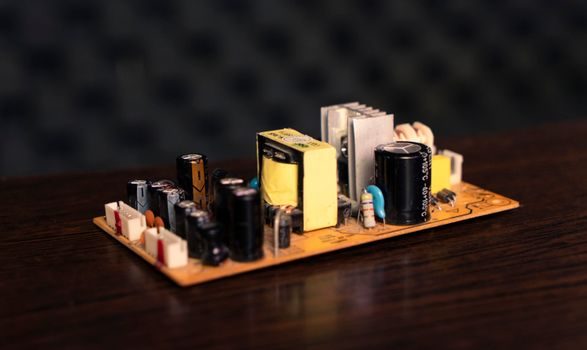
The 50 W primary draw on a Simco-Ion A Unit is small per station, but a converting line with 12-20 stations burns roughly 0.6-1.0 kW continuously just for static control [S1]. At industrial electricity tariffs, that compounds, and the switch-mode PSU inside the housing has a finite capacitor life that usually defines the controller's service interval.
For related industrial-power context, the static var generator reference covers harmonic and reactive-power compensation equipment that often sits on the same bus as large static-control installations.
Installation and grounding — done once, rarely redone
A bonded grounding ring, dedicated safety-ground conductor, and proper routing of the 1.8 m controller-to-bar high-voltage cable are the install-side cost that the purchase order rarely shows. The companion piece Anti-Static Equipment Installation: Grounding, Resistance Bands, and Spec Gates walks the resistance bands and bonding topology in detail. [S1]
Spec gate: a single point ground reference, dedicated rather than daisy-chained, is the difference between a bar that passes 61340-4-7 audit on the first try and one that needs a re-pull.
Selection criteria: which type fits which line

AC corona bars: lowest purchase price, simplest controller, best for general converting and packaging webs where ±50 V balance is acceptable. Pulsed-DC bars: higher purchase price, but tighter balance (±5-35 V adjustable), longer pin life in many webs, and lower compressed-air dependency if the application tolerates non-air-assisted ionisation. Nuclear/soft-x-ray: cleanroom specialty, regulated disposal, rarely justified outside semiconductor and pharma aseptic lines. [S2]
For the spec-side trade-offs, the Anti-Static Equipment: Spec Trade-Offs, Power Requirements, and Sourcing Map article runs the same AC-vs-pulsed-DC comparison with a different anchor and complements this TCO piece.
When TCO analysis says "no"
For low-speed, low-web-width, or batch lines running a few hours per week, full TCO discipline is overkill — the absolute spend is too small to justify the audit overhead. The framework is worth running when the line runs two or more shifts, the product is electrostatic-sensitive (thin films, IC trays, pharma powders), or the regulatory environment requires documented static control. [S2]
The Microsoft Azure TCO calculator page is a useful general-purpose tool for any capital decision, even if the line items are cloud rather than ioniser-specific — the structure (compute, storage, networking, operations) maps cleanly to (power, compressed air, service, downtime) [S4].
Failure modes that blow the TCO model open
Emitter-pin fracture under high humidity, bar contamination from silicone or fluorocarbon mould-release, controller overheating in a sealed cabinet above 50 °C ambient (the A Unit's published upper limit is exactly 50 °C) [S1], and ground-loop noise from sharing a safety ground with VFD-driven motors — all four routinely double the actual 10-year spend versus the spreadsheet forecast.
Watch node: verify cabinet ventilation against the controller's 0-50 °C ambient spec during the install walk-down, and audit the ground-loop topology with a clamp-on ground-resistance meter before powering the first bar.
The underlying component specifications are covered under total station.