Investment casting equipment breaks into four functional stages — wax pattern production, ceramic shell building, dewaxing and shell firing, and metal melting/pouring — each with its own machine class and capacity band [S2][S8].
Modern lost-wax foundries specify equipment around part weight (typically 10 g to 50 kg), alloy pour temperature (often above 1000 °C for steels and nickel superalloys), and the dimensional tolerance required, with the wax-injection stage alone dictating whether a manual, pneumatic, or hydraulic press is justified [S2][S8].
Wax Injection Machines: Manual, Pneumatic, and Hydraulic Classes
Wax injectors are the entry point of every investment casting line, and a well-maintained die can produce up to 50,000 wax patterns before re-work is required, which sets the economic floor for machine class [S2]. Changshun's equipment catalogue lists C-type hydraulic, double-site hydraulic, double-station pneumatic, and thermostat wax-tank variants, each aimed at a different shot weight and cycle-time band [S8].
Selection divides by clamp force and shot control: manual presses suit prototype and short-run work, pneumatic double-station units handle small repetitive patterns, while hydraulic C-type and double-site machines carry the higher injection pressures needed for thin-wall or large-envelope wax patterns [S8]. For buyers comparing options, the casting mold reference page lays out how the wax pattern translates downstream into a refractory shell, and the practical line configuration is covered in the Investment Casting Equipment Selection: Wax Injectors, Shell Lines, Furnaces piece.
Shell-Building Equipment: Slurry Tanks, Sand Spreading, and Drying Chains
Shell building converts the wax tree into a ceramic shell by successive dips in a refractory slurry, draining, and stuccoing with coarser particles, with each coat allowed to dry before the next is applied [S2]. Equipment in this stage includes slurry mixers with controlled viscosity, dipping tanks, rain-type or fluidised sand-spreading machines, sand-floating buckets, and climate-controlled drying rooms [S8].
The shell wall thickness and surface finish target drives how many dip-and-dry stations a line carries — typically 6 to 10 coats for aerospace and nickel-superalloy parts, fewer for carbon-steel industrial hardware [S2][S10]. The casting mold encyclopedia entry describes the resulting shell mould in more detail, while buyers weighing sand-shell versus block-mould approaches can compare this against sand casting mold economics on larger, lower-tolerance parts.
Dewaxing Autoclaves and Shell Firing Furnaces
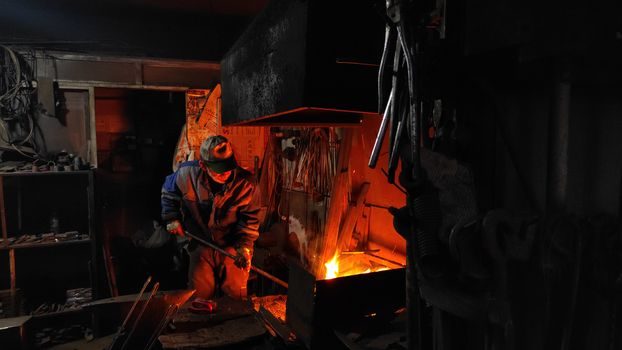
After the ceramic shell has built up, the wax is removed either by a steam autoclave (flash dewaxing, typically under 8 bar in a few seconds) or by a furnace melt-out cycle, after which the shell is fired above 1000 °C to sinter the binder — usually silicate-based — and develop mould strength [S2]. Binder selection, firing temperature, and shell pre-heat directly affect as-cast dimensional accuracy and surface finish, especially on thin-wall nickel and stainless components [S1][S2].
For foundries running high-melt alloys such as tool steel and nickel-iron superalloys, dewaxing and firing equipment is sized to the largest shell envelope, and shell pre-heat is matched to the pouring metal's superheat margin to avoid shell thermal shock [S1][S10]. The die casting die reference is a useful contrast — it shows why high-volume pressure die casting uses a permanent metal die rather than an expendable ceramic shell, and where investment casting's higher tooling-per-part cost is justified.
Metal Melting, Pouring, and Auxiliary Cell Equipment
Once fired, shells go to the melt floor. For steel, stainless, and nickel-base alloys, induction furnaces dominate because they deliver the 1500–1700 °C superheat needed for clean filling of thin sections, and the pour is typically gated into a pre-heated shell tree on a controlled-rate tilt or bottom-pour ladle [S1][S2]. Spectrum-analyser alloy verification is part of the cell — Besser's documented workflow shows spectrometer checks immediately before pour, with shell-removal (vibratory knockout), cut-off, and grinding following solidification [S1].
Auxiliaries on the same line include the casting ladle for metal transfer, shot-blast and sand-blast cabinets for surface cleaning, heat-treatment furnaces for property development, and CNC machining centres for value-added finishing [S1][S8]. For aluminium-alloy parts, where the same lost-wax process is used at lower pour temperatures, many of the same cells apply — a useful cross-check is the cast aluminum alloy selection map, which lines alloy family against part type and tolerance band.
Comparison: Equipment Class Versus Process Stage and Typical Use

Buyer selection turns on three criteria — part weight and envelope, alloy family, and required tolerance/finish — and these line up against the four process stages as follows. Wax injectors are judged on shot weight and pressure control (manual for prototypes, hydraulic for thin-wall or large patterns) [S2][S8]. Shell-building lines are judged on number of dip stations and drying control (more coats for nickel superalloys and aerospace, fewer for general industrial carbon-steel hardware) [S2]. Dewax and firing equipment is judged on shell envelope and pre-heat temperature capability (autoclave for clean wax recovery, furnace for higher throughput) [S2]. Melting and pouring are judged on alloy pour temperature and volume per shift (induction for steels and nickel, lower-temperature furnaces for aluminium and copper alloys) [S1][S2].
Investment casting is generally chosen over sand casting when tighter tolerances, thinner walls, and better surface finish are needed, and over die casting when the alloy, part size, or lot size sits outside pressure-die-casting's economic band [S4]. Foundries such as Ningbo Tongda (HuaShen group) operate at roughly 30,000 tonnes/year of casting capacity across precision investment, alloy, and machining lines, illustrating the scale at which dedicated shell lines become economic [S10].
Industrial Application Bands: Where Investment Cast Equipment Earns Its Keep
Investment casting equipment is widely deployed across five application bands: automotive parts (precision brackets, turbocharger components), construction and bathroom hardware, agricultural and hydraulic equipment, transmission line fittings, and general industrial machinery parts [S1][S5]. Within these bands, the equipment list — wax press, shell line, autoclave, furnace, induction melter, knockout, blast, heat-treat, CNC — is essentially the same; what changes is capacity, alloy, and tolerance [S1][S3][S5].
For foundries adding capability, the practical signal to watch is investment in 3D-printed pattern (SLS) printers for prototype work — Invest Cast documents seven high-speed SLS pattern printers in its prototyping cell, which compresses lead time from weeks to days and removes the need for a hard tooling die at the prototype stage [S3]. Besser similarly documents a 12-step workflow from casting simulation through CNC and surface treatment, indicating that the modern investment casting cell is sold as an integrated process rather than as standalone machines [S1].
Track these two signals over the next planning cycle: (1) the diffusion of SLS/stereolithography pattern printers into prototype cells, which shifts the boundary between investment casting and 3D-printed metal parts [S3]; and (2) the migration of induction-melt capacity toward nickel-iron superalloy and tool-steel runs, where the per-part premium supports the higher shell-coat counts and the autoclave-plus-furnace dewax/firing chain [S1][S2][S10].